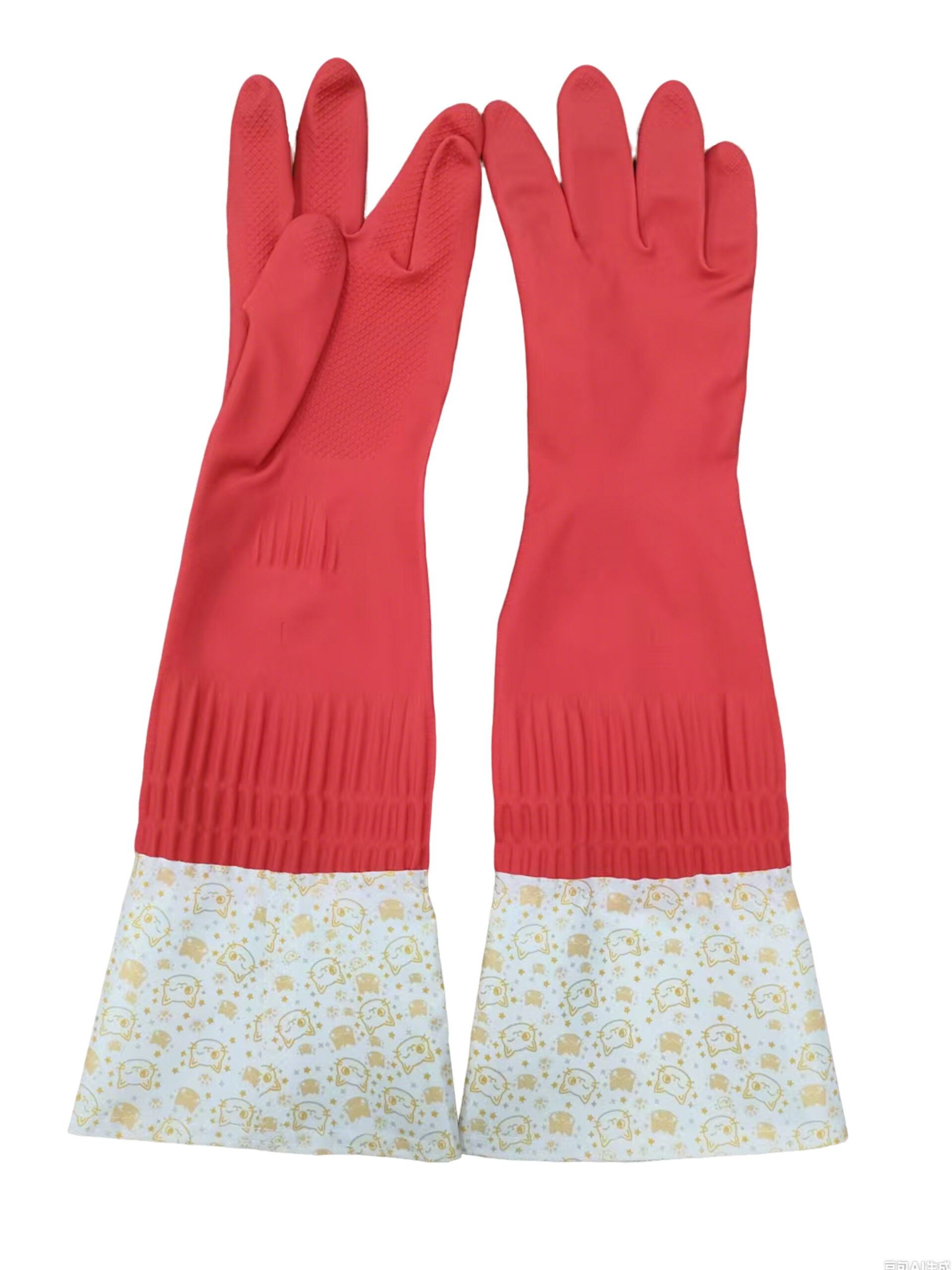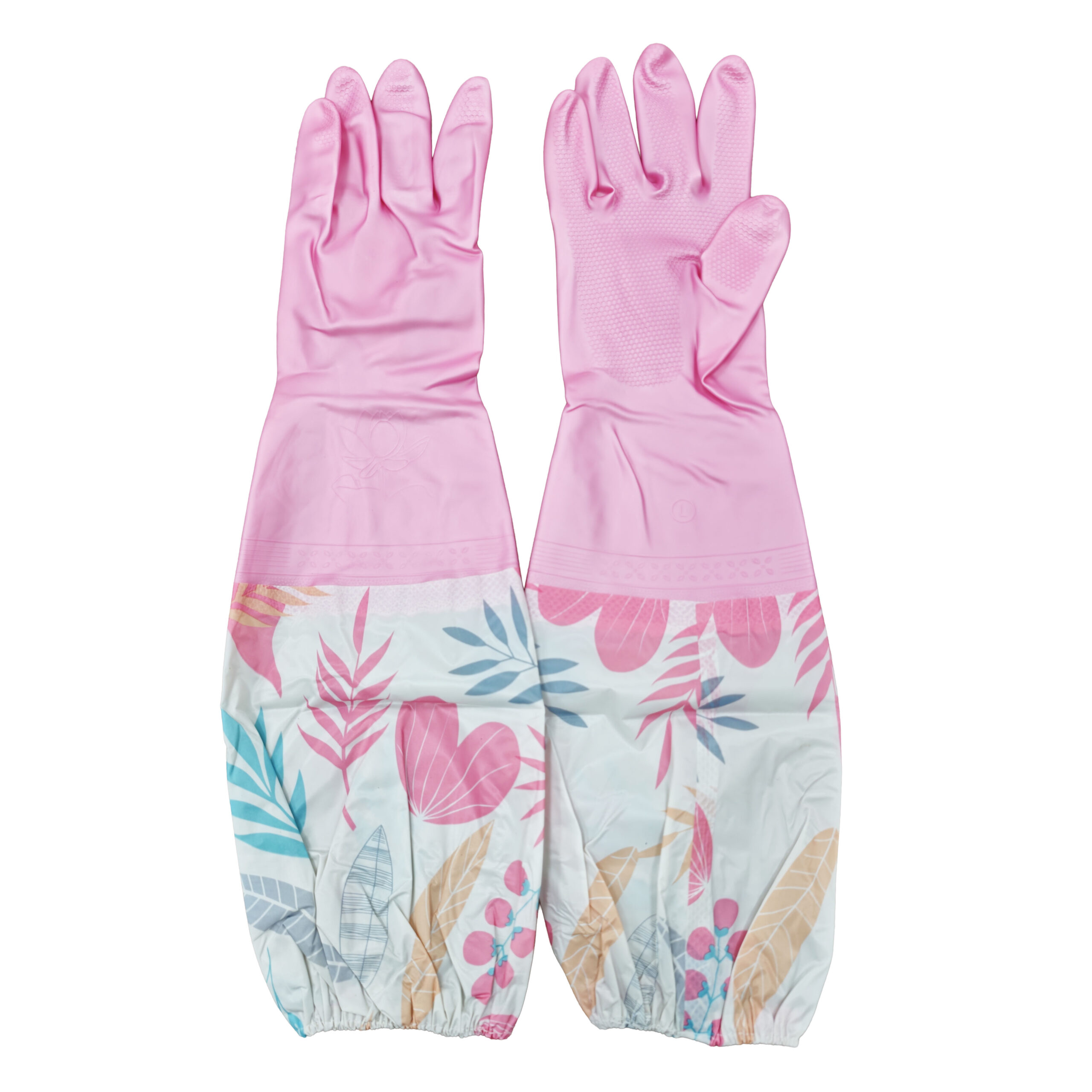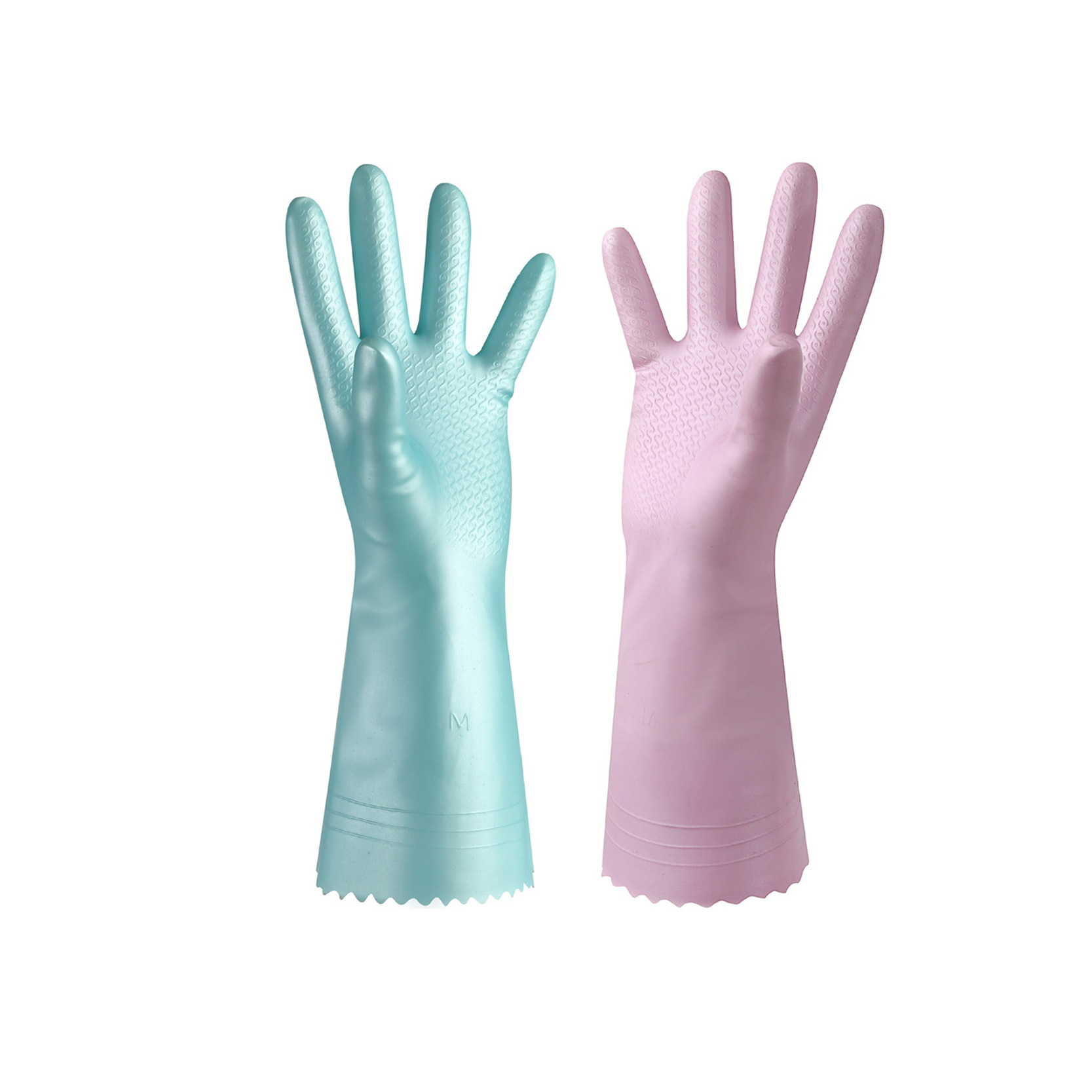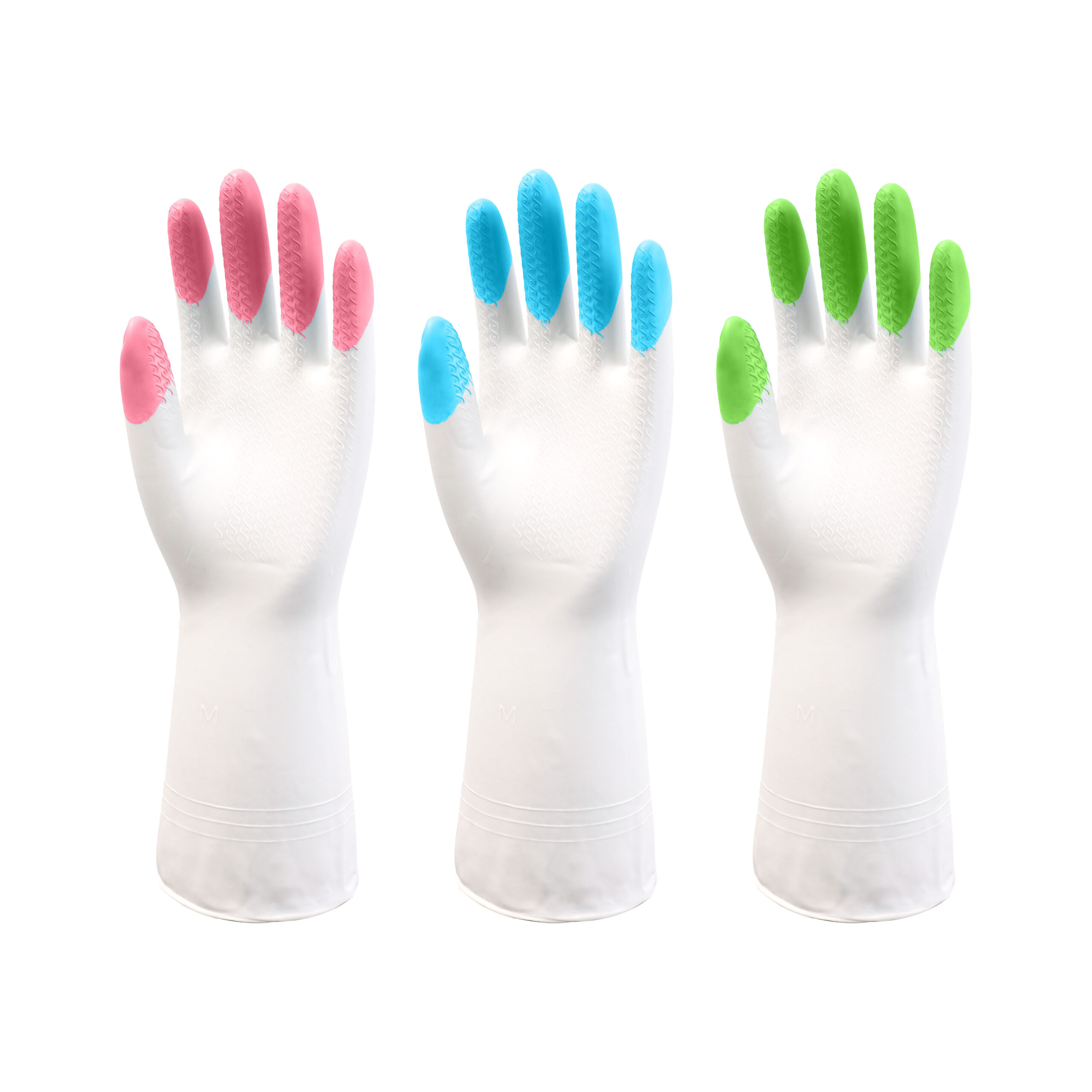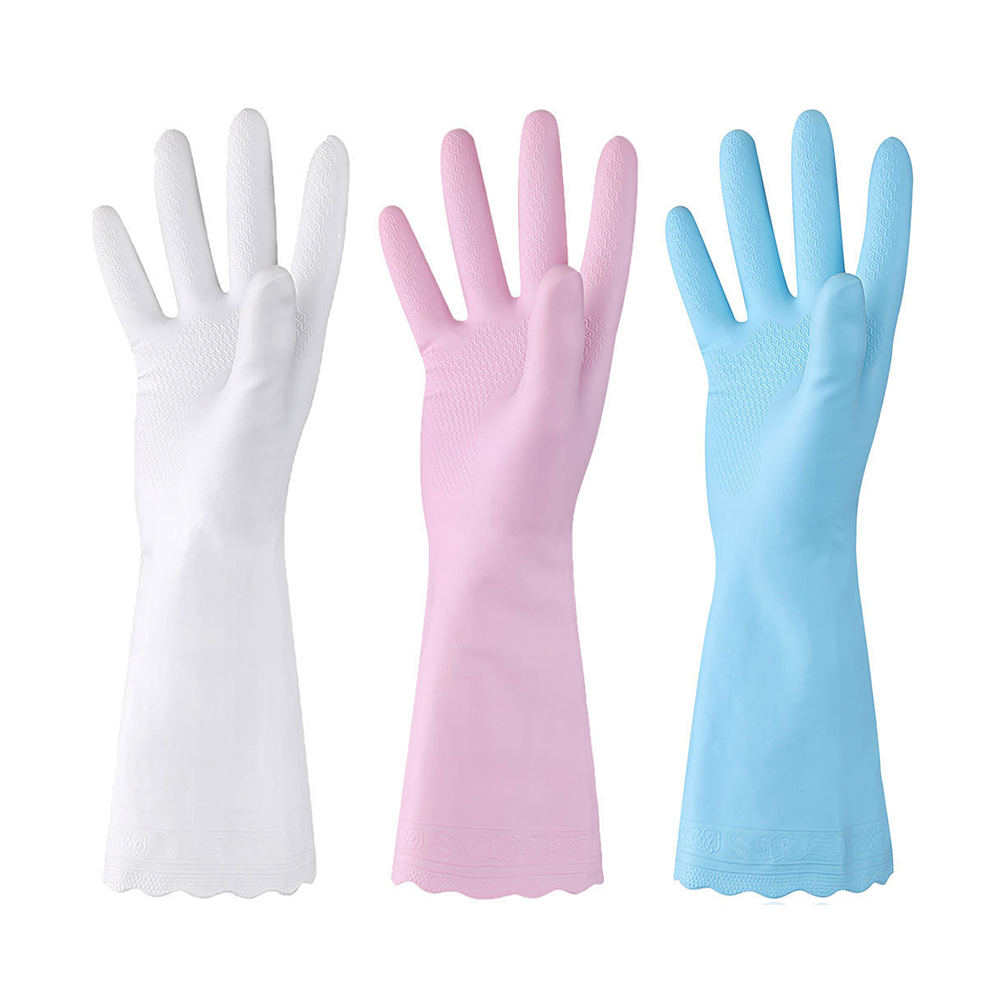
Quick answer: The best rubber gloves for heavy-duty cleaning are reusable latex, nitrile, neoprene or PVC gloves matched to the chemical, concentration, contact time and task. Prioritize model-specific resistance data, suitable thickness, textured grip, correct sizing and enough cuff coverage. No glove material protects against every cleaning chemical. The best rubber gloves for heavy-duty cleaning are essential for effective cleaning.
Definition: A heavy-duty cleaning glove is a reusable protective glove designed for longer, repeated or more aggressive cleaning exposure than routine household wiping. The term describes the intended task and construction; it does not, by itself, prove resistance to a particular chemical.
The best rubber gloves for heavy-duty cleaning should be selected based on the tasks at hand and the chemicals used. Choosing the right gloves can make a significant difference in safety and effectiveness.
When performing heavy-duty cleaning, using the best rubber gloves for heavy-duty cleaning can protect against various hazards and ensure better grip and control. It is vital to consider the best rubber gloves for heavy-duty cleaning when dealing with harsh chemicals, ensuring maximum protection and performance.
Sourcing the best rubber gloves for heavy-duty cleaning can greatly impact the safety and efficiency of your cleaning tasks.
Remember, the best rubber gloves for heavy-duty cleaning are not only protective but also enhance your cleaning experience.
Understanding the features of the best rubber gloves for heavy-duty cleaning is crucial to ensure compliance with safety standards and effectiveness. Using the best rubber gloves for heavy-duty cleaning can help prevent skin contact with harmful substances during your cleaning processes.
Heavy-duty cleaning may expose workers to concentrated detergents, disinfectants, degreasers, oils, repeated wet work and abrasive surfaces. Suitable gloves must match the hazard, provide dependable grip, fit correctly and cover enough of the wrist or forearm.
For tasks like commercial kitchen degreasing, the best rubber gloves for heavy-duty cleaning provide the necessary durability and grip.
In environments like hotels, using the best rubber gloves for heavy-duty cleaning ensures a high standard of cleanliness and safety.
For bathroom and sanitation work, the best rubber gloves for heavy-duty cleaning are essential for protecting your skin from harsh chemicals.
The best rubber gloves for heavy-duty cleaning also play a role in maintaining hygiene and safety in industrial equipment cleaning.
When considering automotive and workshop cleaning, the best rubber gloves for heavy-duty cleaning are indispensable in protecting against grease and oil.
For healthcare environmental cleaning, the best rubber gloves for heavy-duty cleaning ensure compliance with infection control standards.
Choosing the best rubber gloves for heavy-duty cleaning requires careful consideration of the specific cleaning tasks involved.
According to OSHA, the best rubber gloves for heavy-duty cleaning are crucial when evaluating exposure to hazardous substances.
There are various materials for the best rubber gloves for heavy-duty cleaning, and each has its advantages.
For instance, natural rubber latex is often recommended as one of the best rubber gloves for heavy-duty cleaning due to its flexibility.
Nitrile is another material that is among the best rubber gloves for heavy-duty cleaning, especially in oily environments.
Neoprene is also one of the best rubber gloves for heavy-duty cleaning when balanced flexibility and chemical resistance are needed.
Moreover, it’s essential to test the best rubber gloves for heavy-duty cleaning for your specific use-case to ensure optimal performance.
When assessing chemical resistance, choose the best rubber gloves for heavy-duty cleaning that align with your cleaning chemicals.
Reusable latex gloves can suit general wet cleaning. Heavy-duty nitrile gloves may be more suitable around oils, grease or selected chemicals. Consider long cuffs when splashes can reach the wrist or forearm.
The final choice should always follow the cleaning-product label, Safety Data Sheet and glove manufacturer’s compatibility information.
Decision rule: choose the glove model only after confirming five variables: substance, concentration, temperature, contact type and expected exposure time. Then evaluate thickness, cuff length, grip, fit and mechanical durability.
What Counts as Heavy-Duty Cleaning?
Always refer to the manufacturer’s data to confirm that the best rubber gloves for heavy-duty cleaning meet your specific needs.
For best practices, the best rubber gloves for heavy-duty cleaning should be tested in the environment they will be used.
When selecting gloves, consider the best rubber gloves for heavy-duty cleaning that provide the needed dexterity and comfort.
In demanding environments, the best rubber gloves for heavy-duty cleaning should be durable and provide a secure grip.
Moreover, these gloves should be verified for resistance to the substances being handled to maintain safety while using the best rubber gloves for heavy-duty cleaning.
Heavy-duty cleaning includes tasks that create longer, more frequent or more aggressive exposure than routine household wiping. Common examples include:
- Commercial kitchen degreasing
- Hotel and facility deep cleaning
- Bathroom and sanitation work
- Industrial equipment cleaning
- Automotive and workshop cleaning
- Healthcare environmental cleaning
A glove that works for dishwashing may not suit a concentrated degreaser. A chemically compatible glove may still fail the task if it tears easily or lacks grip.
OSHA recommends evaluating the chemical, concentration, temperature, exposure, cuff length, dexterity and grip before choosing gloves. Its dermal-exposure guidance provides a useful framework.
Which Material Is Best for Heavy-Duty Cleaning Gloves?
No material is best for every application. Buyers should start with the substances used during cleaning and then compare glove construction.
When shopping, identify the best rubber gloves for heavy-duty cleaning tailored to specific tasks and environments.
In summary, the best rubber gloves for heavy-duty cleaning are critical for maintaining safety and effectiveness in any cleaning scenario.
For your next investment, consider the best rubber gloves for heavy-duty cleaning that fit your business and personal needs.
| Material | Suitable Starting Point | Main Advantages | Important Limitation |
|---|---|---|---|
| Natural rubber latex | General wet cleaning, detergent work and tasks requiring flexibility | Elastic, comfortable and offers good tactile control | Contains natural rubber latex proteins and does not resist every chemical |
| Nitrile | Oil, grease, workshop cleaning and selected chemical applications | Latex-free, durable and available in thick industrial constructions | Compatibility varies by chemical, thickness and formulation |
| Neoprene | Selected chemical-cleaning and professional sanitation applications | Balances flexibility with resistance to a range of substances | More application-specific and often more expensive |
| PVC | General wet work and cost-sensitive cleaning applications | Waterproof, latex-free and available in long lengths | Grip, flexibility and chemical performance depend on construction |
| Specialist barrier materials | Concentrated chemicals and controlled industrial processes | May resist substances that common glove materials cannot | Often less flexible and unsuitable for ordinary cleaning |
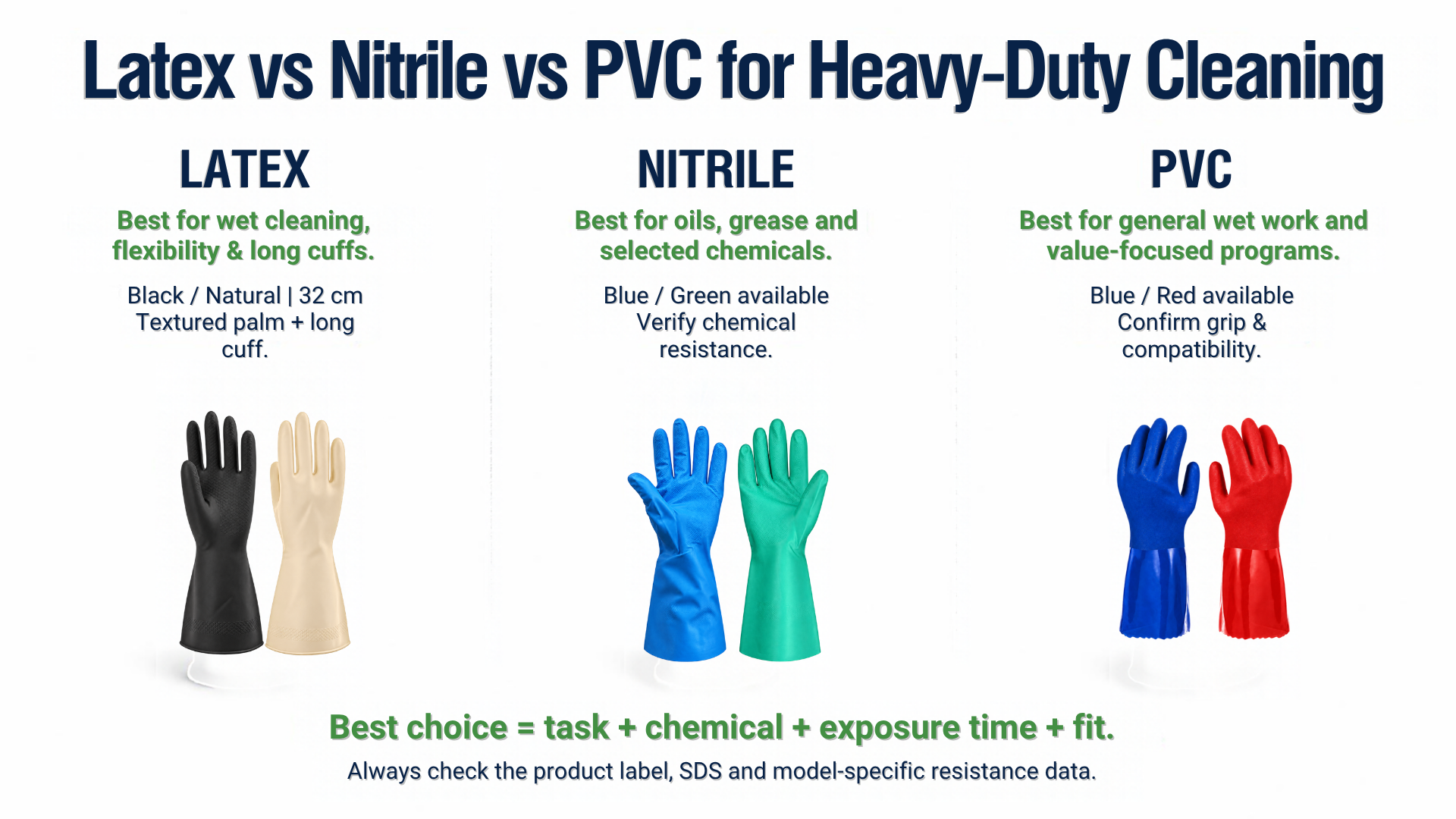
The material name alone does not prove protection. OSHA’s Personal Protective Equipment guide says chemical-glove selection must be based on the chemicals encountered, chemical resistance and the physical properties of the glove material. Model-specific data therefore matters more than a generic material claim.
What Does Chemical Resistance Mean for Cleaning Gloves?
Chemical resistance is not a permanent or universal property. It describes how a specific glove model performs against a specified substance under defined test conditions. Three terms help buyers read supplier data correctly:
- Breakthrough time: how long it takes a chemical to permeate through the glove material under the test conditions.
- Permeation rate: the rate at which the chemical passes through after breakthrough.
- Degradation: physical deterioration such as swelling, softening, hardening, cracking or loss of strength after chemical contact.
These values are specific to the tested glove, chemical, concentration and conditions. A result for a pure chemical should not automatically be applied to a commercial cleaning mixture. The HSE advises using the correct manufacturer’s data because performance can vary between glove products. When mixture data is unavailable, send the complete Safety Data Sheet to the glove supplier and treat any recommendation as application-specific.
For workplace selection, chemical resistance must also be considered with splash versus immersion, temperature, abrasion, puncture risk, dexterity and the area that needs protection. A glove may resist a substance but still be unsuitable if the cuff is too short or the surface becomes slippery during the task.
Are Latex Gloves Good for Heavy-Duty Cleaning?
Reusable latex gloves are a practical choice for many general cleaning tasks. Natural rubber offers elasticity and a secure grip, which can help workers handle brushes, cloths and wet equipment.
For demanding applications, buyers should consider industrial latex gloves with:
- A heavier construction than ordinary household gloves
- Textured palms and fingers
- Longer cuffs
- A choice of lining for different climates
- Verified resistance to the cleaning substances being used
Red Sunshine supplies latex industrial gloves for demanding cleaning and industrial applications, including extended-length options.
Ultimately, the best rubber gloves for heavy-duty cleaning will ensure a more efficient and safe cleaning experience.
Latex is not appropriate for every wearer or chemical. Natural rubber latex may trigger allergic reactions in sensitive users. The UK Health and Safety Executive recommends considering non-latex alternatives when they provide the required protection. Its glove-selection guidance also advises buyers to use manufacturer data.
Are Nitrile Gloves Better for Cleaning Chemicals?
Nitrile is often considered for oil, grease, workshop contamination and selected chemicals. It is also an option for users who need to avoid natural rubber latex.
For heavy-duty cleaning, reusable nitrile gloves are generally more appropriate than thin disposable examination gloves. Useful features include:
- Extended cuffs
- Textured palms and fingers
- Multiple thickness options
- Resistance to abrasion and puncture
- Sizes that provide a secure fit
- Model-specific chemical-resistance documentation
Red Sunshine’s reusable industrial nitrile range includes a 33 cm green nitrile model. Available production specifications include several sizes and thickness options. A 15 mil construction is a common option, while 13, 18 and 22 mil specifications can be discussed for different requirements.
Buyers can review the industrial nitrile glove range and the 33 cm industrial nitrile glove before requesting samples.
Nitrile should not be described as universally chemical-proof. Temperature, concentration, exposure time and glove thickness all affect performance.
How to Choose the Best Rubber Gloves for Heavy-Duty Cleaning
1. Identify Every Chemical
List each detergent, disinfectant, degreaser or solvent, including its concentration. Check the product label and Section 8 of the Safety Data Sheet for PPE recommendations.
2. Define the Type of Contact
Determine whether exposure involves occasional splashes, repeated surface contact or immersion. A glove suitable for brief splashes may not be suitable for prolonged contact.
3. Request Chemical-Resistance Data
Ask the supplier for available data on breakthrough time, permeation, degradation, penetration and tested concentration. Confirm the test method and recommended use conditions.
The HSE explains that gloves can fail through permeation, penetration or degradation. It also states that no glove material offers unlimited resistance to every chemical or mixture. Review the HSE’s guidance for chemical protective gloves alongside the cleaning-product documentation.
4. Select the Appropriate Thickness
A thicker glove may offer more durability, but thickness cannot compensate for an incompatible material. Excessive thickness may also reduce finger movement. Compare suitable thicknesses during the sample stage.
5. Choose the Right Cuff Length
Short gloves may work for controlled splash exposure. Long cuffs provide more coverage when workers clean deep containers, toilets, machinery or vertical surfaces.
Red Sunshine’s glove portfolio includes lengths from approximately 26 cm to 55 cm. Available options include standard household lengths, extended household gloves and long industrial latex gloves.
6. Test Grip Under Real Working Conditions
A glove that feels secure when dry may become slippery around water, detergent or oil. Test samples with the actual tools used in the workplace. Palm and finger texturing should be evaluated under realistic conditions.
7. Confirm the Fit
Gloves that are too tight can restrict movement and place additional stress on the material. Loose gloves may reduce control, slide during use or allow liquid to enter through the cuff.
Use a model-specific size chart and test a size mix before placing a bulk order. Red Sunshine’s rubber glove sizing guide explains how to measure palm width and evaluate fit.
Recommended Glove Specifications by Cleaning Task
| Application | Recommended Starting Specification | What to Verify |
|---|---|---|
| Commercial kitchen cleaning | Reusable latex or nitrile glove with wet grip and extended cuff | Degreaser compatibility and food-area requirements |
| Bathroom sanitation | Long-cuff latex, nitrile or PVC glove | Toilet cleaner, descaler, bleach and disinfectant compatibility |
| Hotel and facility cleaning | Flexible reusable glove with textured palm | Comfort during extended wear and color coding by zone |
| Automotive cleaning | Heavy-duty nitrile glove | Oil, degreaser, solvent and abrasion exposure |
| Industrial equipment cleaning | Task-specific industrial latex, nitrile or specialist glove | Chemical permeation, abrasion, puncture and immersion |
| Healthcare environmental cleaning | Reusable rubber or chemical-resistant glove according to protocol | Facility rules, SDS, contamination control and disinfectant label |
| Household retail product | Comfortable reusable glove with clear sizing and retail packaging | Consumer fit, grip, color, lining and packaging information |
In its guidance for environmental cleaning in global healthcare facilities, CDC identifies reusable rubber gloves for several cleaning situations. It also says the Safety Data Sheet should determine the PPE used when preparing cleaning products and solutions. See the CDC’s environmental-cleaning guidance for that healthcare-specific context.
Reusable or Disposable Gloves for Heavy-Duty Cleaning?
Reusable gloves are usually the better starting point for extended or abrasive cleaning because they can provide greater thickness, longer cuffs and stronger grip patterns.
Disposable gloves remain useful for short tasks, frequent changes and contamination-control procedures. A thin disposable glove should not be assumed to replace a reusable industrial glove during immersion, prolonged chemical contact or abrasive cleaning. Compare risk, replacement frequency and cost per task rather than price per pair alone.
What Should B2B Buyers Ask a Glove Manufacturer?
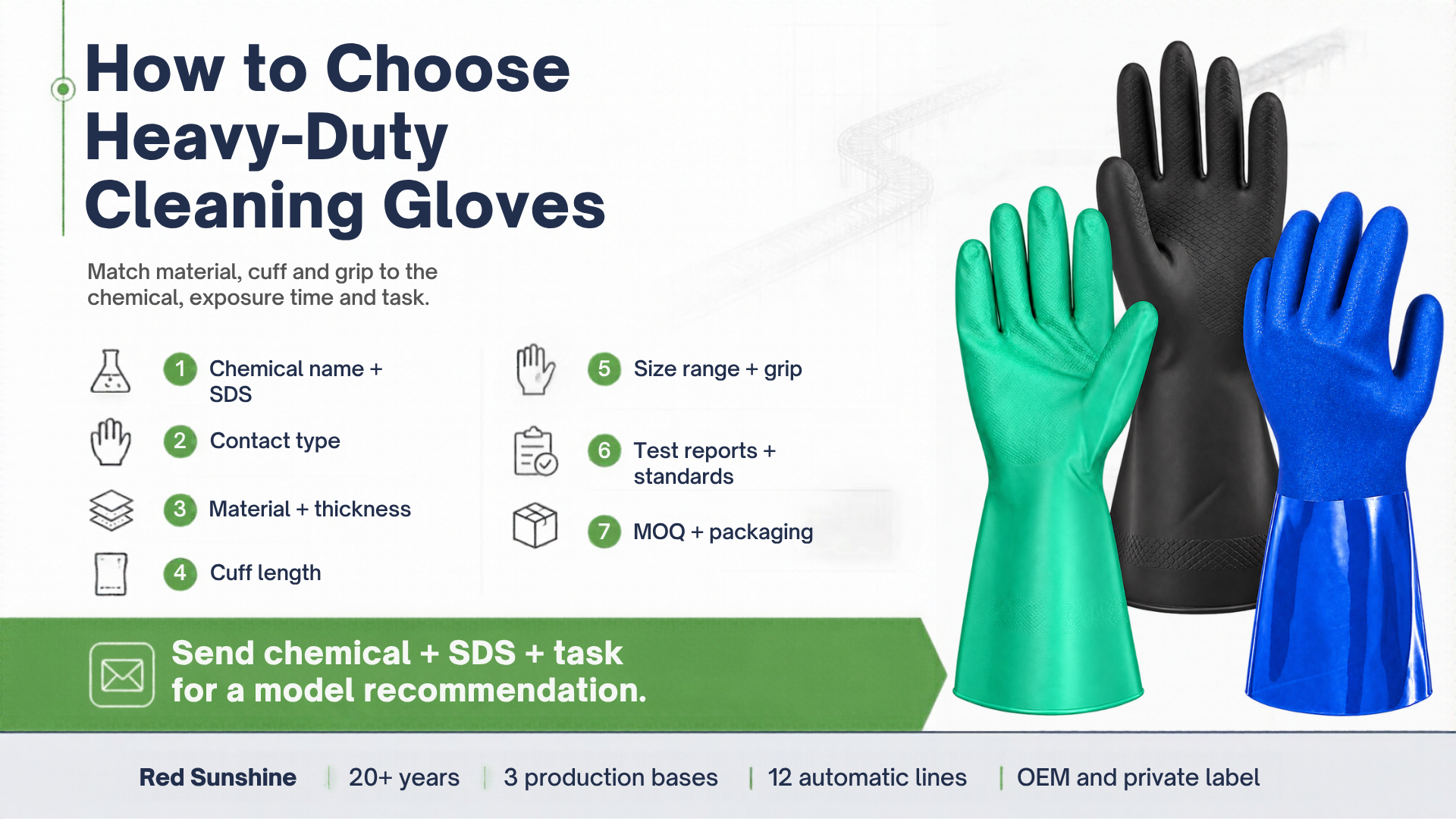
A professional inquiry should include more than a request for “the best heavy-duty glove.” Send the manufacturer the following information:
- Cleaning-product names and Safety Data Sheets
- Concentration and working temperature
- Splash, repeated-contact or immersion conditions
- Required cuff length
- Required sizes and size distribution
- Preferred material and any latex restrictions
- Wet, dry or oily grip conditions
- Required thickness or durability level
- Lined or unlined preference
- Applicable certification and testing requirements
- Expected order quantity
- Retail, industrial or e-commerce packaging format
- Logo, barcode and private-label requirements
- Destination market and delivery schedule
Why Source Heavy-Duty Cleaning Gloves from Red Sunshine?
Guangzhou Red Sunshine has focused on rubber glove manufacturing and export for more than 20 years. The company operates through production bases in Foshan, Guangxi and Hebei, with 12 automatic production lines and more than 300 employees.
Its product range includes latex, nitrile and PVC household and industrial gloves. Depending on the product, buyers can customize:
- Glove material and style
- Length from approximately 26 cm to 55 cm
- Thickness or product weight
- More than 10 color options
- Unlined, sprayed-lining or flock-lined constructions
- Size combinations
- Logo printing
- Retail bags, boxes, barcodes and instruction cards
Contact Red Sunshine for a selection of the best rubber gloves for heavy-duty cleaning, tailored to your specific needs.
Red Sunshine uses a six-stage internal quality-control process covering production inspection, packaging inspection, carton-weight checks, pre-shipment sampling and retained samples.
The company also provides private-label glove manufacturing, packaging design assistance and sampling. Production normally takes around 30–50 days, depending on specifications, quantity and scheduling.
Certifications and test reports vary by factory, product and market. Buyers should review the glove certification page and request current documents for the exact glove model before placing an order.
Common Mistakes When Buying Heavy-Duty Cleaning Gloves
Choosing by Material Name Alone
“Nitrile,” “latex” or “PVC” is only the starting point. Formulation, thickness, lining, surface treatment and construction can change performance. Ask for data tied to the exact model, not only a generic material chart.
Treating “Chemical-Resistant” as “Chemical-Proof”
Chemical resistance has limits. Breakthrough time and degradation can change with concentration, heat, mixtures and longer contact. Avoid absolute claims and define the intended conditions before approving a glove.
Ignoring Contact Type and Cuff Coverage
A short glove may manage controlled splashes but leave the wrist exposed during immersion or overhead cleaning. Match cuff length to the direction and depth of likely exposure, and make sure liquid cannot readily enter through the opening.
Approving a Bulk Order Without a Task Trial
Test samples with the actual detergent, tools, surfaces and working duration. Include multiple hand sizes and record grip, comfort, cuff stability, visible degradation and replacement frequency. A short documented trial gives procurement teams better evidence than appearance alone.
Frequently Asked Questions
What Type of Rubber Glove Is Best for Heavy-Duty Cleaning?
A reusable latex, nitrile, neoprene or PVC glove may be suitable. The best material depends on the chemical, concentration, contact time, temperature and physical demands of the task. Verify compatibility before purchase.
Are Thicker Rubber Gloves Always Better?
No. Thickness may improve physical durability, but it does not make an incompatible material safe. A very thick glove may also reduce dexterity. Buyers need to balance chemical resistance, durability and hand movement.
What Glove Length Is Best for Deep Cleaning?
A 30–35 cm glove can provide more wrist coverage than a short household glove. Tasks involving deep containers, strong splashing or forearm exposure may require 45–55 cm gloves. The correct length depends on the exposure.
Can Nitrile Gloves Be Used with Bleach?
Some nitrile glove models may be suitable for specified bleach solutions, but compatibility depends on concentration, temperature and contact time. Check the disinfectant label, Safety Data Sheet and glove manufacturer’s resistance data.
Can Reusable Rubber Gloves Be Washed and Reused?
Reusable gloves can be used again when the manufacturer permits it and when the glove remains uncontaminated and undamaged. Inspect for swelling, cracking, stickiness, punctures and loss of elasticity before every use.
How Often Should Heavy-Duty Cleaning Gloves Be Replaced?
There is no universal replacement period. Replace gloves when they reach their documented use limit, become contaminated beyond safe cleaning, show degradation or suffer physical damage.
Can Red Sunshine Customize Heavy-Duty Cleaning Gloves?
Yes. Available customization includes material, length, thickness, color, size combinations, lining, logo and packaging. Feasibility and minimum order quantity depend on the product and requested customization.
What Information Should I Provide When Requesting a Quotation?
Provide the intended application, chemical information, length, thickness, size mix, color, packaging, certification requirements, destination market and estimated order quantity. Sending the relevant Safety Data Sheets will improve product matching.
Authoritative Sources Used in This Guide
- OSHA: Dermal Exposure—Control and Prevention
- OSHA: Personal Protective Equipment, OSHA 3151-02R 2023
- UK HSE: Choosing the Right Gloves to Protect Skin
- UK HSE: Selecting Protective Gloves for Work with Chemicals
- CDC: Cleaning Supplies, Equipment and PPE
Choose Heavy-Duty Cleaning Gloves for the Actual Task
The best rubber gloves for heavy-duty cleaning are gloves selected for the actual chemical, exposure time and working environment. Material matters, but so do cuff length, thickness, grip, fit and documented test performance.
Latex gloves can provide flexibility and wet grip for general cleaning. Reusable nitrile gloves are often considered for oils, grease and selected chemical tasks. PVC can serve as an economical latex-free option for general wet work. None of these materials should be treated as universally chemical-resistant.
For a bulk or private-label project, Red Sunshine can provide latex, nitrile and PVC cleaning gloves in different lengths, thicknesses, colors and packaging formats.
Before requesting a quotation, prepare the cleaning-product information, target specification, packaging requirements and destination market.
Request a Glove Recommendation and Quote
With Red Sunshine’s expertise, you can find the best rubber gloves for heavy-duty cleaning suitable for any application.
Make sure to choose the best rubber gloves for heavy-duty cleaning that align with your cleaning protocols and safety requirements.