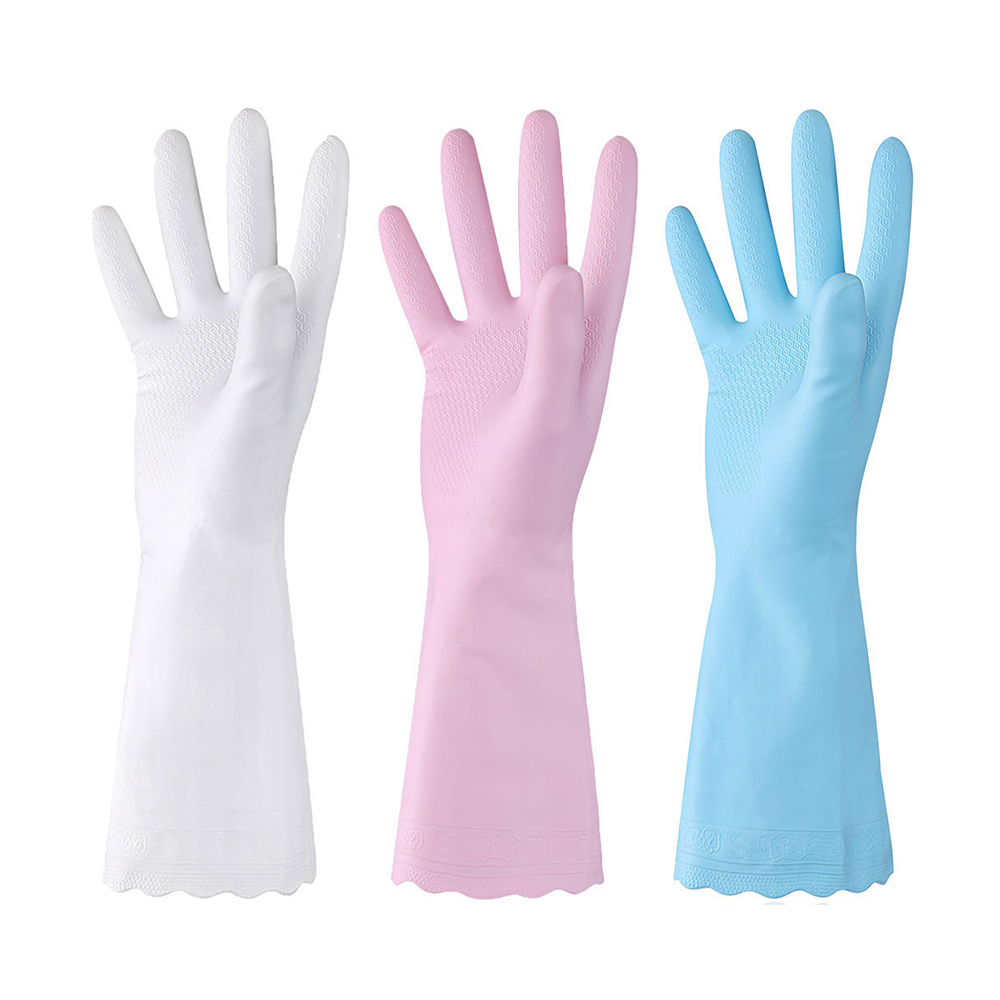
A sample can look convincing on a desk and still fail as a retail item. Silicone dishwashing gloves combine a reusable glove with a cleaning surface, so the buyer has to evaluate fit, bristles, use instructions, packaging and replenishment as one product. The right question is not simply, “Can the supplier make this?” It is, “Can we approve this exact version, explain it accurately to shoppers and receive the same version again?”
Direct answer: Before ordering silicone dishwashing gloves, approve a written specification and a representative preproduction sample. Check the left/right pair, palm-side bristle design, fit, cuff, cleaning feel, proposed claims, retail pack, carton and repeat-order controls. Ask for evidence tied to the finished item and intended market whenever a claim goes beyond ordinary household cleaning.
1. Define the shelf promise before requesting a quote
Two products sold as silicone dishwashing gloves may answer different shopper needs. One has short integrated bristles on the palm and fingers to help scrub dishes. Another has a flatter grip pattern and acts mainly as a hand barrier for wet chores. A buyer who requests only “silicone gloves” may receive both, with quotations that cannot be compared fairly.
Write the intended task in ordinary language: washing plates and cups with household dish liquid, rinsing vegetables, cleaning a sink, or general damp household work. Then state what the pack will actually promise. A bristle glove may offer convenient surface cleaning, but a listing should not imply that it replaces every brush or removes all residues. If a range has multiple uses, specify which are central and which are secondary.
The first supplier brief should name the destination market, sales channel, expected pack format, planned colors, size strategy and opening quantity. It should also distinguish a stock design with private-label packaging from a newly tooled shape. That difference affects sample approval, artwork, ownership questions and the price basis. For silicone dishwashing gloves, the buying brief is the first quality-control document, not a formality after the price is agreed.
2. Check the actual left/right pair and glove geometry
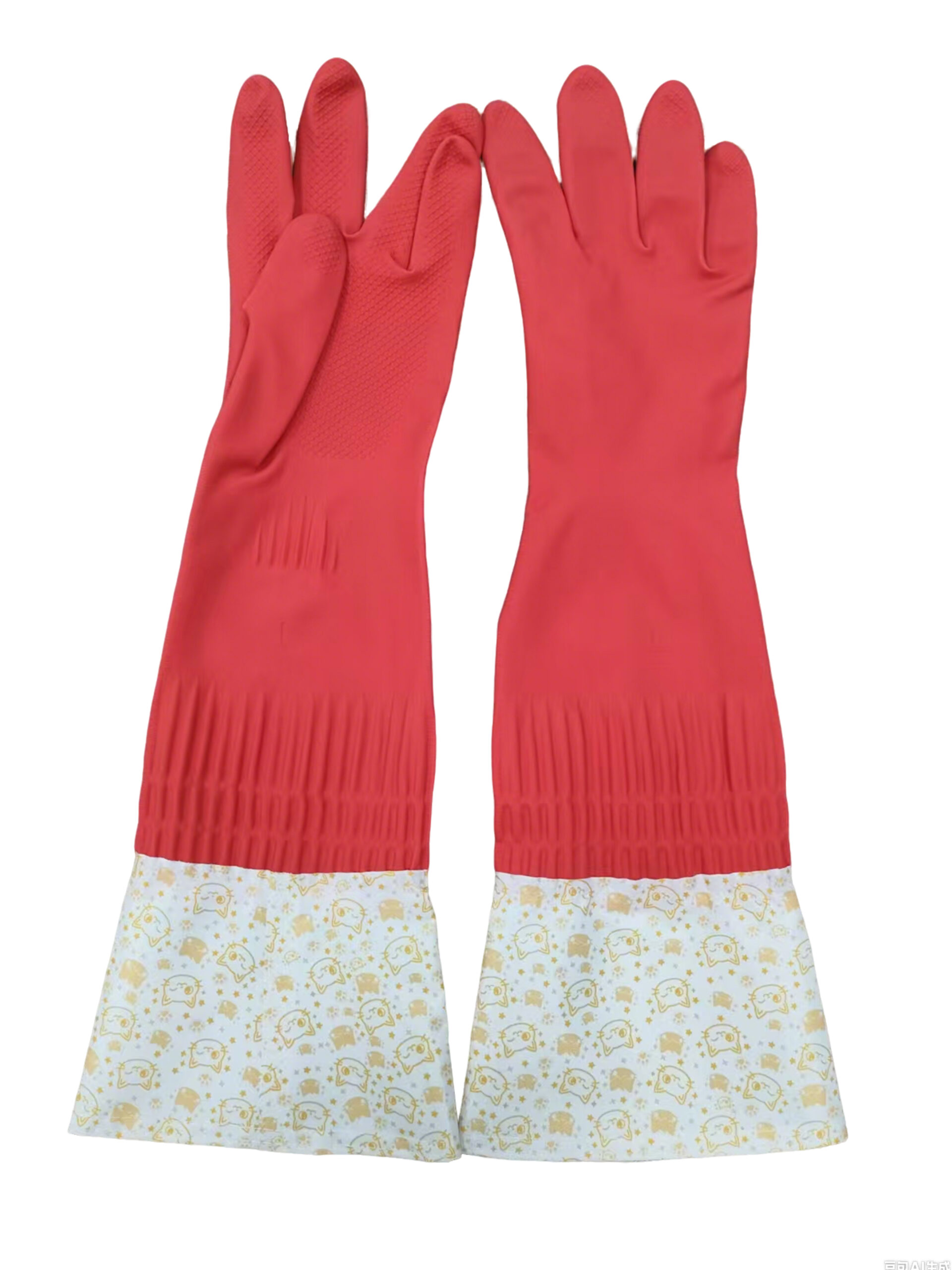
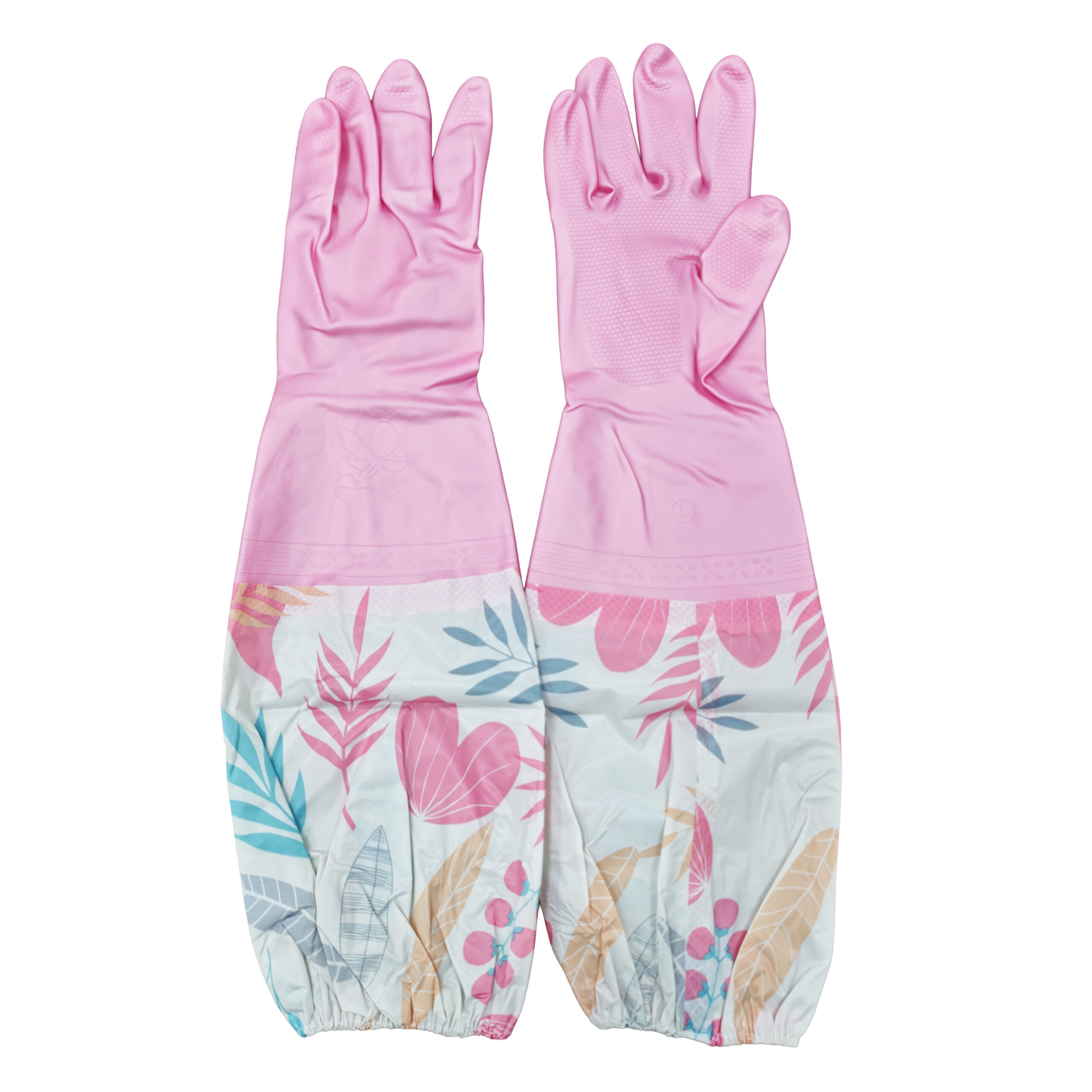
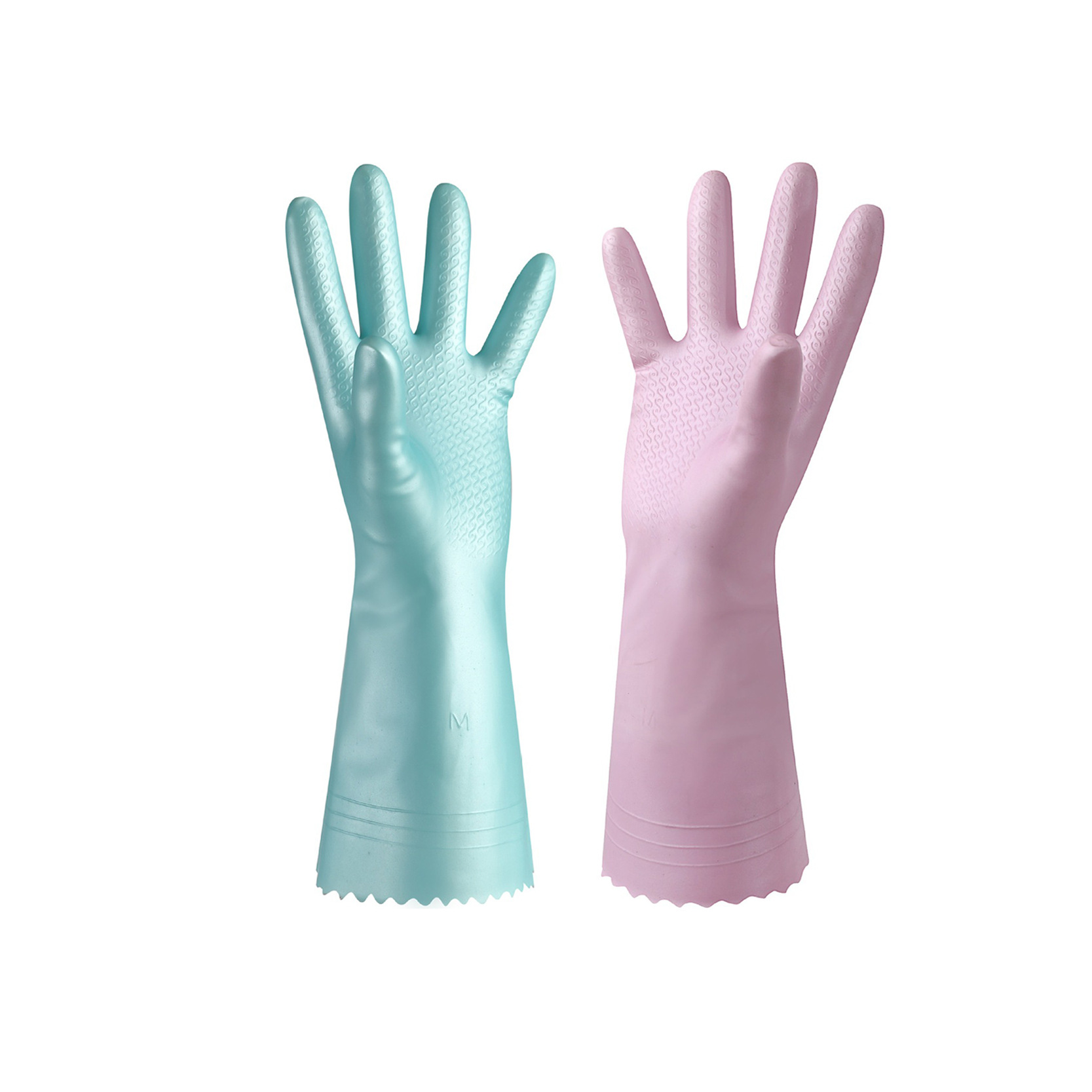
Start with a flat photograph of both gloves and a worn sample. Each glove must have five correctly formed digits: four fingers and a thumb. The pair should contain one left and one right hand, not two gloves from the same mold. Inspect the finger lengths, thumb angle and spaces between fingers from both sides. A product image can hide a narrow opening, a bulky fingertip or an awkward thumb that becomes obvious when a shopper tries it on.
Record total length, palm width, finger dimensions and cuff opening as measurements on the approved sample. Do not accept “one size” as an explanation of fit. Ask who the intended wearer is and test the sample on several hand sizes that match the planned market. A cuff that looks generous in a photo can roll down during wet work; a tight cuff can make removal unpleasant. If the glove has a hanging tab, confirm that it does not pull or tear during normal handling and that it fits the retail display method.
Silicone dishwashing gloves are sold as a pair, so check symmetry as well as comfort. Put both gloves side by side after use and drying. Compare color, weight and finger shape. A buyer can set reasonable tolerances with the supplier, but should avoid claiming a precise fit range without actual wearer testing. The sample should become a controlled reference for production and incoming inspection.
3. Examine bristle placement, height and feel
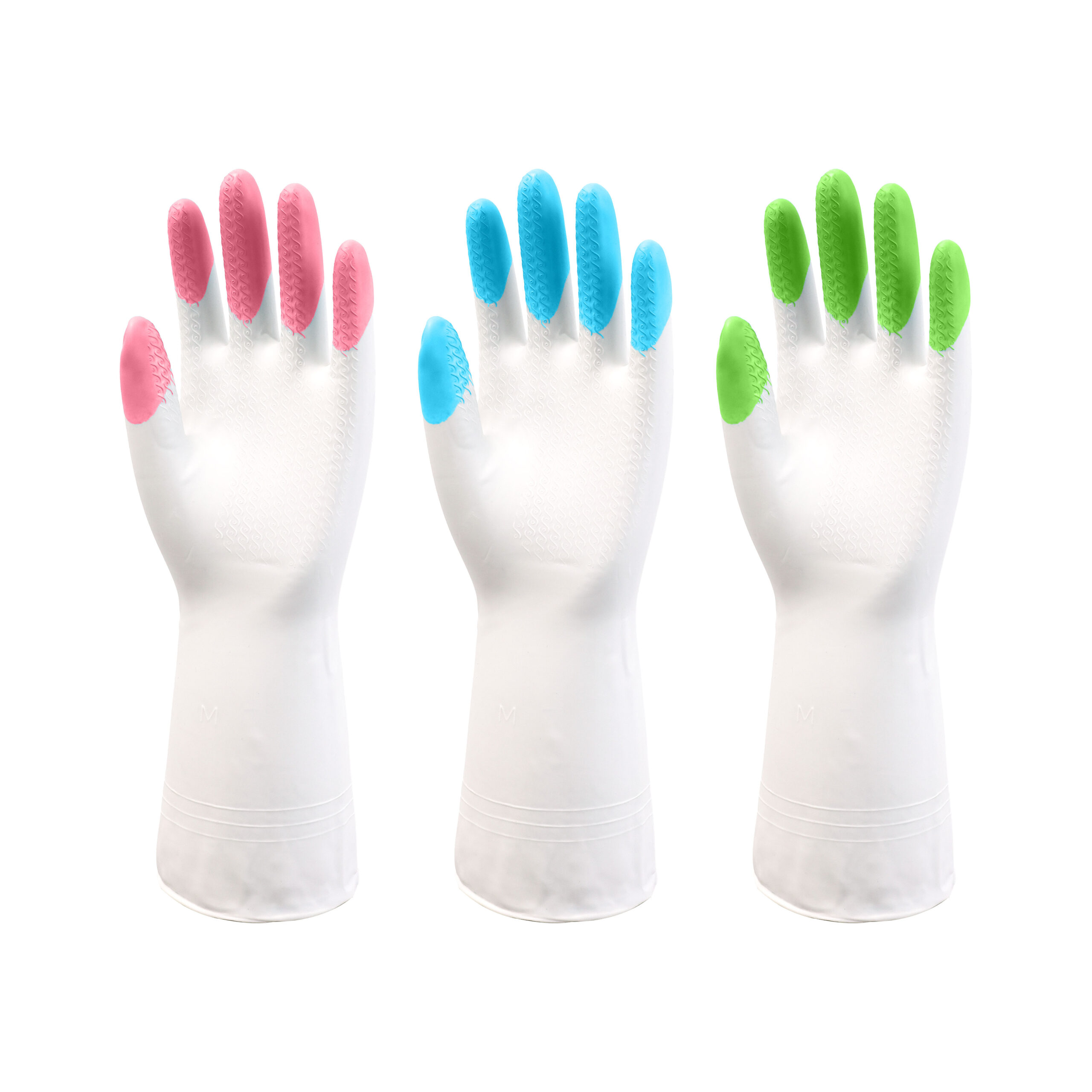
The cleaning surface is often the reason a shopper selects silicone dishwashing gloves. On a bristle model, identify exactly where the bristles begin and end: fingertips, finger pads, palm and, if designed, the thumb. Check that the back of the glove is not accidentally depicted as a second bristle palm. If a different texture appears on the back, describe it separately. Use close photographs and a physical sample rather than a generic mock-up.
Run a short use trial with the same dish liquid and test items for every competing sample. Wash a smooth plate, a curved cup and a utensil with a narrow surface. Note whether bristles bend comfortably, whether the palm reaches the item, and whether residue remains trapped between bristles after rinsing. A test on one smooth plate cannot prove broad cleaning performance. Ask the supplier to define which bristle features are controlled in production, such as layout, height range or visual defects, and which variations are inherent to the molding process.
Check bristle edges and attachment by flexing the palm and finger sections repeatedly by hand. Look for torn or missing projections, sharp flash, bubbles and uneven density. Avoid declaring a universal “best” bristle length: the useful pattern depends on whether the range is aimed at light dishwashing, kitchen surfaces or other chores. The commercial test is whether the chosen design works for the advertised task and stays consistent across the approved sample and delivered batch.
4. Separate material identity from performance claims
“Silicone” tells a buyer the broad material family; it does not by itself establish that the finished glove is suitable for every heat level, cleaning chemical or food-contact use. Request the material description and intended-use statement for the finished item, including pigments and any added components. Ask what documents the supplier can provide for the destination market and whether the documents identify the product or merely a raw-material grade.
Some search results ask, “Are silicone dishwashing gloves safe?” The useful B2B answer is conditional. For routine dishwashing, evaluate the finished design and the cleaning instructions. If the package claims direct food contact, identify the intended contact conditions and obtain applicable evidence. The European Commission’s food-contact overview states that articles intended to contact food in the EU must meet the applicable framework and good manufacturing practice requirements; FDA consumer guidance explains that US food-contact substances require appropriate authorization for their intended use. Neither source makes every silicone glove automatically compliant.
Likewise, a hot-water dishwashing scene is not proof of oven-mitt performance. Do not transfer a heat-resistance number from a different silicone kitchen product. If the proposed label says “dishwasher safe,” “food safe” or “heat resistant,” ask for evidence on the finished glove under the stated conditions. If evidence is unavailable, keep the claim narrow or omit it. This protects the buyer from building a retail promise around a supplier adjective.
5. Test cleaning, drying and storage as a shopper would
Reusable silicone dishwashing gloves need after-use instructions that a shopper can follow. During sample review, use the gloves, rinse both sides, inspect between bristles, and let them dry in the position that the packaging recommends. Observe whether water remains in the fingers or cuff, whether the bristles retain debris, and whether the surface stays easy to inspect. Record observations rather than promising that the glove is “hygienic” or “odor free” in all households.
For silicone dishwashing gloves sold in a family cleaning range, use instructions should also set boundaries. They are not a substitute for task-specific PPE when handling concentrated chemicals, sharp objects or high heat. Buyers should consider a simple pictogram or concise warning where the local market expects one. The best wording is specific to the design and evidence, with translations checked by someone who understands the destination market.
6. Compare silicone dishwashing gloves samples with an approval sheet
A single attractive sample gives little protection against a different production lot. Create a simple approval sheet that captures the item code, sample date, material and color description, dimensions, weight basis, bristle layout, cuff design, packaging revision and approved photos. Keep one sealed reference sample for the buyer and one for the supplier. If several colors are planned, approve each finished color or establish a documented color standard rather than assuming the same pigment behaves identically in every batch.
For a meaningful comparison, give each supplier the same brief and the same test tasks. Ask for a production-representative sample, not only a sales-room prototype. Confirm whether the sample uses the same mold, material, color and finishing route as the proposed bulk order. If it does not, list the differences and require a final preproduction sample before release. This is especially relevant when silicone dishwashing gloves move from a stock design to a custom logo, color or hanging-pack format.
7. Price the whole retail unit, not just the glove
The unit price for silicone dishwashing gloves is only one part of the landed retail decision. Ask whether the quote is per glove, per pair or per packed retail unit. Clarify whether it includes the hanging card, insert, polybag, carton, labels, tooling and any printing. A lower quote can become higher once artwork, color changes, separate sizes and carton configuration are included.
MOQ should be requested by exact variation. An existing mold in a standard color may have a different minimum from a new color or new mold. A private-label card may have its own print minimum even when the glove is unchanged. Ask the supplier to show the minimum by SKU, color, size and package format, plus the conditions for combining variants in one order. Do not publish a fixed MOQ, sample time or lead time until the supplier confirms those conditions for the current project.
Build a comparison table from the same assumptions: quantity, finished specification, pack, destination, trade term and shipment window. Include one-time development or tooling costs as separate lines. Ask who owns the mold or artwork and what happens if the design changes. For importers, carton dimensions and gross weight matter because freight and warehouse handling can alter the economics of an apparently inexpensive kitchen item.
| Approval item | What to request | Why it matters |
|---|---|---|
| Finished pair | Left/right photos, measurements and approved sample | Prevents an attractive but poorly fitting SKU |
| Cleaning surface | Palm and finger bristle map, defect examples | Keeps product promise and production aligned |
| Claims | Market-specific evidence for any food-contact, heat or wash claim | Prevents unsupported retail copy |
| Retail unit | Artwork proof, barcode, pack contents and seal | Avoids listing and shelf errors |
| Order terms | MOQ by variation, tooling, lead time and trade term | Makes quotes comparable |
| Repeat supply | Change-control and retained sample plan | Reduces batch-to-batch surprises |
8. Make packaging and listing data part of sample approval
The retail pack is what shoppers and warehouse teams see first. For silicone dishwashing gloves, check that the photo shows the same color, texture and cuff as the delivered item. If the product is sold as a pair, say “one pair” clearly. State the actual size or size approach; do not let a generic “universal fit” claim replace usable measurements. Review care instructions, material description, country-of-origin statement, importer details and required local language with the destination-market compliance team.
Separate each sellable variation in the item master. GS1’s guidance on size and color variations says each size/color combination needs its own GTIN. The buyer should align the final barcode, artwork revision, purchase order and carton label before printing. A color change without an item-master change can create receiving errors even when the gloves themselves are sound.
Avoid broad environmental wording. “Reusable” describes the intended repeated use of the item, but “eco-friendly” or “biodegradable” needs separate support. The US FTC Green Guides summary cautions against broad unqualified environmental-benefit claims. For a private-label range, this means the packaging copy should say only what the finished product and evidence can support.
9. Control the transition from approved sample to repeat order
Supplier selection is incomplete until the buyer knows how the approved silicone dishwashing gloves will be repeated. Ask who holds the approved sample, which mold and material specification apply, how color and packaging revisions are recorded, and who must approve a substitution. The purchase order should reference the specification version and artwork version, not just a catalog photo. If a supplier proposes a different bristle layout or cuff to meet a delivery date, treat it as a change requiring approval.
For the first order, request a preproduction sample or equivalent production proof, a practical inspection plan and clear photos of the packed retail unit. Agree the stage at which the buyer may stop a run for a material deviation. Ask for carton markings that connect the delivery to the item code and production lot. If a defect is found after receipt, the ability to identify the affected lot is more useful than a generic promise of “strict QC.”
A short RFQ that produces a useful answer
When requesting silicone dishwashing gloves, send a concise but complete brief. Include the target country, channel, intended cleaning tasks, reference image or desired bristle layout, preferred size and color, pack style, artwork status, estimated first order and annual forecast. Ask for a sample of the actual left/right pair and say whether a stock mold is acceptable. State any proposed on-pack claim that requires documentary review.
Ask the supplier to return a line-item response: exact model or mold, sample status, MOQ by variation, quote unit, packaging and tooling costs, production lead-time basis, carton specification, available documents and change-control process. Compare answers side by side. A supplier who asks clarifying questions about intended use, market and pack may give a more reliable answer than one who immediately quotes a universal price.
Frequently asked buyer questions
Are silicone dishwashing gloves safe for washing dishes?
They can be evaluated for ordinary dishwashing, but “safe” is too broad without a defined use. Review the finished item, intended detergents, care instructions and any claim on the pack. Direct food-contact or high-heat claims need separate evidence for the target market.
Do silicone dishwashing gloves replace a sponge?
A bristle design may help scrub some dishes, but performance depends on the bristle layout, the item being cleaned and the user’s method. Run a consistent use trial and avoid promising that it replaces every brush or sponge.
Can silicone dishwashing gloves carry a private label?
The project may use a stock glove with custom packaging or require a custom color, logo or mold. Confirm which option the supplier can actually provide, then approve a production-representative sample, artwork, MOQ and tooling terms before ordering.
What should a retailer check on the first sample?
Check the true left/right five-finger pair, comfort across intended hand sizes, palm-side bristle quality, cuff, cleaning and drying behavior, pack contents, color and barcode. Keep a signed specification and reference sample for repeat orders.
What is the right MOQ for a silicone dishwashing glove program?
There is no responsible universal figure. The minimum may change with mold, color, packaging and order mix. Request a written MOQ for each planned variation and a separate quote for tooling and print work.
The decision to make before placing the order
The best silicone dishwashing gloves for a particular retail program are the ones that match its intended task, shopper fit, evidence-backed claims and replenishment plan. A clean first sample is useful; a controlled finished specification is what makes the purchase repeatable. Buyers can use the checklist above to reject an unclear offer early and to move a viable supplier toward a precise quotation.
To discuss a specific range with Red Sunshine, send the intended market, quantity, preferred design, packaging concept and claim requirements through the silicone household glove category. Ask for an item-specific sample and written terms before approving any shelf copy.