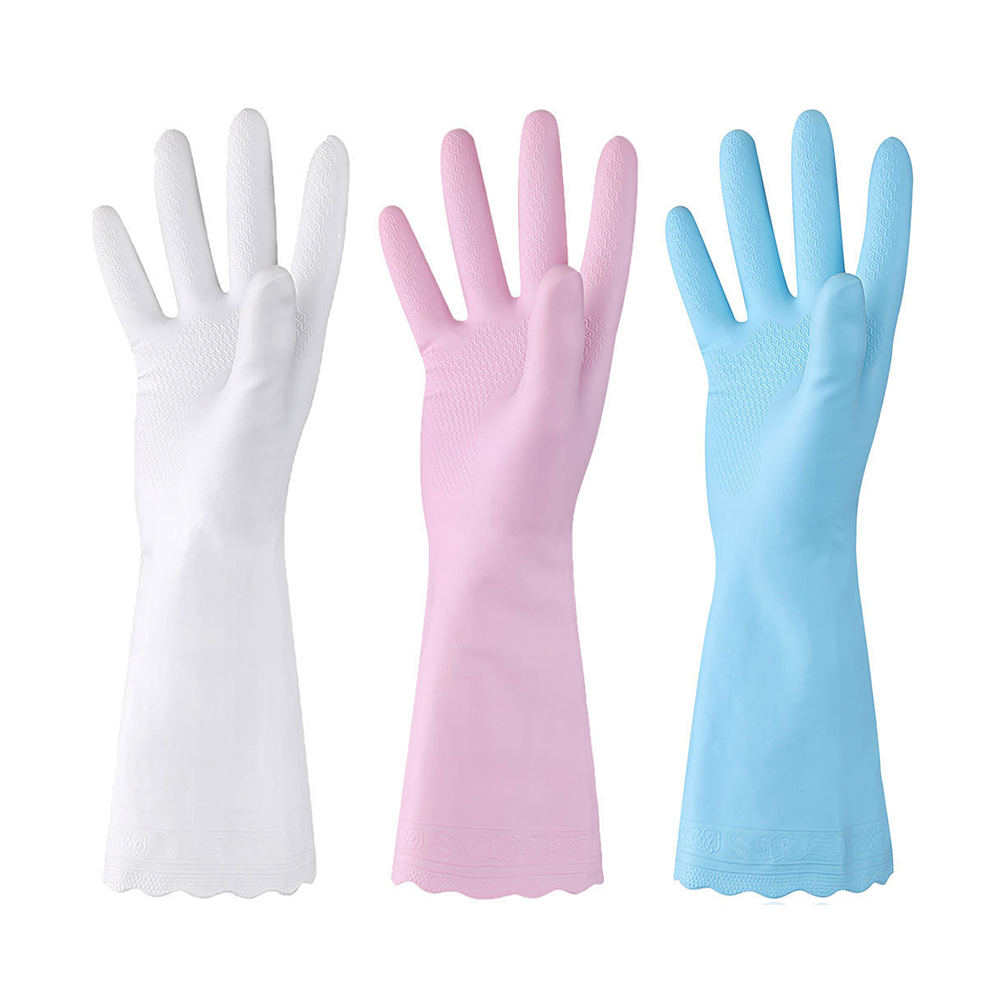
Quick Answer
The best gloves for dishwashing protection are the pair that keeps hands dry in the intended task, fits securely, grips wet dishes and provides suitable cuff coverage. Latex often suits buyers prioritizing flexibility, nitrile suits many natural-rubber-latex-free programs, and PVC can fit value-focused everyday ranges. The finished specification matters more than the material name alone.
In this guide, best means “best matched to a defined user and task,” not a universal winner. A glove that performs well for short household washing may not be the right specification for a restaurant, professional cleaner or private-label retail program.
What Should Buyers Look for in Dishwashing Gloves?
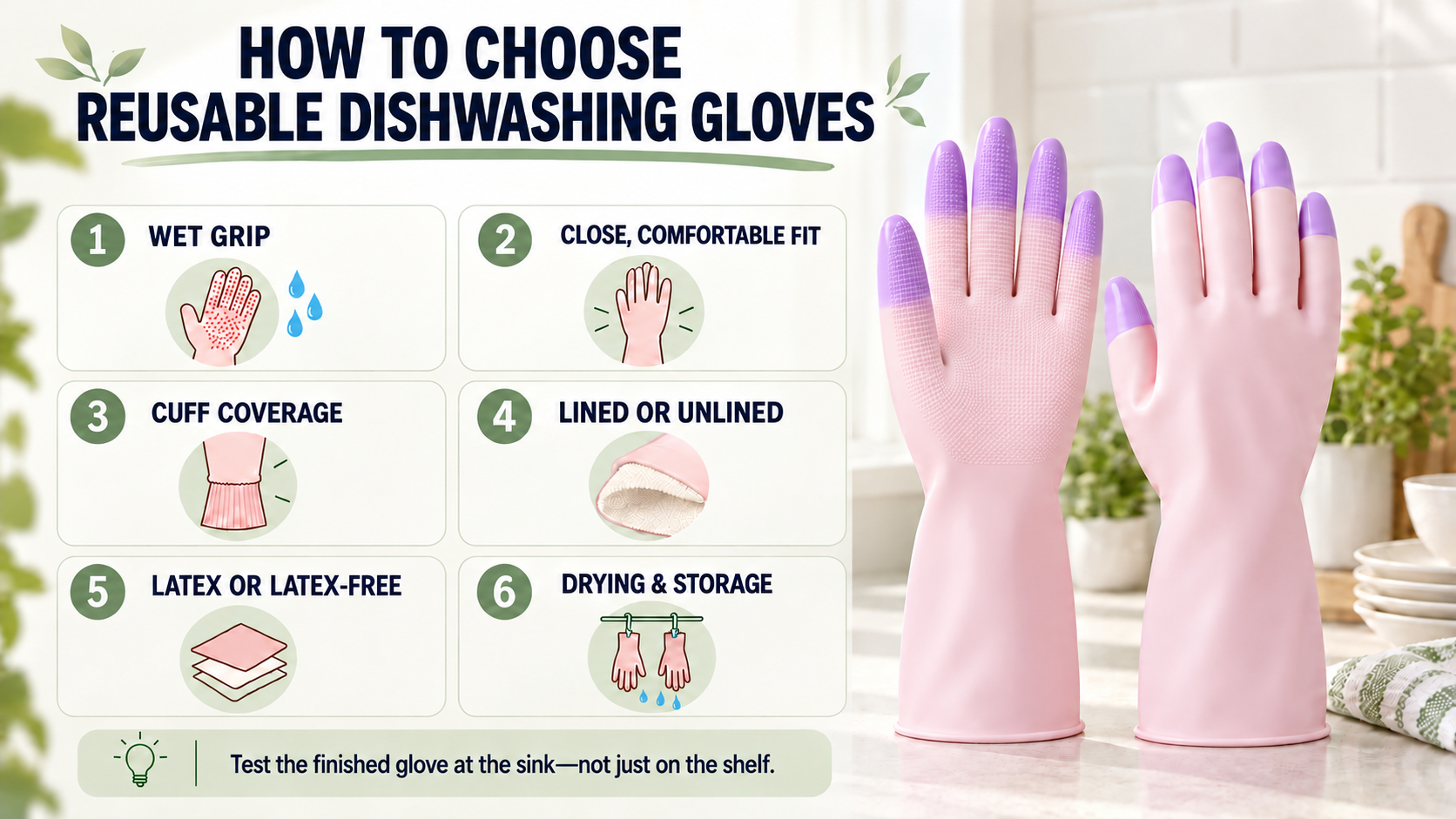
Start with six questions:
- Does the glove maintain a secure grip on wet, soapy dishes?
- Does it fit without loose fingertips or excessive hand pressure?
- Is the cuff long and stable enough for the expected splash level?
- Is the user avoiding natural rubber latex?
- Does the lining and thickness suit the expected wear time?
- Has the finished model been tested under the intended use conditions?
These questions are more useful than asking which material is “best” in isolation.
Why Wear Gloves for Dishwashing?
Dishwashing combines water, detergent, food residue, friction and changing temperatures. An intact reusable household glove can reduce direct contact with this wet environment and support more secure handling of dishes.
The American Academy of Dermatology notes that frequent wet work and detergents can contribute to hand-eczema problems. Its guidance also mentions waterproof gloves and, for some people with eczema-prone hands, clean cotton gloves beneath them. See the American Academy of Dermatology guidance on hand eczema.
Dishwashing gloves still have limits. Ordinary household models should not be presented as cut-proof, puncture-proof, heat-resistant or compatible with every cleaner unless the exact model has evidence supporting that claim. Remove knives and broken glass separately, and evaluate stronger cleaning chemicals against product-specific information.
Latex vs Nitrile vs PVC Dishwashing Gloves at a Glance
| Material | Often a Good Starting Point For | Potential Advantages | Important Limitations |
|---|---|---|---|
| Natural latex | Users prioritizing flexibility and close hand movement | Elastic feel, tactile control and good potential for textured wet grip | Not appropriate for users with natural rubber latex allergy; performance varies by formulation and thickness |
| Nitrile | Buyers seeking a natural-rubber-latex-free household option with a structured feel | Shape retention, distinctive positioning and useful textured-grip designs | May feel less elastic than latex; “latex-free” does not mean universally reaction-free |
| PVC | Everyday wet work and value-focused latex-free retail ranges | Broad color and design options, practical household positioning and cost flexibility | Fit, softness and durability depend strongly on formulation, thickness and construction |
Which Material Is Best for Dishwashing?
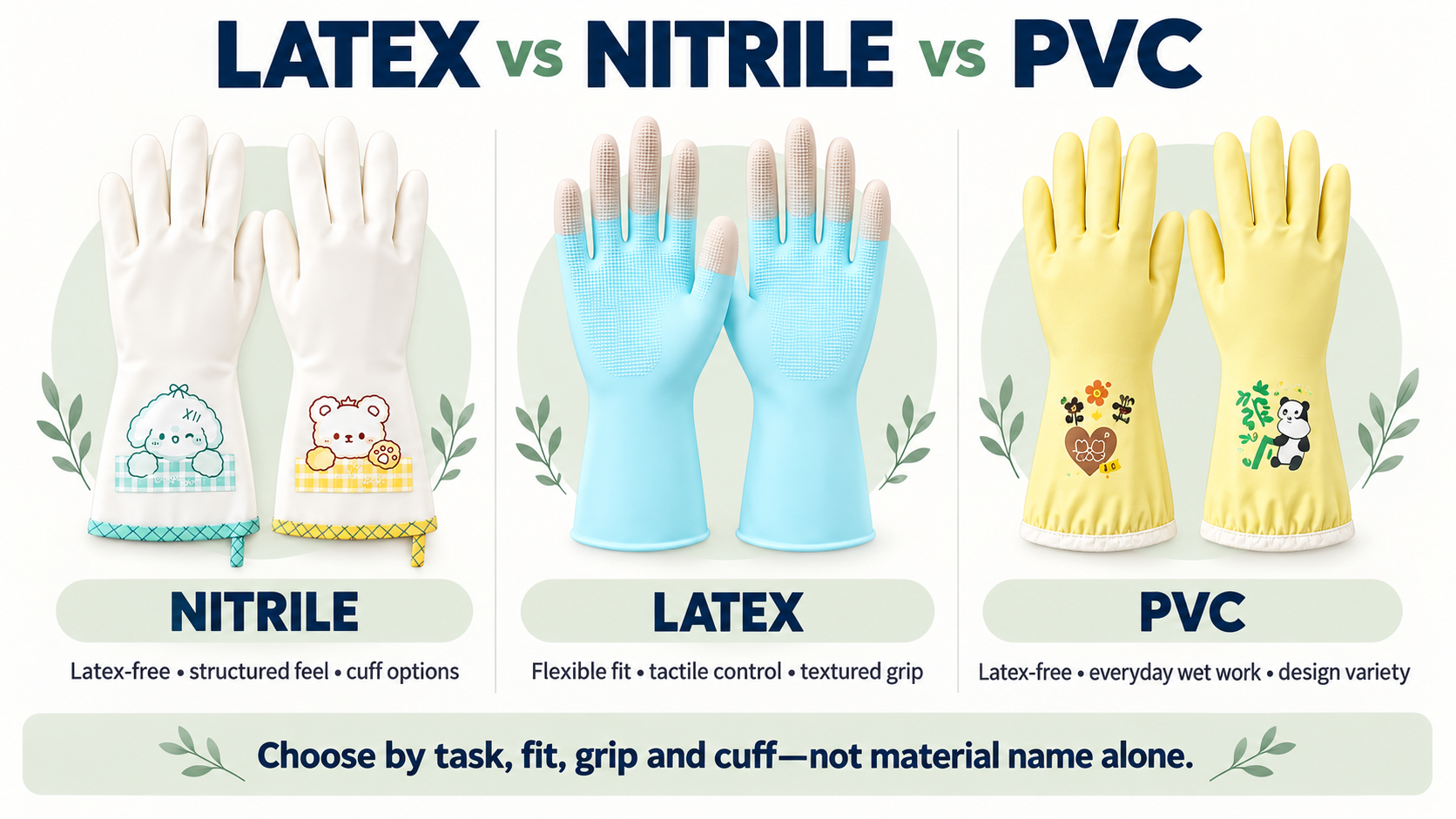
There is no material that is automatically best for every user. Latex is often a strong starting point when flexibility is the priority and latex sensitivity is not a concern. Nitrile may be the better match when a natural-rubber-latex-free material and firmer feel are required. PVC can suit accessible everyday ranges where design variety and value are central.
The final decision should be made using a finished sample, because two gloves made from the same general material can differ in grip, thickness, lining, fit and cuff performance.
Are Latex Gloves Good for Dishwashing?
Reusable natural latex gloves can be a good choice for routine dishwashing when the user does not have a natural rubber latex allergy. Latex elasticity often allows the glove to follow hand movement closely, which may improve control when handling cups, cutlery and irregular cookware.
That does not make every latex glove equally suitable. Buyers should still compare fit, palm texture, thickness, cuff construction, lining, finishing and drying.
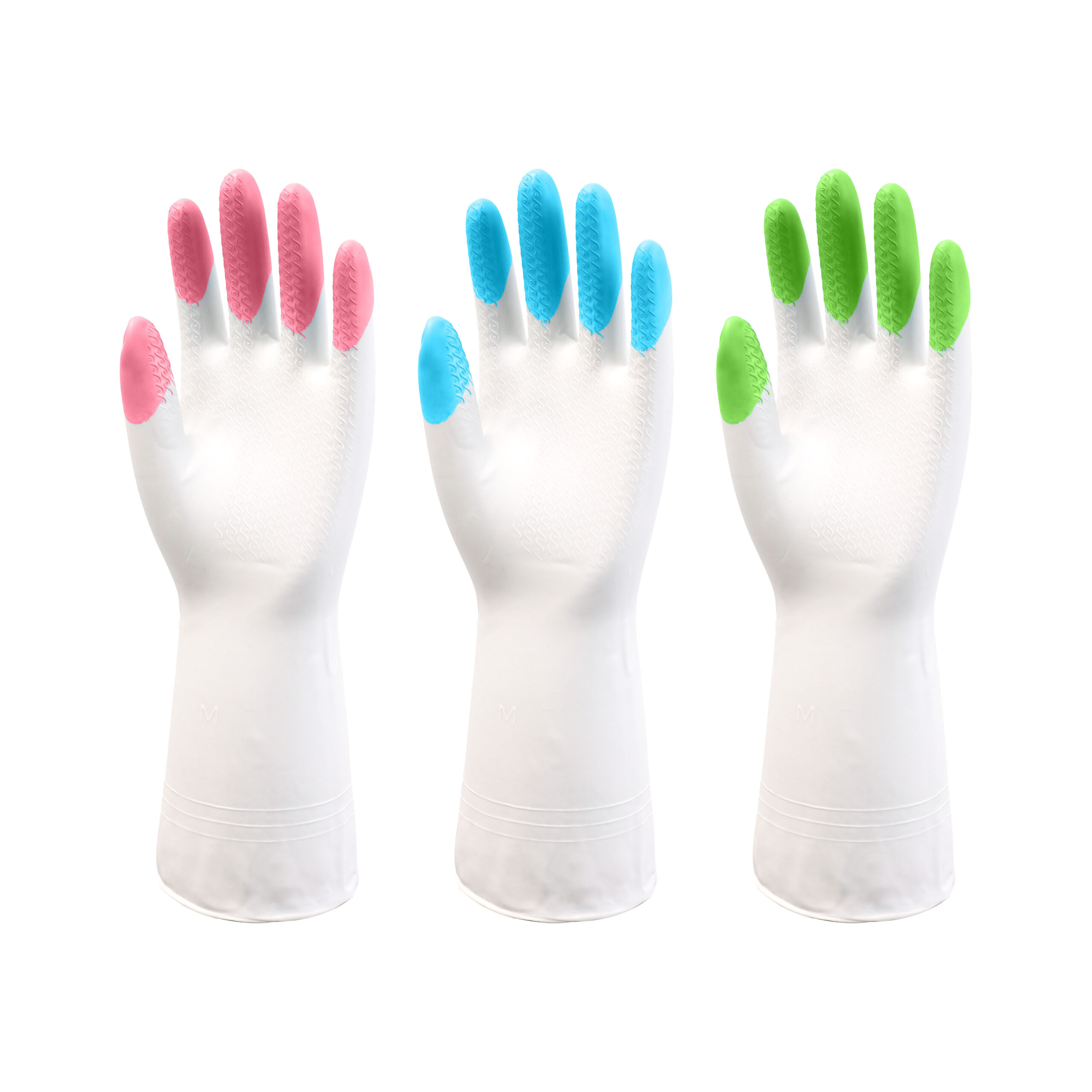
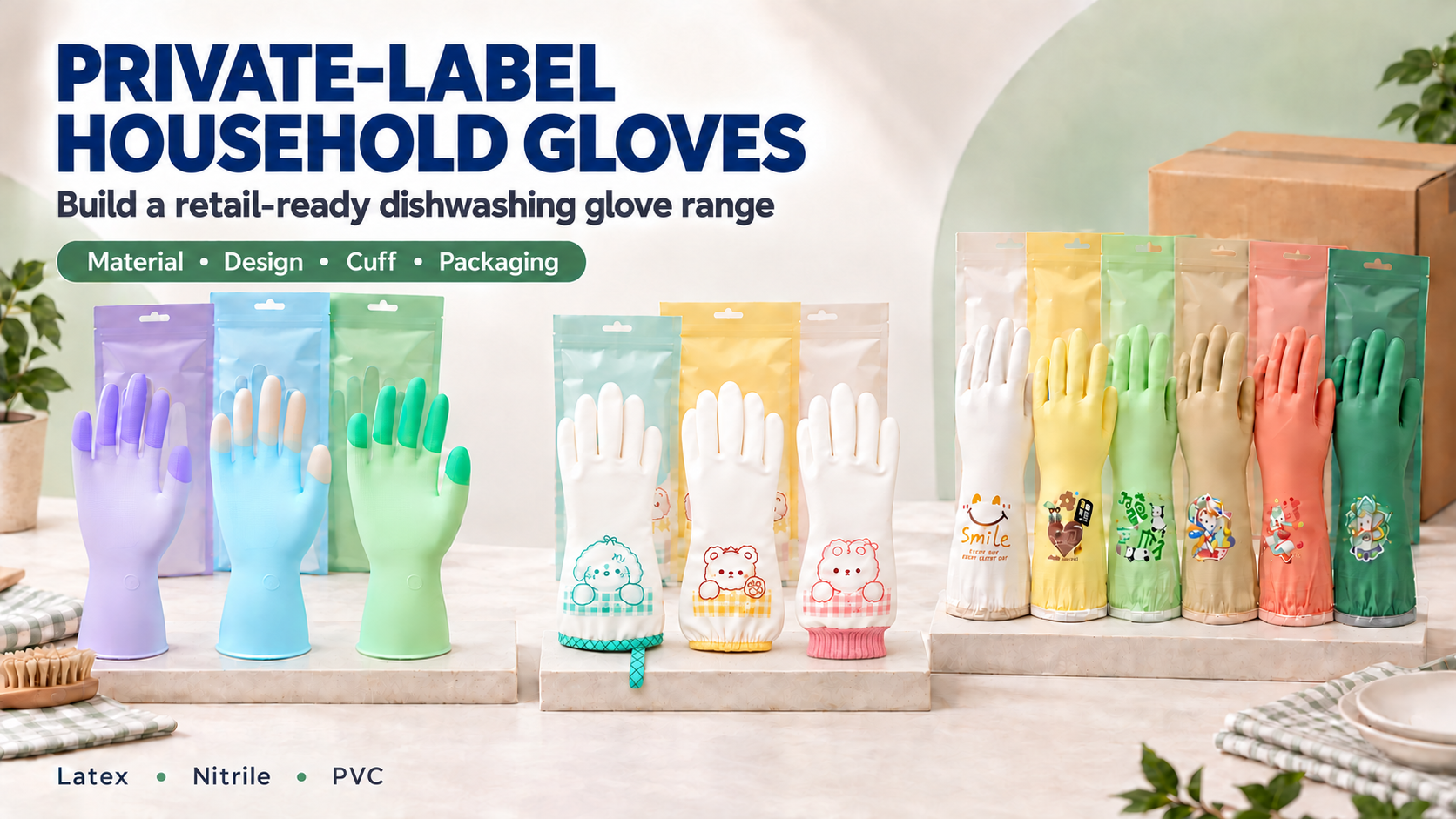
Red Sunshine’s Color-Tip latex household series is available in Vibrant Green, Vibrant Purple and Vibrant Blue design directions. The contrasting fingertips support visual differentiation, while the palm-and-finger texture is designed for wet handling. This series does not include a hanging loop.
Explore Red Sunshine’s reusable latex household gloves.
People with a known or suspected natural rubber latex allergy should avoid natural latex products and seek appropriate guidance. The CDC’s latex resources also emphasize selecting the right glove for the task rather than treating one glove material as universally suitable.
Are Nitrile Gloves Good for Washing Dishes?
Reusable nitrile household gloves can be a suitable choice for dishwashing and kitchen cleanup, especially when the product brief requires a natural-rubber-latex-free material. Nitrile often has a more structured feel than latex, and an appropriate palm texture can support handling of wet or lightly greasy objects.
The Red Sunshine nitrile design featured in this article uses a white nitrile glove body. Green, yellow and red refer to the cuff, hanging loop and printed decoration—not to the main glove color.
The collection includes three cuff constructions:
- A colored plaid-bound cuff with a matching visible hanging loop.
- An elastic-gathered cuff with a concealed white hanging loop.
- A knitted rib cuff with a concealed white hanging loop.
Across three coordinated accent colors, these structures can support nine design combinations while retaining a consistent white-nitrile identity.
Review the nitrile household glove range.
The cuff changes the wearing and storage experience. A knitted cuff may feel more secure, a gathered cuff gives a clean retail silhouette, and a visible loop can make storage easier. Buyers should evaluate the exact cuff during sink trials rather than assuming one construction is best for every consumer.
Nitrile is not indestructible. Sharp utensils may puncture a reusable glove, and suitability for a concentrated cleaner depends on the exact formulation, thickness, temperature and contact time.
Are PVC Gloves Good for Dishwashing?
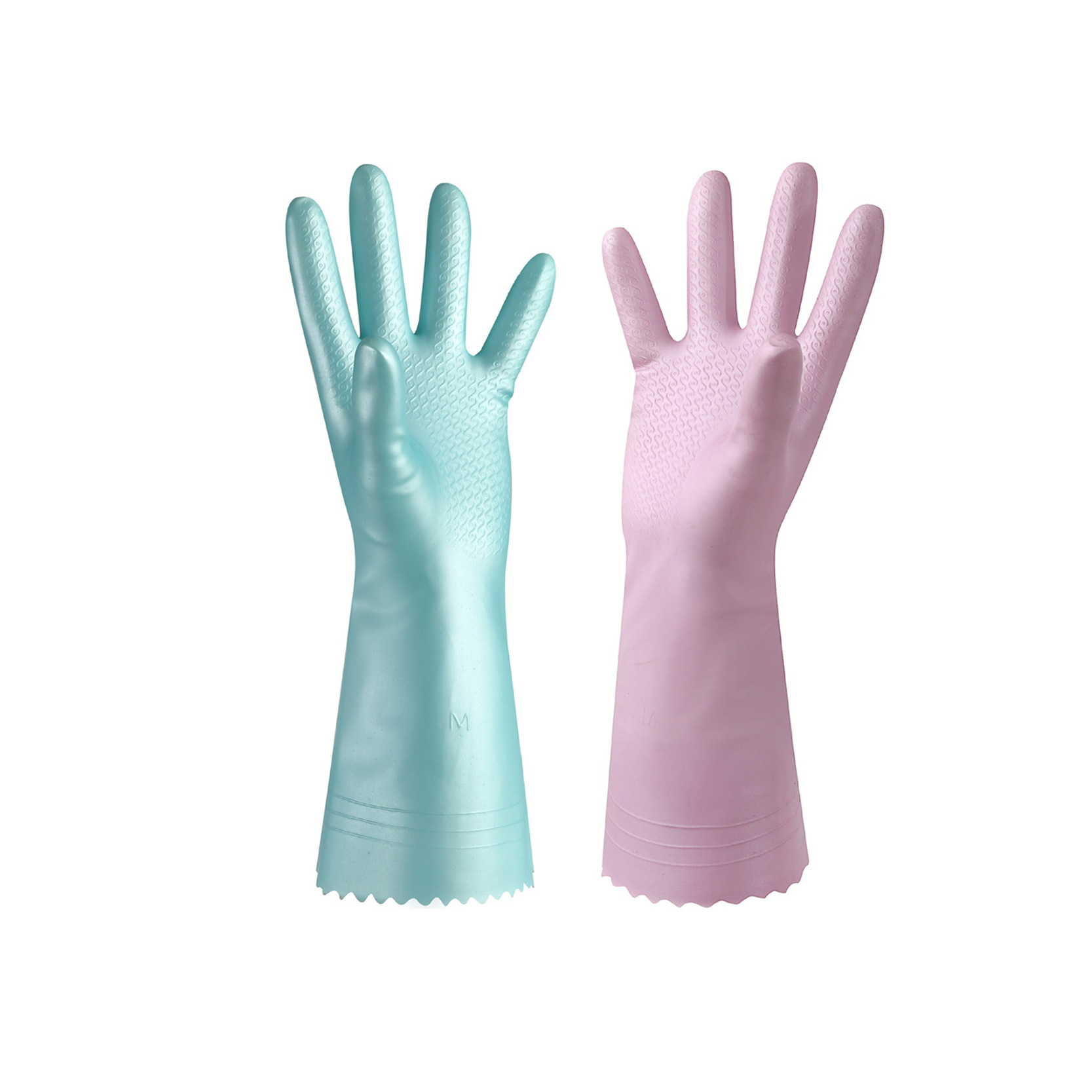
PVC household gloves can be a practical natural-rubber-latex-free option for everyday dishwashing and value-focused retail programs.
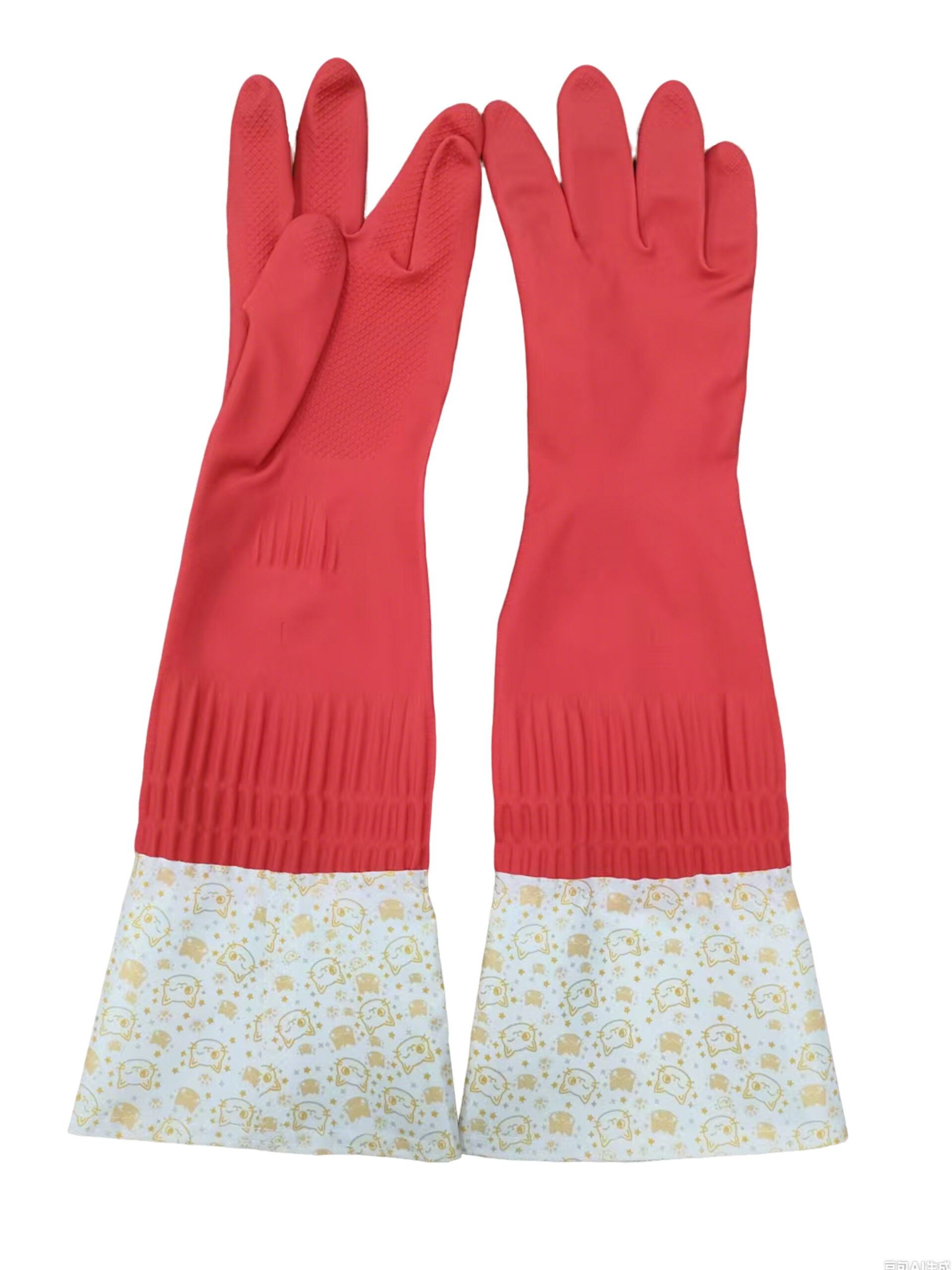
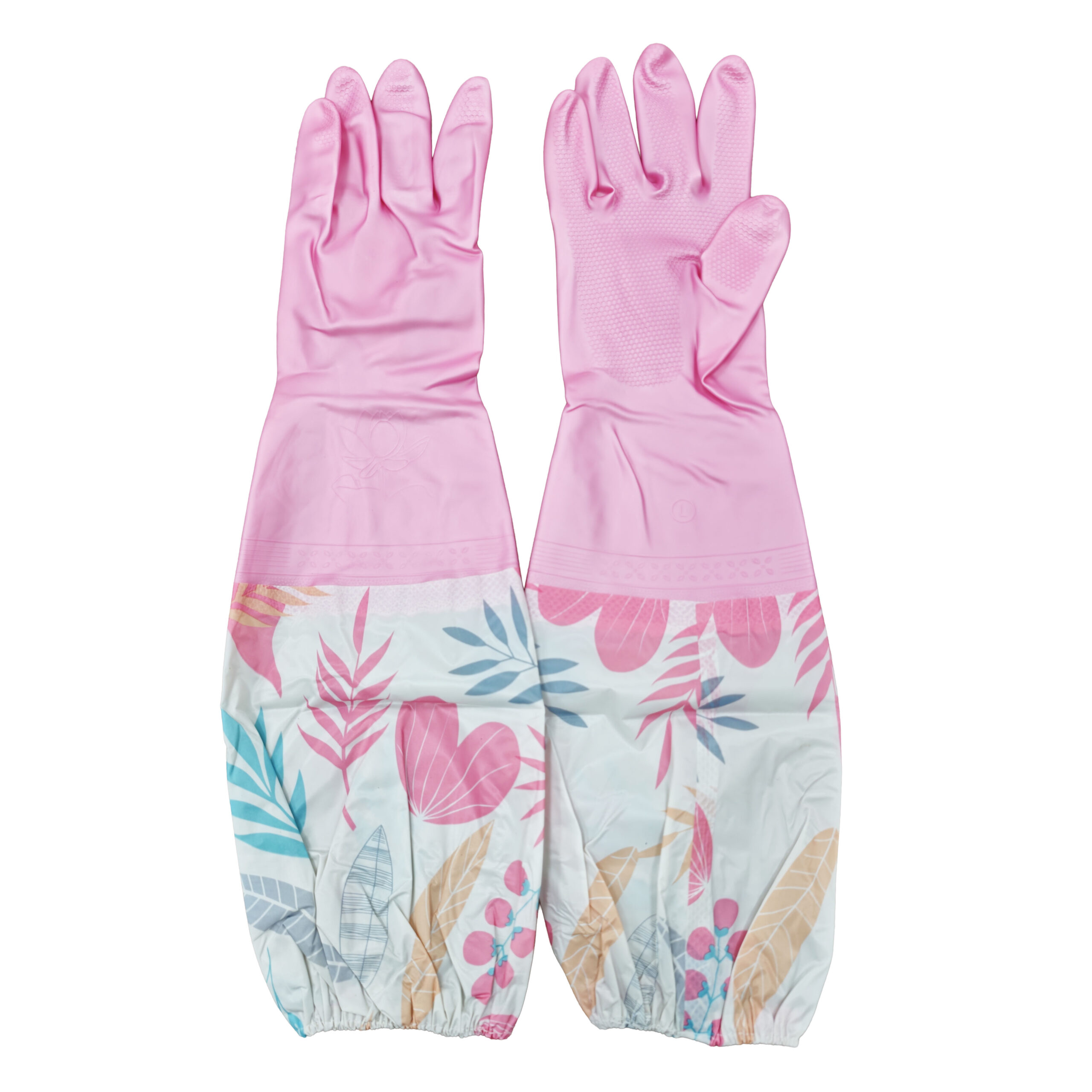
The Red Sunshine PVC collection discussed here includes six color-and-print directions. These gloves use a colored bound cuff with an elastic-gathered finish and a concealed white hanging loop. The assortment includes cream, yellow, light green, beige, coral pink and dark green design directions.
Explore Red Sunshine’s PVC household gloves.
PVC should not be described as automatically more comfortable, durable or protective than another material. Those characteristics depend on the finished formulation, glove thickness, lining, fit and quality control. For stronger cleaners or extended contact, provide the supplier with the cleaner name, concentration, temperature and exposure time.
Seven Features That Often Matter More Than Material Name
1. Secure, Comfortable Fit
Loose fingertips can fold around a glass or catch on small utensils. An overly tight glove can restrict movement and cause fatigue. A useful fit feels close without squeezing the hand.
Product pages should provide clear sizing information. Red Sunshine’s household glove sizing guide can help buyers connect palm measurements with available sizes.
2. Wet Grip
Grip should be assessed with the objects the user actually handles: smooth glasses, ceramic plates, coated cookware, cutlery and plastic containers. A texture that looks prominent in a product image is not a substitute for a wet-use trial.
Avoid describing a glove as “non-slip” as an absolute promise. More precise wording includes “textured for wet grip” or “designed to support handling of wet dishes,” provided the product construction supports it.
3. Cuff Coverage and Stability
A longer cuff gives more wrist and lower-forearm coverage, but length alone does not prevent water entry. The opening, stiffness, fit and wearing angle also affect splash control.
For private-label programs, cuff choices may include smooth cuffs, fabric binding, elastic gathering, knitted ribs and visible or concealed hanging loops.
4. Thickness and Dexterity
A thicker glove may feel more substantial, but extra bulk can reduce control of smaller objects. A thinner glove may provide better touch while offering a different durability profile. Specify thickness or weight together with the intended task, not as a standalone quality claim.
5. Lined or Unlined Interior
A soft lining may improve comfort and donning during longer sessions. An unlined glove may feel more direct and may dry faster. If a separate cotton liner will be worn, the selected size needs enough internal room without becoming loose.
6. Material and Sensitivity Information
Clearly state whether the glove contains natural rubber latex. Nitrile and PVC can be natural-rubber-latex-free, but “latex-free” should not be expanded into unsupported claims such as “allergy-proof” or “hypoallergenic” without appropriate evidence.
7. Drying and Storage
Reusable gloves should be allowed to dry between uses. Hanging loops can support organized storage, but loop placement and cuff construction must be evaluated on the finished product. The Red Sunshine white nitrile series offers visible or concealed loop options, the PVC series uses concealed white loops, and the Color-Tip latex series has no loop.
How to Choose the Best Dishwashing Gloves for a Specific Use
Step 1: Define the User
Identify the wearer: household consumer, restaurant team, cleaner, supermarket customer or e-commerce buyer. Record common hand sizes, wearing duration, lining preferences and any requirement to avoid natural rubber latex.
Step 2: Define the Task
Record the detergent, water temperature, session length, objects being washed and expected splash level. Separate normal dishwashing from drain treatment, oven cleaning and concentrated degreasing; these may require a different glove assessment.
Step 3: Compare Finished Samples
Test more than one size under realistic wet conditions. Check grip, finger control, cuff stability, internal comfort, odor, drying and visible changes after use. For B2B projects, connect every approval to a sample code and written specification.
Step 4: Check Claims and Market Requirements
Marketing language should match available evidence. Terms such as heat-resistant, chemical-resistant, food-contact suitable or hypoallergenic require model- and market-specific support.
For EU consumer sales, the General Product Safety Regulation includes safety, traceability, responsible-economic-operator and distance-selling information requirements. Review the EUR-Lex GPSR summary and confirm obligations for the final SKU and destination.
How Should Reusable Dishwashing Gloves Be Cleaned and Replaced?
Follow the care instructions supplied with the exact glove. A practical routine is to rinse detergent from the exterior while the gloves are still being worn, remove them without leaving them in a damp bundle, and dry both the outside and inside in a ventilated place away from excessive heat and prolonged direct sunlight.
Inspect the gloves before reuse. Replacement is appropriate when the glove leaks, tears, cracks, becomes sticky or stiff, retains an interior odor after drying, loses elasticity or no longer provides stable grip.
If water repeatedly enters through the cuff, first check the size, cuff opening, cuff length and washing technique. If the hands become itchy, red, painful or blistered, stop using the product and seek appropriate medical advice.
What Should Retailers and Importers Put in a Sourcing Brief?
Consumer searches reveal desired benefits, but a purchasing specification needs measurable details. Include:
- Material and construction
- Intended household task
- Length, size range and thickness or weight
- Palm and fingertip texture
- Cuff type and hanging-loop requirement
- Lined or unlined construction
- Color, artwork and logo files
- Pair packaging, barcode and carton requirements
- Destination market and languages
- Applicable product-safety and labeling requirements
- Any chemical or food-contact requirement
- Sample-approval method and quality criteria
- Order quantity, Incoterm and delivery destination
Red Sunshine’s private-label household glove solutions can use this brief to recommend a starting specification. Buyers should confirm quote validity, tariff treatment, documentation and estimated landed cost before approving a launch.
Why Consider Red Sunshine for a Household Glove Program?
Guangzhou Red Sunshine has focused on glove production and export for more than 20 years. Its household glove portfolio includes latex, nitrile and PVC options, with OEM/ODM support for material, size, texture, cuff, color, print and packaging development.
The three ranges featured in this guide create different merchandising routes:
- Color-Tip latex series: Vibrant Green, Vibrant Purple and Vibrant Blue designs without hanging loops.
- White nitrile cartoon series: three accent colors combined with plaid-bound, elastic-gathered or knitted cuff structures.
- Printed PVC series: six color-and-print directions with gathered bound cuffs and concealed white loops.
Buyers can review the household glove manufacturing process and custom OEM/ODM glove services before requesting samples.
Before bulk production, match specifications, certifications and test documents to the exact model, claim and destination market. A report for one glove should not automatically be applied to every product made from the same material.
Frequently Asked Questions
What are the best gloves for dishwashing protection?
The best option is the glove that fits the user and task: secure fit, useful wet grip, suitable cuff coverage and the required material. Latex, nitrile and PVC can all be appropriate. Compare finished samples rather than choosing by material name alone.
Are latex or nitrile gloves better for washing dishes?
Latex often provides a more elastic, close-fitting feel. Nitrile avoids natural rubber latex and may feel more structured. The better choice depends on sensitivity requirements, fit, texture, thickness, cuff and intended wear time.
What are the best latex-free dishwashing gloves?
Reusable nitrile and PVC household gloves are common natural-rubber-latex-free options. Check the complete material declaration and finished construction. “Latex-free” does not by itself establish comfort, chemical suitability or universal allergy safety.
Do dishwashing gloves protect against hot water?
They provide a barrier, but ordinary household gloves should not be treated as heat-resistant unless the exact model has a supported temperature claim. Use comfortably warm water and avoid very hot cookware and steam.
Should dishwashing gloves be lined?
A lining may improve comfort and donning, while an unlined glove may provide a more direct feel and faster drying. The best choice depends on wear time, climate, user preference and sizing.
How long should dishwashing gloves be?
The cuff should cover the wrist and remain above the likely splash line. Deeper sinks and longer washing sessions may benefit from additional coverage, but cuff opening and fit matter as much as stated length.
How often should reusable dishwashing gloves be replaced?
There is no universal replacement schedule. Replace them when they leak, tear, crack, become sticky or stiff, retain odor after drying, lose elasticity or no longer provide stable grip.
Can the same gloves be used for dishes and bathroom cleaning?
Separate, clearly identified pairs are preferable to reduce cross-contamination. Different colors, prints or storage locations can help users keep kitchen and bathroom gloves apart.
Can dishwashing gloves be used for food preparation?
Only when the finished product is suitable for the intended food-contact use and meets destination-market requirements. A glove photographed near food is not proof of food-contact compliance; request model-specific documentation.
Can Red Sunshine make private-label dishwashing gloves?
Yes. Red Sunshine supports OEM/ODM household-glove projects covering material, size, construction, texture, cuff, color, artwork and packaging. Feasibility, minimum order quantity, testing and lead time depend on the approved specification.
Choose the Best Match for the Sink—not the Broadest Claim
The best gloves for dishwashing protection are not defined by one material or one marketing word. They are defined by the user, the sink task and a finished specification that balances wet grip, fit, cuff coverage, comfort, dexterity and care.
Latex can be a strong starting point for flexible fit. Nitrile can suit programs requiring a natural-rubber-latex-free material and structured feel. PVC can support accessible, design-led everyday ranges. In every case, test the finished glove and keep product claims within the evidence available for that exact model.
For a wholesale or private-label project, send Red Sunshine your target material, size range, cuff design, artwork, packaging, destination market and estimated quantity. The team can recommend a starting specification and arrange samples for evaluation.