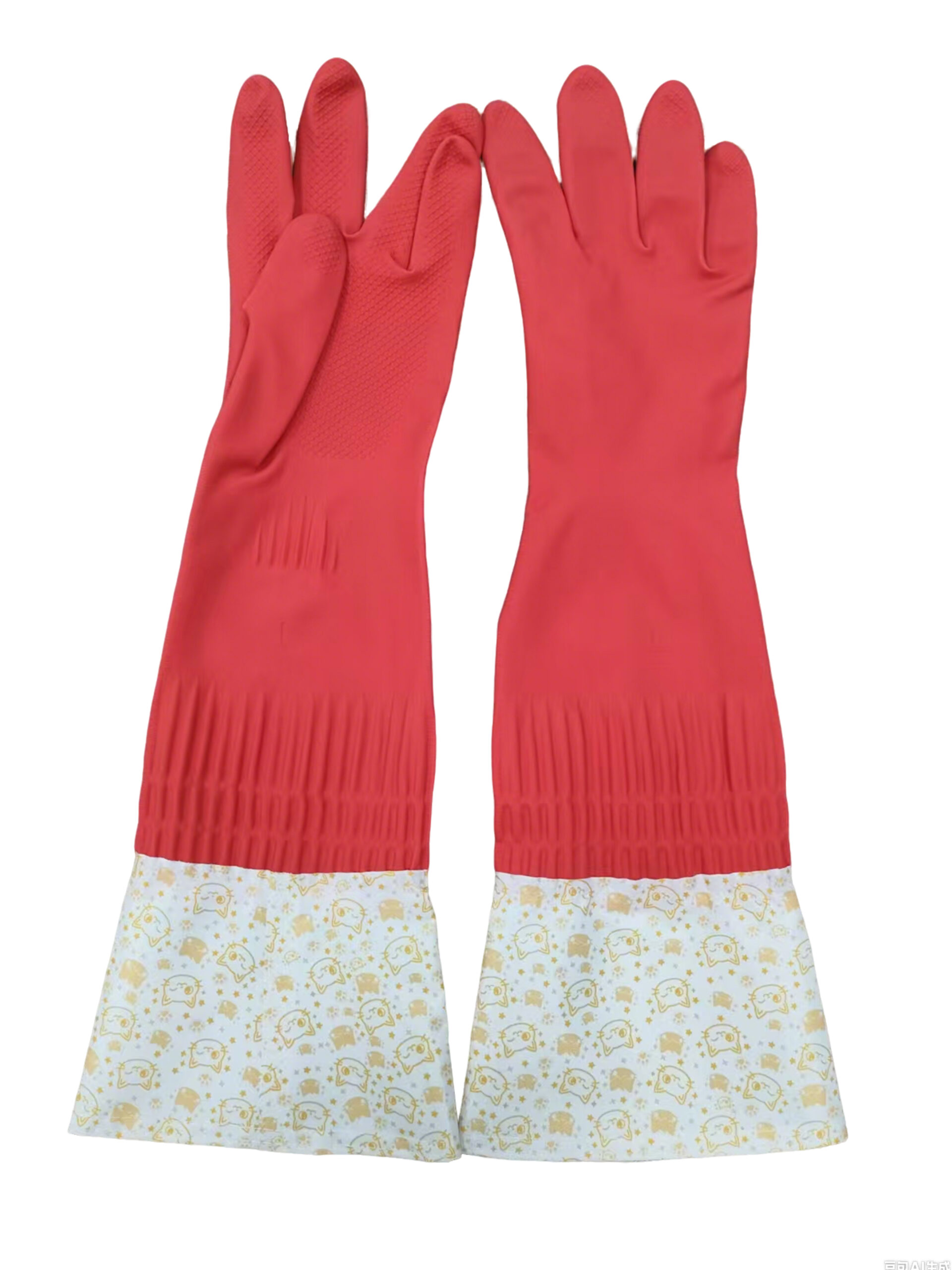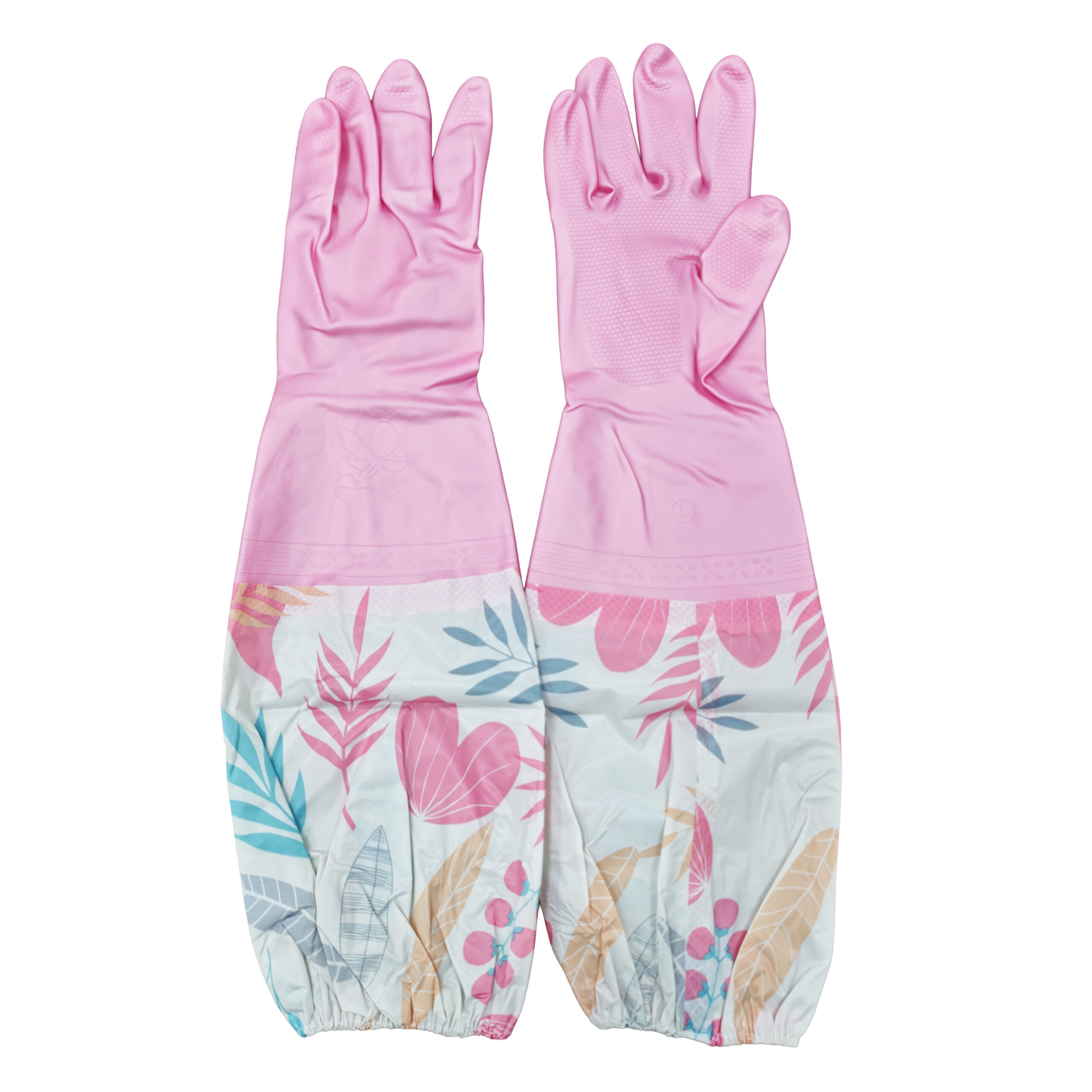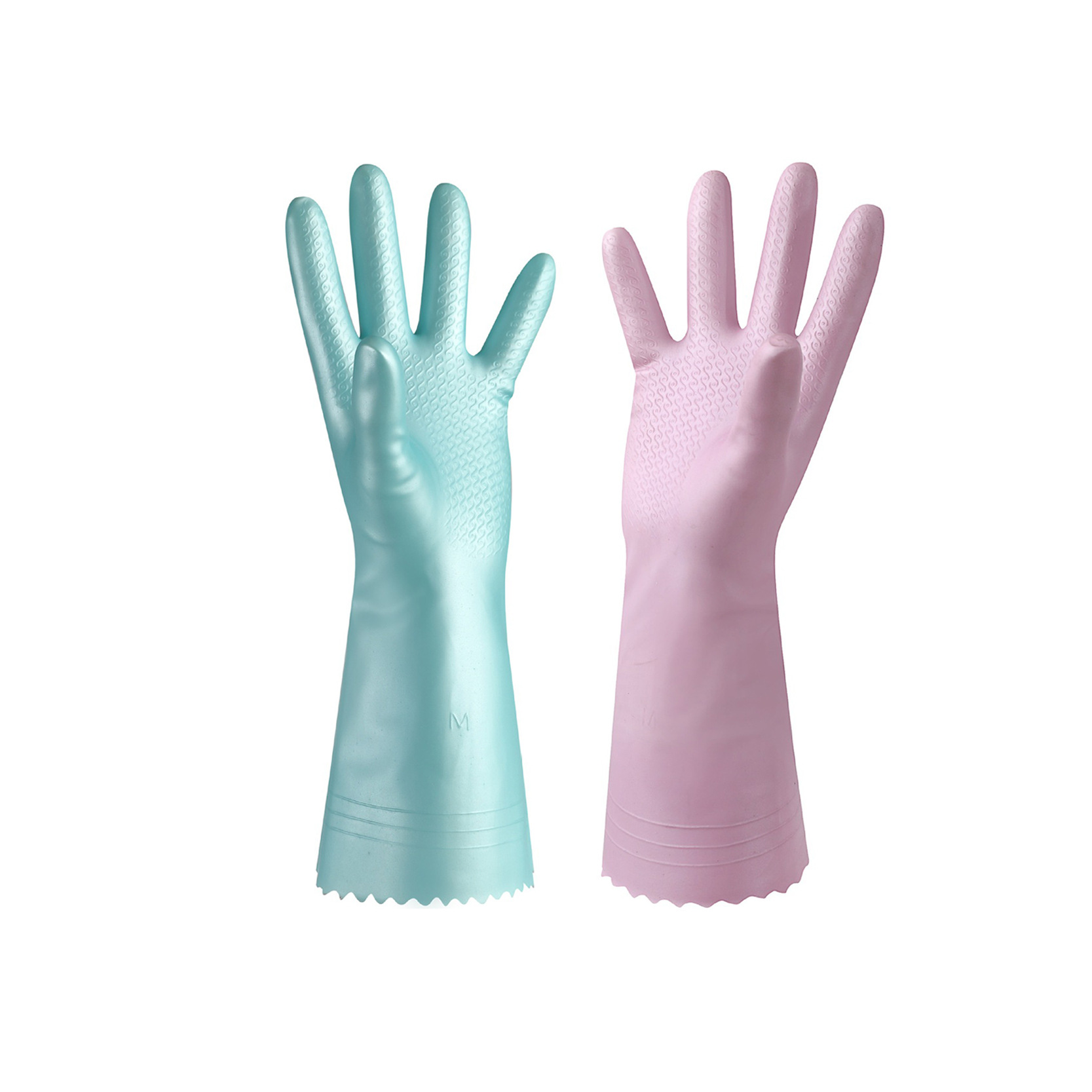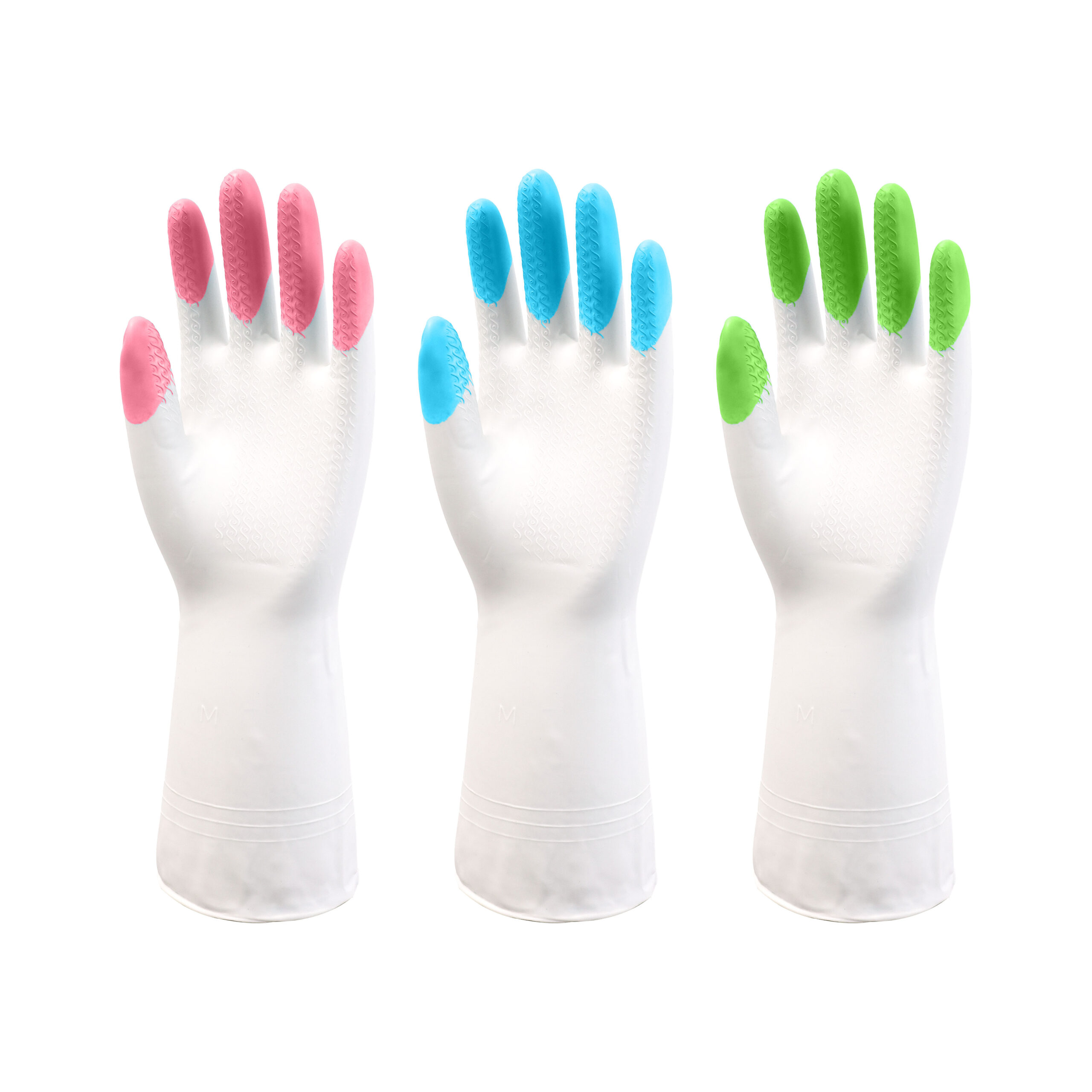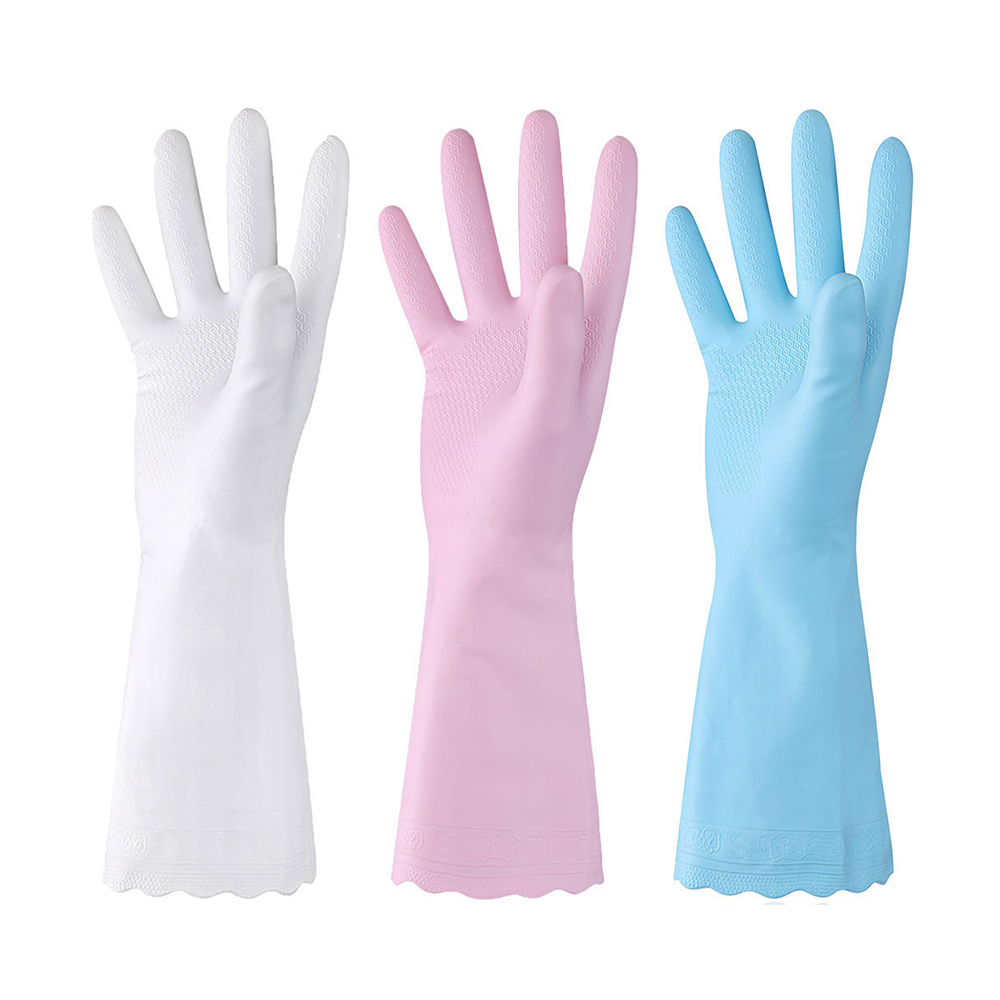
A glove can look long in a catalog photograph and still leave a cleaner’s sleeve exposed during the actual task. For a supermarket, distributor, or janitorial procurement team, that gap becomes a product-selection problem before it becomes a customer complaint. The right buying question is therefore not simply, “How long is the glove?” It is, “Does the chosen cuff cover the part of the arm that this task exposes, while letting the wearer work comfortably?”

Direct answer: Buy long cuff gloves against a written application and sample specification. Check the required coverage, measured overall length, cuff opening and retention, hand fit, grip in the intended wet conditions, material and thickness trade-offs, pack accuracy, and the supplier’s bulk-production controls. A longer cuff alone does not prove chemical suitability or better protection. The final glove must be evaluated for the actual task and market. The UK’s Health and Safety Executive (HSE) explicitly links glove length to splash versus immersion exposure, and asks buyers to consider contact duration, comfort, size, and dexterity.
This guide is for reusable household and industrial cleaning ranges. It does not cover knitted coated work gloves or disposable examination gloves. The nine checks below turn a visual product feature into a measurable buying specification. They also provide a clear way to compare suppliers without treating an attractive image, a single sample, or a low unit price as the whole decision.
1. Define the task before asking for a longer cuff
Start with a one-page use-case brief for long cuff gloves. Record who wears them, what they handle, whether water reaches the forearm, and whether the hand needs fine movement or a firmer grip. For a home-care retail range, distinguish ordinary dishwashing from deep cleaning and from tasks in which the forearm enters a sink or bucket. For a professional cleaning contract, note whether the task involves occasional splashes, repeated wet work, or immersion.
The same nominal length cannot answer all three scenarios. HSE guidance says short gloves may be sufficient for splashes, whereas unavoidable hand immersion calls for length greater than the depth of immersion. That is a selection principle, not a blanket endorsement of any particular long cuff gloves. If a task involves a hazardous chemical, the buyer must also obtain the product-specific compatibility information and the chemical’s safety data sheet; length cannot substitute for those checks. The Canadian Centre for Occupational Health and Safety (CCOHS) similarly asks users to match glove construction to the hazard and to avoid a gap between glove and sleeve.
2. Measure coverage on a wearer, not only on a flat product
Ask the supplier how overall length of long cuff gloves is measured: fingertip to cuff edge, along a laid-flat glove, or by another method. Request a measurement diagram and a tolerance for every size. Long cuff gloves that have the same stated overall length can differ in how much of that length is allocated to the hand versus the forearm. A tall cuff on a glove with a short finger section may still fit poorly; a well-fitting hand with a loose cuff may slide down.
Test coverage with representative wearers performing the intended motion. Have them extend, bend, and lower the arm as they would during the job. Photograph the lowest cuff position, the sleeve overlap, and any exposed gap. If the glove is intended to sit over a garment, test it over that garment. If it sits under a sleeve, verify that the arrangement does not channel liquid into the glove. Do not infer safe use from a studio image. CCOHS advises checking that gloves cover exposed skin and are long enough to avoid a glove-to-sleeve gap.
3. Check cuff opening, retention, and removal
Long cuff gloves must stay in place without turning the cuff into a tight band. Measure the opening circumference and the lower-forearm circumference on the sample. Put the glove on dry and with slightly damp hands, then perform repeated reaching and gripping movements. Record whether the cuff rolls, flares, or slides. A cuff that is deliberately wide for quick removal may be unsuitable when the arm points down into a wet work area; a narrow opening may be uncomfortable over a sleeve.
Look at the actual cuff construction. A straight edge, rolled edge, ribbed lower section, hanging loop, or other feature should be named in the specification only if the approved sample has it. Each design has a trade-off in packing, comfort, cleaning, or storage. If a supplier offers a different cuff for the production run, treat that as a sample change requiring approval, not as a harmless cosmetic variation.
Removal is part of the test. The wearer should be able to remove a used glove without forcing a contaminated outer surface against bare skin. CCOHS provides a glove inspection and removal guide; follow the employer’s actual hygiene procedure where applicable. The purchasing team should avoid calling long cuff gloves “safe for all cleaning chemicals” merely because a cuff reaches farther up the arm.
4. Approve hand fit and dexterity separately from cuff length
Long cuff gloves do not repair an oversized palm, short fingers, or an awkward thumb. Ask for the supplier’s size chart and measurement method. Check hand circumference, finger length, palm width, and finger movement on multiple wearers. HSE cautions that tight gloves can tire the hand while oversized gloves create folds and impair work. That practical fit issue matters to a retail buyer because a wrong size can be perceived as a product defect.
Use a simple task test: pick up a wet cup, open a lid, grasp a bottle, and handle the object the glove is intended to protect against. Observe whether the wearer compensates by squeezing too hard, losing grip, or removing the glove to finish the task. Record results by size, not merely as a pass/fail for the whole model. A cleaning contractor may need more hand mobility than a household deep-cleaning shopper even when both prefer long cuff gloves.
5. Evaluate texture and wet grip in the intended task
Calling long cuff gloves “non-slip” is not a substitute for a defined test. Inspect where texture appears: palm, fingers, fingertips, or another area. A catalog may show a decorative pattern that offers little practical help on a wet object. Conversely, a very deep pattern may affect handling and cleaning. Compare the sample against the actual work object under controlled, repeatable conditions. Record water or detergent conditions, object surface, wearer size, and whether the grip changes after repeated use.
The HSE glove selection aid asks buyers to state whether the task needs dry, wet, or oily grip and how much dexterity is required. These are separate requirements. For long cuff gloves sold to retail channels, a wet dish and a smooth bottle can be useful demonstration objects; for an industrial customer, use its own workpiece and approved procedure. Do not claim a glove performs equally on all wet, oily, or chemical surfaces without model-specific evidence.
6. Treat “extra thick” as a measurement, not a guarantee
Bulk buyers often ask for extra thick rubber gloves or heavier long cuff gloves because they expect longer wear. Define exactly what “thick” means in the quotation. Request measurement points at the palm, fingertips, and cuff, the method used, and tolerances. Ask whether a stated number includes an embossed texture peak or represents the base material. Compare samples under the same method. Weight per pair can help identify variation, but it is not a replacement for thickness measurements or a durability test.
Thicker is not automatically better. HSE describes a trade-off: thicker, robust gloves can offer more protection in some uses, while thinner gloves generally allow better dexterity. The US Occupational Safety and Health Administration (OSHA) also notes that thickness can affect grip and dexterity. Neither source establishes the performance of a specific Red Sunshine model. The correct question is whether the proposed construction meets the buyer’s task requirements at an acceptable level of hand control and comfort.
7. Lock a sample, specification, and revision together
The sample of long cuff gloves that wins approval should be easy to identify later. Give it a sample ID and date. Keep the physical pair with a signed specification covering material, color reference, hand dimensions, cuff dimensions, texture map, weight or thickness method, and any lining or cuff detail. Add photographs of both sides and of the cuff opening. If a buyer wants a particular claim, attach the supporting document for that exact model and market; otherwise keep the claim off the artwork.
Build a short revision table. For example, revision A might change the cuff opening, revision B might adjust the finger length, and revision C might change packaging only. The table should state who approved each change and whether another wear trial was required. This is especially useful when a brand owner, importing agent, and factory sales contact are all involved. Without one version-controlled record, the production team can follow a later email while the buyer still thinks the first sample is the approved reference.
8. Match retail packaging to the glove and the SKU
The retail pack for long cuff gloves must identify what is inside. Check the pair count, size, color, material, intended use, care information, market language, and any warnings required for the intended destination. The buyer or its regulatory adviser should approve destination-specific wording. A printer’s attractive mockup does not demonstrate that the right glove size will be packed under the right label.
Assign each trade-item variation correctly. GS1’s guidance says that each size and color variation needs its own GTIN. That matters when long cuff gloves are offered in several colors and sizes. Maintain a controlled matrix linking SKU, size, color, GTIN, inner pack, and outer carton mark. Then perform a physical scan test on a production-like pack. GS1’s barcode-quality guidance identifies contrast, quiet zones, print size, and packaging interference as common check points.
Check the package after the gloves are inserted, sealed, and handled as they would be in distribution. A barcode visible on flat artwork may become hard to scan if it crosses a fold or is obscured by wrapping. Confirm carton quantities and mixed-size rules separately from the pair count. If the retailer needs a peg-hang pack, test the actual pair in that format; a long cuff may fold differently from a standard-length glove and change pack dimensions.
9. Compare quotations on the same specification and release controls
For a long cuff gloves RFQ, send all suppliers the same use-case brief, size matrix, target sample, packaging format, destination, quantity by SKU, and delivery point. Ask each supplier to state its assumptions and exceptions. Do not compare an unprinted bulk carton quotation with a fully printed retail-pack quotation as if they were equivalent. Ask separately about glove production minimums, printed packaging minimums, sampling charges, artwork setup, inspection scope, and the date from which a quoted lead time starts. Do not substitute another factory’s published MOQ or schedule for the quotation for your order.
Specify the trade term with a named place and year. The International Chamber of Commerce explains that Incoterms 2020 allocate delivery, risk, cost, and other responsibilities, but do not replace the sale contract. An RFQ that merely says “FOB” leaves a material location question open. State the port or place, then keep artwork approval, sampling, production, inspection, and transit as separate milestones.
Before the first bulk release, agree who checks incoming material, in-process dimensions, visual defects, leak or hole criteria where appropriate, packing accuracy, carton marks, and the final sample comparison. State the sampling or inspection plan and what happens after a failed check. A buyer should be able to trace one approved pair and pack to the order record. That control is more useful than a vague promise that every pair will be identical.
A practical approval matrix
| Decision | Record to request | Reason to pause |
|---|---|---|
| Intended task and exposure | Use-case brief; contact conditions | Application is vague or implies unsupported chemical claims |
| Coverage | Measured overall length; wearer trial; sleeve overlap | Cuff slips or leaves a gap during motion |
| Hand fit | Size chart; size-set samples | One approved size is used to infer all sizes |
| Grip and dexterity | Texture map; repeatable wet-task notes | “Non-slip” appears without a defined surface or test |
| Construction | Material; measurement points; revision ID | “Extra thick” has no measurement method |
| Retail SKU | Artwork proof; GTIN matrix; finished pack scan | Size or color does not match the printed label |
| Bulk release | Approved sample; inspection plan; named owner | Factory and buyer reference different versions |
For a first inquiry to Red Sunshine’s OEM service, send the application, target cuff coverage, preferred material, size and color matrix, pack format, destination, and estimated quantity by SKU. The site’s household glove product range and quote contact page provide relevant starting points. Any particular model, MOQ, test report, or delivery date should be confirmed in the project quotation and sample file rather than inferred from a general page.
Frequently asked buyer questions
How long should long cuff gloves be for wet cleaning?
There is no single length that fits every wet-cleaning task. Define the deepest expected contact and the sleeve arrangement, then test whether the cuff remains above the exposure point during the actual movement. HSE advises selecting a length greater than immersion depth when immersion cannot be avoided. Record the result for every proposed size.
Are long cuff gloves automatically chemical resistant?
No. Cuff length addresses coverage; chemical suitability depends on the exact glove material, construction, chemical, concentration, temperature, and contact time. Obtain model-specific information and the relevant safety data sheet before making an industrial chemical claim. OSHA warns that no glove protects against every hand hazard.
Are extra thick rubber gloves always more durable?
Not necessarily. Thickness is one variable, and it can affect dexterity. Ask where and how thickness was measured, then compare the approved samples under the intended task conditions. Do not convert a heavier pair weight into a durability guarantee without an appropriate test.
What should a private-label buyer send for an accurate quotation?
Provide the glove application, material, target dimensions, size and color quantities, texture and cuff reference, sample or specification version, pack format, artwork status, destination, and required arrival window. Ask the supplier to identify any unresolved assumptions and to quote glove and printed-pack minimums separately.
Can one barcode cover several sizes or colors?
For trade-item variations, GS1 says each size and color combination needs its own GTIN. Keep the identifier, printed label, actual packed glove, and outer-carton record aligned. Test the barcode on a finished pack rather than relying only on the artwork file.
Which sample should control the bulk order?
Use a dated, identifiable approved pair and a matching specification revision. Keep packaging artwork under its own revision control. If the glove construction or the retail pack changes, record whether the buyer approved the new sample before production release.
Conclusion
The value of long cuff gloves is specific to the task. A useful purchase decision joins arm coverage to hand fit, grip, construction, labeling, and a traceable bulk-order process. Start with the exposure and wearer, then let the sample and written specification settle the quotation. That approach gives a retailer or cleaning-supply buyer a defensible reason to choose one SKU over another without making unsupported claims about universal protection.