Latex Free vs Hypoallergenic Gloves: What B2B Buyers Need to Know
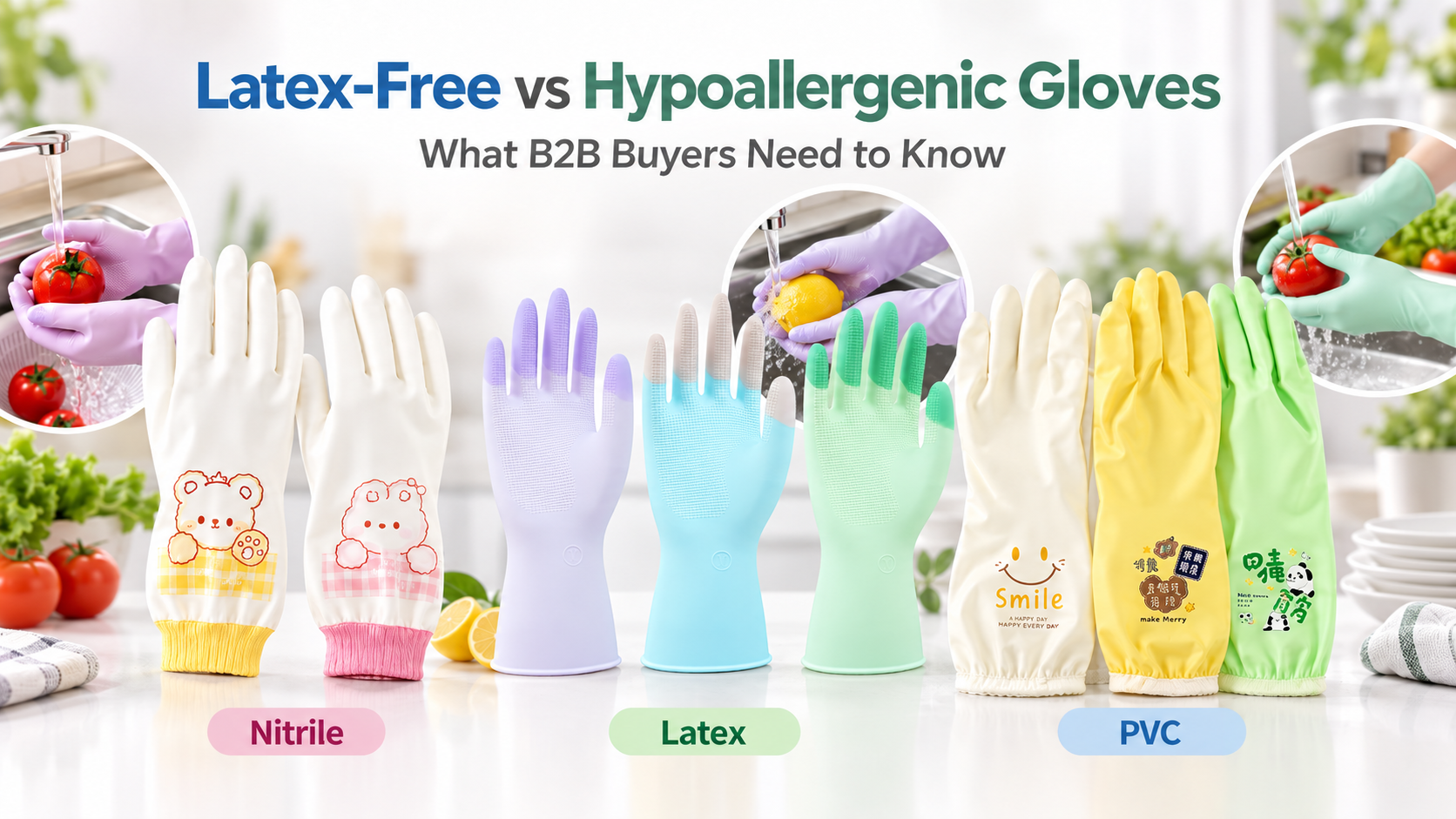
Latex-free and hypoallergenic are not the same thing.
This distinction is especially important for glove importers, distributors, cleaning brands and private-label buyers.
A latex-free glove is manufactured without natural rubber latex.
A hypoallergenic product, on the other hand, is generally intended to reduce the likelihood of an allergic reaction.
However, neither term means that a glove is guaranteed to cause zero reactions in every user.
Nitrile and PVC gloves eliminate natural latex proteins, but their formulations may still contain other chemicals or additives.
For B2B buyers, the safest approach is to evaluate the actual glove specification rather than relying only on packaging claims.
What Does Latex-Free Mean?
Latex-free means that the glove does not contain natural rubber latex.
Natural rubber latex contains proteins that can cause allergic reactions in sensitized individuals.
Latex-free alternatives commonly include:
- Nitrile gloves
- PVC gloves
- Vinyl gloves
- Neoprene gloves
- Polyurethane gloves
For users who must avoid natural latex proteins, these materials can provide practical alternatives.
However, latex-free only describes one aspect of the glove.
It does not automatically describe every chemical or additive used during production.
What Does Hypoallergenic Mean?
Hypoallergenic generally refers to a product designed to reduce the likelihood of causing an allergic reaction.
However, the term should not be interpreted as:
“Guaranteed allergy-free.”
For professional glove buyers, the more useful question is:
What potential allergen or sensitizer has been reduced or removed?
For example:
- Natural latex proteins
- Rubber accelerators
- Powder
- Certain pigments
- Specific additives
Clear specifications are more useful than broad marketing terminology.
Latex-Free vs Hypoallergenic: Quick Comparison
| Feature | Latex-Free | Hypoallergenic |
|---|---|---|
| No natural rubber latex | Yes | Not necessarily |
| No natural latex proteins | Yes | Not necessarily |
| No rubber accelerators | Not necessarily | Not necessarily |
| No additives | No | No |
| Guaranteed allergy-free | No | No |
| Useful for latex-sensitive users | Usually | Depends on formulation |
The key takeaway is simple:
Latex-free is a material specification. Hypoallergenic is a broader product claim.
Latex vs Nitrile vs PVC Gloves
Understanding the material is the first step in selecting the right glove.
Natural Latex Gloves
Natural latex gloves are widely used because they offer:
- Excellent elasticity
- Flexible fit
- Good tactile sensitivity
- Comfortable hand movement
- Good performance for many cleaning applications
However, natural latex contains proteins that can trigger latex allergy in sensitive users.
For applications specifically targeting latex-allergic consumers, alternative materials are usually preferred.
Nitrile Gloves
Nitrile gloves are made from synthetic nitrile rubber.
They do not contain natural rubber latex proteins.
Common advantages include:
- Latex-free construction
- Good durability
- Good oil resistance
- Flexible fit
- Good puncture and abrasion performance
- Household and industrial applications
Because nitrile does not contain natural latex proteins, it is widely used as a latex alternative.
However, conventional nitrile gloves may contain chemical accelerators used during vulcanization.
Some individuals can develop allergic contact dermatitis to these chemicals.
Therefore:
Latex-free nitrile does not automatically mean completely hypoallergenic.
Why Do Some People React to Nitrile Gloves?
The nitrile polymer itself is not usually the primary concern.
The more common issue is the chemical system used during manufacturing.
Traditional nitrile formulations may contain accelerators such as:
- Thiurams
- Dithiocarbamates
- Thiazoles
- Guanidines
- Other rubber curing chemicals
For people who are already sensitized to these substances, repeated contact may cause delayed skin reactions.
Possible symptoms include:
- Itching
- Redness
- Dry skin
- Rash
- Inflammation
This is why professional buyers should distinguish between:
Latex-free nitrile
and
Accelerator-free nitrile.
They are not the same specification.
What Is Accelerator-Free Nitrile?
Accelerator-free nitrile gloves are produced using alternative formulation systems that avoid specified traditional rubber accelerators.
They may be considered when buyers are sourcing gloves for users with known accelerator sensitivity.
However, accelerator-free still does not mean:
- Chemical-free
- Irritation-free
- Allergy-free for everyone
B2B buyers should request formulation information and supporting documentation before using strong allergy-related marketing claims.
PVC Gloves as a Latex-Free Alternative
PVC household gloves are another common alternative to natural latex.
PVC gloves can be suitable for:
- Household cleaning
- Dishwashing
- Kitchen work
- Laundry
- Light commercial cleaning
- General-purpose protection
PVC does not contain natural latex proteins.
It also does not normally use the traditional rubber vulcanization system associated with nitrile and latex gloves.
However, PVC formulations may contain:
- Plasticizers
- Stabilizers
- Pigments
- Processing aids
- Surface coatings
- Textile or flock lining
This means PVC should also be evaluated based on the complete formulation.
Which Is Better for Sensitive Skin: Nitrile or PVC?
There is no universal answer.
The better choice depends on the type of sensitivity and the required application.
Consider Nitrile When You Need:
- Latex-free material
- Better durability
- More flexibility
- Oil resistance
- Industrial or household performance
- Longer reusable service life
Consider PVC When You Need:
- Latex-free material
- Household cleaning performance
- Waterproof protection
- Competitive cost
- Light-duty applications
Consider Accelerator-Free Nitrile When:
- Users have known rubber accelerator sensitivity
- Sensitive-skin positioning is important
- The supplier can provide suitable formulation documentation
The correct material should always be selected based on both protection requirements and user needs.
Three Different Causes of Glove-Related Skin Problems
Professional buyers should avoid describing every glove reaction as an “allergy.”
There are several possible causes.
1. Natural Latex Allergy
Natural latex proteins can cause immediate allergic reactions in sensitized individuals.
Latex-free gloves remove this specific exposure.
2. Allergic Contact Dermatitis
This delayed reaction can be caused by chemicals used during glove manufacturing.
Rubber accelerators are one possible cause.
3. Irritant Contact Dermatitis
This is not necessarily an allergic reaction.
Common causes include:
- Sweating inside gloves
- Long wearing time
- Frequent handwashing
- Detergents
- Friction
- Damaged skin
This distinction is especially important when evaluating customer complaints or product suitability.
Are Latex-Free Gloves Better for People With Latex Allergy?
Generally, yes.
If the problem is specifically natural latex protein allergy, gloves manufactured from nitrile or PVC eliminate natural latex proteins from the glove itself.
However, professional buyers should still consider:
- Chemical additives
- Accelerator systems
- Glove lining
- Powder
- Intended wearing time
- Workplace exposure
A good glove program considers the entire product, not only the base polymer.
Should B2B Buyers Trust the Word “Hypoallergenic”?
Buyers should treat it as a claim that requires supporting context.
Instead of asking:
“Is this glove hypoallergenic?”
Ask:
“What specific features support the hypoallergenic or sensitive-skin claim?”
The supplier should be able to explain whether the product is:
- Latex-free
- Powder-free
- Accelerator-free
- Tested for specified substances
- Manufactured under controlled formulation requirements
This approach gives buyers measurable information.
Do SGS and CE Mean Hypoallergenic?
No certification should automatically be interpreted as proof that a glove can never cause an allergic reaction.
CE documentation relates to applicable regulatory requirements depending on the glove type and intended use.
SGS may provide third-party testing, inspection or verification for specified parameters.
Professional buyers should review the actual report.
Important questions include:
- Which glove model was tested?
- Which test method was used?
- Which substances were tested?
- What were the test limits?
- Is the report still applicable?
- Does the report match the product being quoted?
For Red Sunshine products, applicable third-party documentation should be matched to the specific glove model and specification being purchased.
B2B Sourcing Checklist for Latex-Free Gloves
Before approving a product, importers and private-label buyers should confirm the following.
1. Base Material
Is the glove made from:
- Natural latex
- Nitrile
- PVC
- Another polymer
2. Latex Status
Does the finished product contain natural rubber latex?
3. Accelerator Information
Are rubber accelerators used?
Which accelerator system is used?
4. Accelerator-Free Availability
Can the manufacturer provide an accelerator-free formulation if required?
5. Lining
Is the glove:
- Unlined
- Flock-lined
- Textile-lined
6. Powder
Is the glove powder-free?
7. Additives
Are there important plasticizers, pigments, stabilizers or coatings?
8. Testing
Which reports apply to the exact SKU?
9. Intended Application
Will the glove be used for:
- Dishwashing
- Household cleaning
- Kitchen cleaning
- Food handling
- Industrial cleaning
- Chemical handling
- Commercial janitorial work
10. Production Consistency
Can the manufacturer maintain the approved formulation across repeat orders?
Why Formulation Consistency Matters for Private-Label Buyers
For OEM and private-label programs, consistency is extremely important.
Imagine that a buyer approves a nitrile glove based on:
- Material
- Thickness
- Color
- Accelerator system
- Lining
- Texture
- Test reports
If the formulation changes in later production, the original product claim may no longer accurately represent the product.
For this reason, importers should clearly define critical requirements in:
- Product specifications
- Purchase orders
- Approved samples
- Quality agreements
- Inspection standards
This turns a marketing claim into a measurable procurement requirement.
How to Write a Better Glove RFQ
Instead of sending:
“We need hypoallergenic household gloves.”
Send a more detailed request such as:
“We are sourcing reusable latex-free household gloves for private-label distribution. Please confirm the glove material, accelerator system, lining, thickness, length, surface texture, applicable test reports, MOQ and OEM packaging options.”
A detailed RFQ helps both the buyer and manufacturer avoid misunderstandings.
Red Sunshine Glove Manufacturing Solutions
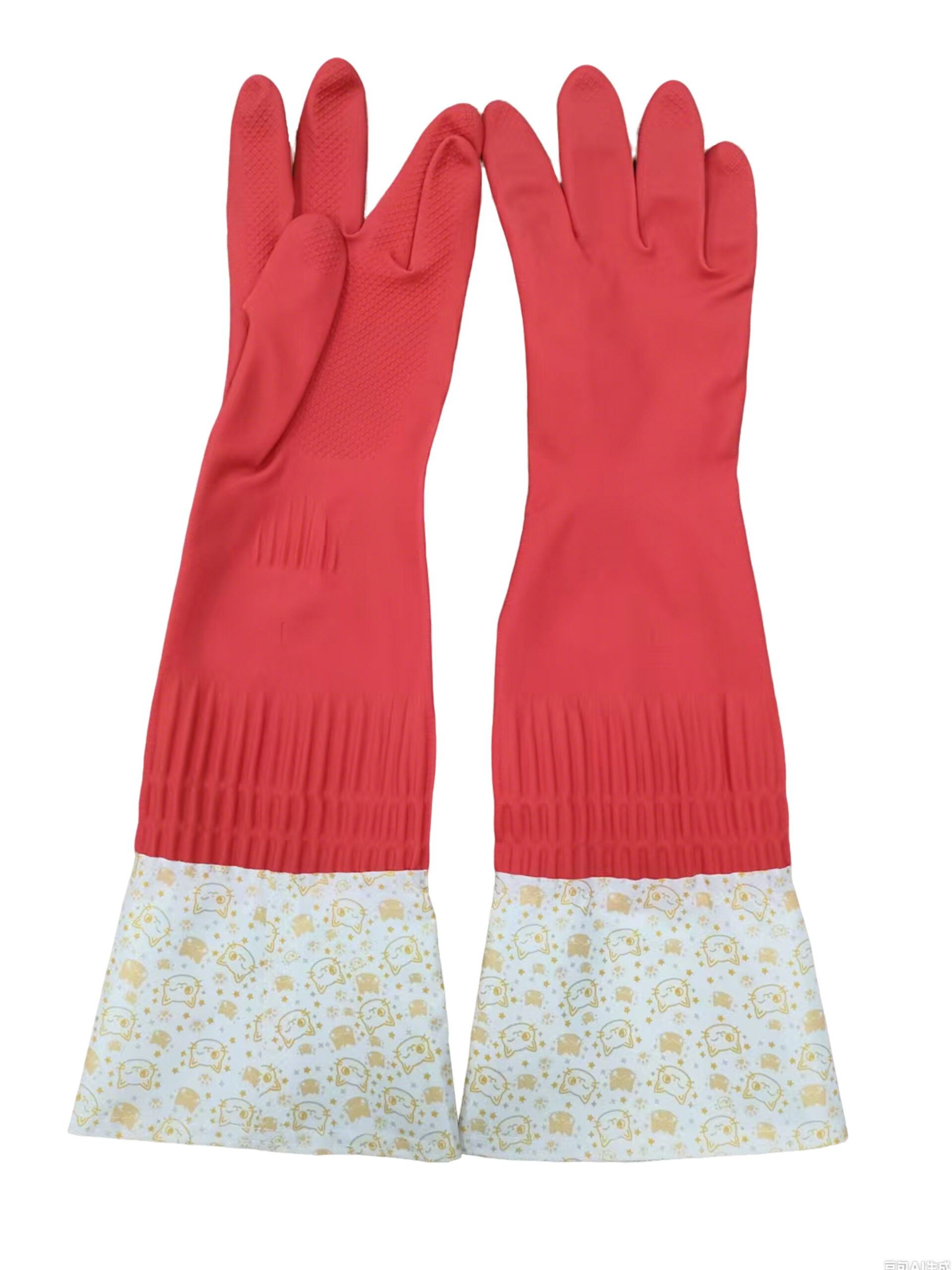
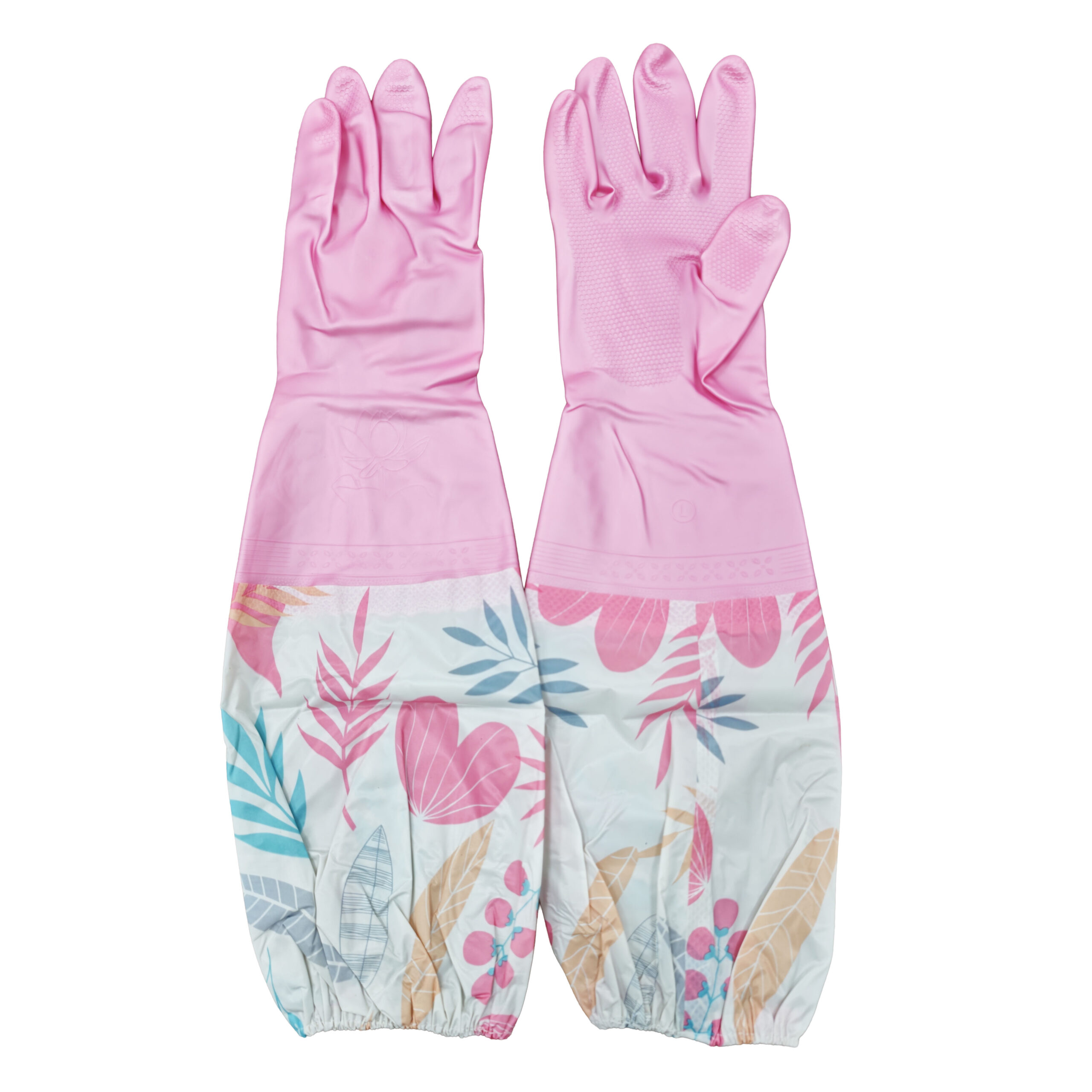
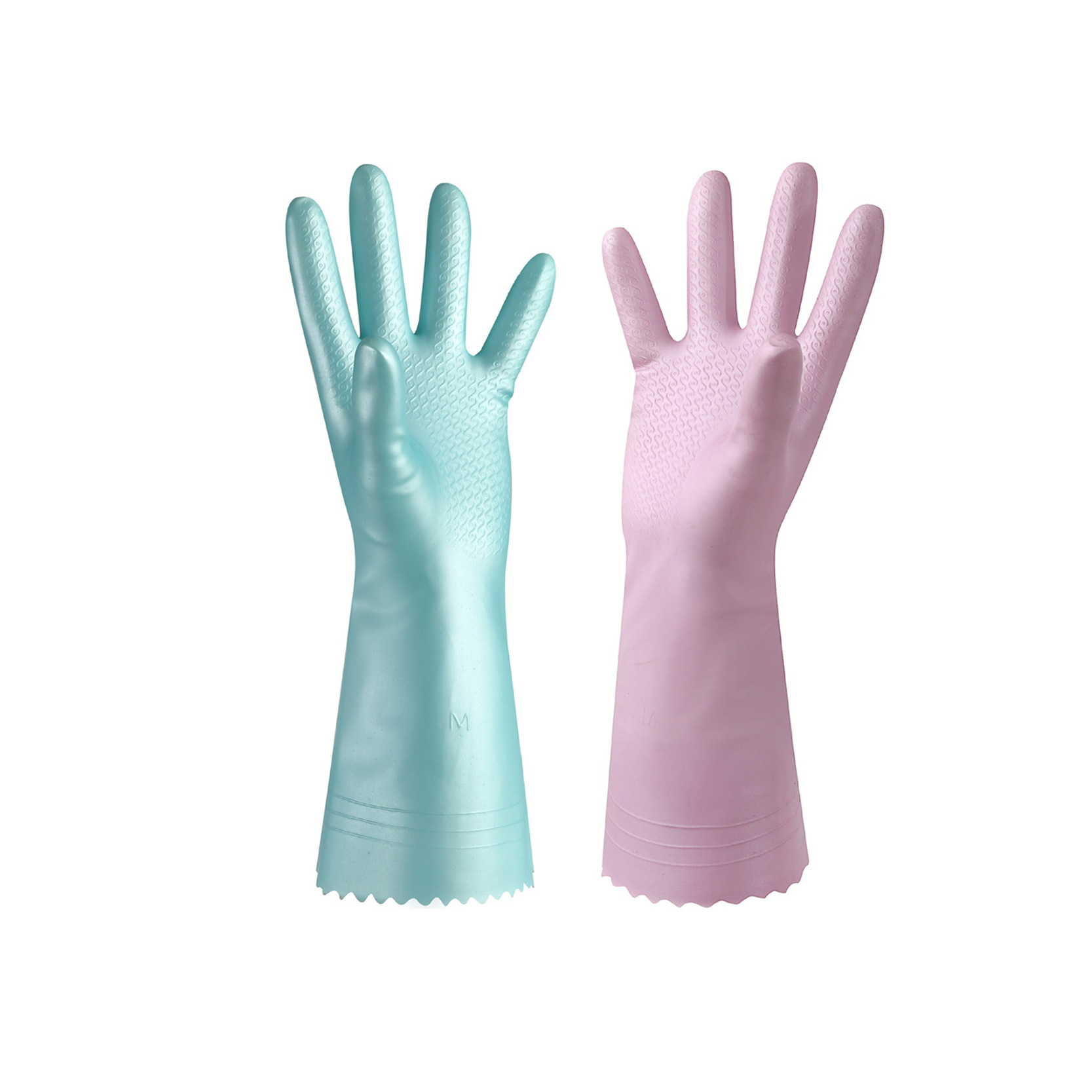
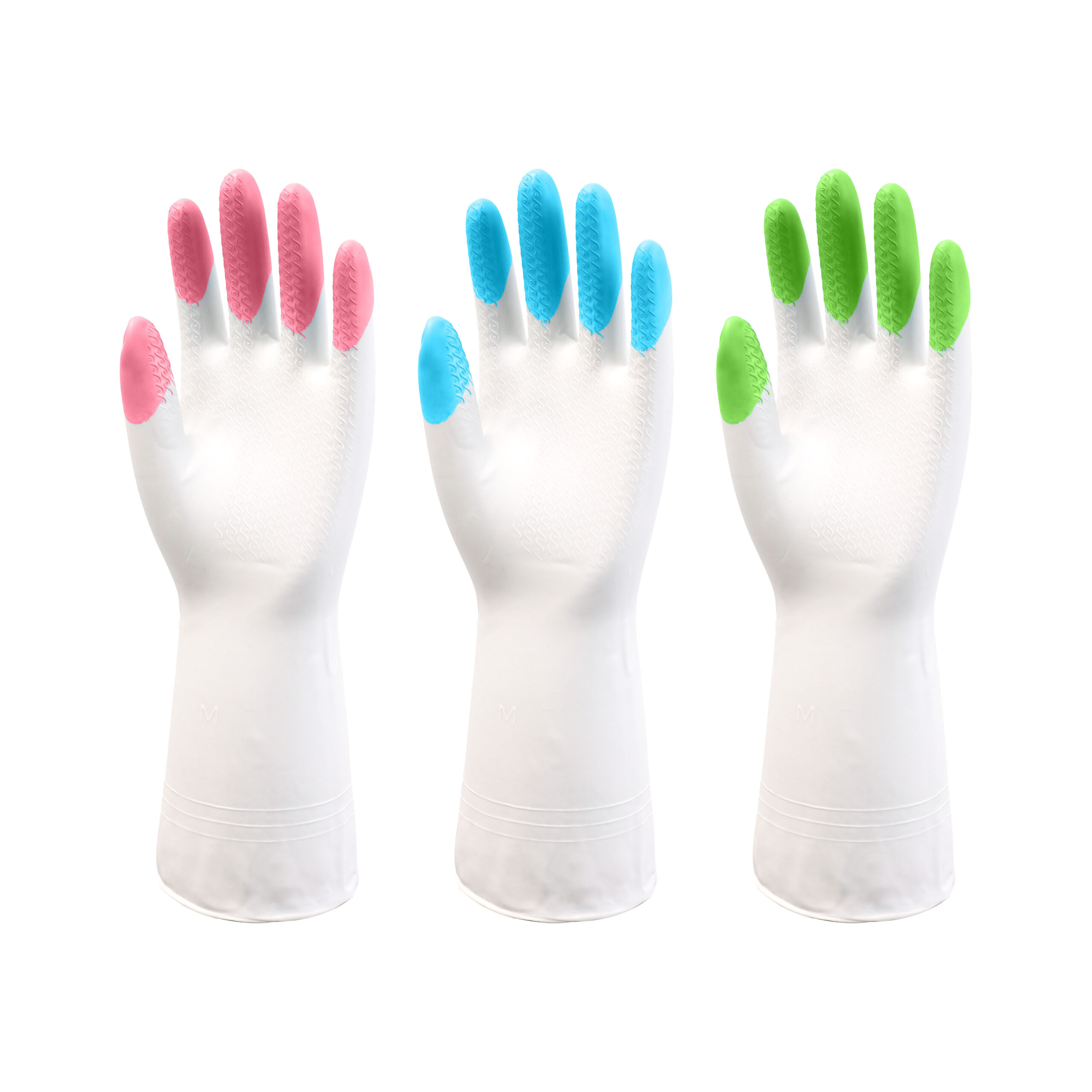
Red Sunshine supplies reusable household and industrial glove solutions for international B2B buyers.
Product categories include:
- Latex household gloves
- Nitrile household gloves
- PVC household gloves
- Industrial rubber gloves
- Reusable cleaning gloves
OEM and ODM options can include:
- Custom colors
- Custom sizes
- Custom lengths
- Different thicknesses
- Cuff designs
- Surface textures
- Flock lining
- Logo printing
- Private-label packaging
- Export carton customization
For latex-free programs, nitrile and PVC can be evaluated according to application, performance requirements and target-user sensitivity considerations.
Frequently Asked Questions
What is the difference between latex-free and hypoallergenic gloves?
Latex-free means the glove does not contain natural rubber latex. Hypoallergenic generally means the product is intended to reduce allergy potential. The two terms are not interchangeable.
Are nitrile gloves latex-free?
Yes. Nitrile rubber is synthetic and does not contain natural rubber latex proteins.
Can nitrile gloves still cause allergies?
Yes. Some users may react to chemical accelerators or other additives used during manufacturing.
Are PVC gloves latex-free?
Yes. PVC gloves are made from polyvinyl chloride rather than natural rubber latex.
Are PVC gloves better for latex allergy?
PVC eliminates natural latex protein exposure from the glove. However, buyers should still consider the complete formulation and intended use.
What is an accelerator-free nitrile glove?
It is a nitrile glove produced without specified conventional rubber accelerators that may cause allergic contact dermatitis in sensitized users.
Is accelerator-free the same as hypoallergenic?
No. Accelerator-free describes one formulation characteristic. It does not guarantee that no individual will react to any component of the glove.
Which glove is best for sensitive skin?
The correct choice depends on the user’s specific sensitivity, the application and the required protection level. Nitrile, accelerator-free nitrile and PVC may all be considered depending on the situation.
What should importers ask their glove supplier?
Ask about the material, accelerator system, lining, additives, test reports, intended-use compliance and production consistency.
Final Answer: Are Latex-Free Gloves Truly Hypoallergenic?
Not necessarily.
Latex-free gloves eliminate natural rubber latex proteins, which makes nitrile and PVC important alternatives for users who need to avoid natural latex.
However, the finished glove may still contain rubber accelerators, plasticizers, stabilizers, pigments or other additives.
For B2B glove buyers, the most reliable sourcing process is:
Verify the material.
Review the formulation.
Check the application.
Review relevant testing.
Confirm the exact product specification.
Instead of relying only on the words “latex-free” or “hypoallergenic,” professional buyers should use product specifications and supporting documentation to make informed purchasing decisions.