Direct answer
The right nitrile chemical gloves for an industrial cleaning task are the ones whose specific model has evidence for the actual chemical, concentration, temperature and contact pattern, and whose fit and construction work in the task. Start with the cleaning product’s safety data sheet (SDS), ask for model-level permeation and degradation information, then test samples with the intended users. Material name, color and nominal thickness alone cannot establish suitability. OSHA lists chemical identity, duration, temperature, grip, size and cuff features among the factors that affect glove choice.
Why this buying decision is harder than it looks
A facilities buyer may need one glove for daily wash-down, another for intermittent splash while diluting a cleaner, and a third for maintenance staff who handle a concentrated product. All three requests might arrive as “industrial nitrile gloves.” That phrase describes a material family, not a completed protection specification. A purchasing team can receive a neat product photograph and a low price yet still lack the information needed by its safety lead. Nitrile chemical gloves should therefore be evaluated against the work, not just against the neighboring item in a catalogue.
That distinction matters because “chemical resistant rubber gloves” is also a broad search term. Different polymers, formulations and constructions respond differently to different substances. No glove material should be sold as a universal barrier. The OSHA Technical Manual explains that permeation can occur without visible damage and that temperature, thickness and other conditions affect performance. The sensible commercial question is: what can the supplier document for this model and this exposure?
The checks help buyers prepare a useful quote request; they do not replace an employer’s hazard assessment.
1. Write the task before choosing nitrile chemical gloves
Describe the cleaning operation in plain words. State whether workers wipe a contaminated surface, spray a diluted product, pour concentrate, wash equipment in a sink or reach into a solution. Note the likely contact area, whether the product can run down the forearm, and the longest plausible continuous contact period. Nitrile chemical gloves suitable for an incidental splash task may be a poor assumption for repeated immersion, even when the same cleaner is named.
Include mechanical demands. Is the worker gripping a wet steel handle, turning a small valve or carrying abrasive containers? Will a sleeve cover the cuff, or does the hand move above shoulder height? Which sizes are needed across the workforce? The Canadian Centre for Occupational Health and Safety (CCOHS) advises buyers to identify chemicals and physical hazards, contact type, duration, dexterity, grip and decontamination before selecting a glove. A purchasing specification built from those inputs is far more useful than “heavy duty, green, long cuff.”
If a supplier lacks data for a solvent mixture, it should flag the gap or propose a documented alternative.
A brief the supplier can actually use
| Field | What the buyer should write | Why it matters |
|---|---|---|
| Work step | Surface wipe, spray, dilution, equipment wash or immersion | Changes contact intensity and duration |
| Product | Commercial name and current SDS | Identifies ingredients and hazards |
| Mixture | Working concentration and dilution method | Data for concentrate may not describe the dilution, or vice versa |
| Conditions | Liquid temperature, contact time and frequency | Can affect permeation and degradation |
| Physical work | Wet grip, abrasion, fine handling, cuff exposure | Determines construction and fit needs |
| Destination | Country, channel and required documents | Controls labeling and procurement review |
2. Read the SDS, then ask about the formulation
Do not stop at the front label of a cleaning product. A disinfectant, degreaser or descaler may be a blend; a trade name can also refer to several concentrations. Request the current SDS for each product, especially any concentrate. Identify hazardous ingredients and handling advice, then ask the safety team which exposure scenario to review. The SDS begins the selection of nitrile chemical gloves; it does not guarantee that a model works.
Nitrile chemical gloves should be compared with the formulation actually handled, not with a familiar ingredient mentioned in advertising. OSHA’s PPE selection guidance notes that mixtures may need to be assessed against the component with the shortest breakthrough time unless specific mixture data exist; solvents can carry other ingredients through a polymer. Do not calculate a safe wear time by averaging several chemical entries in a chart.
Ask whether workers use a stronger solution, warm water or gloves carrying residue between tasks.
3. Request evidence for the exact nitrile chemical gloves model
“Nitrile” is not a certificate. Before approving nitrile chemical gloves, ask the supplier to identify the exact model, material construction and test document used to support the proposed application. Look for the tested chemical and concentration, test method, sample description, relevant performance result, date and issuing laboratory. If a report is for a different thickness, coating or model, ask why it applies to the proposed item. Do not treat a report for the base polymer as proof for every finished glove made from it.
Three mechanisms are worth distinguishing:
- Permeation is movement of a chemical through intact material at the molecular level; it may be invisible.
- Penetration is passage through a hole, defect, opening or weak point.
- Degradation is a physical change such as swelling, softening, stiffening or loss of strength after contact.
These definitions follow the CCOHS glove selection guide. A leak check on nitrile chemical gloves does not answer a permeation question, and a long breakthrough time for one chemical does not answer another chemical’s question. A strong test result does not excuse visible defects.
If the destination market requires a particular protective-glove standard, have the compliance team verify the current edition and the applicability of the supplier’s documents. The ISO 374-1:2024 page identifies a current standard for chemical risks. Mentioning that standard here does not mean any Red Sunshine model has been tested or certified to it. Any such claim must be supported by a model-specific document reviewed for the intended market.
What to do when data are missing
If the supplier cannot provide relevant evidence, mark the application “not yet approved” internally. You may still ask for a sample to evaluate fit and workmanship, but do not turn a sample trial into an unverified chemical-protection claim. Nitrile chemical gloves are only one possible option; a different material or control measure may be needed. HSE’s selection guidance and OSHA both put chemical and task information ahead of a generic material label.
4. Compare construction against the work, not the photograph
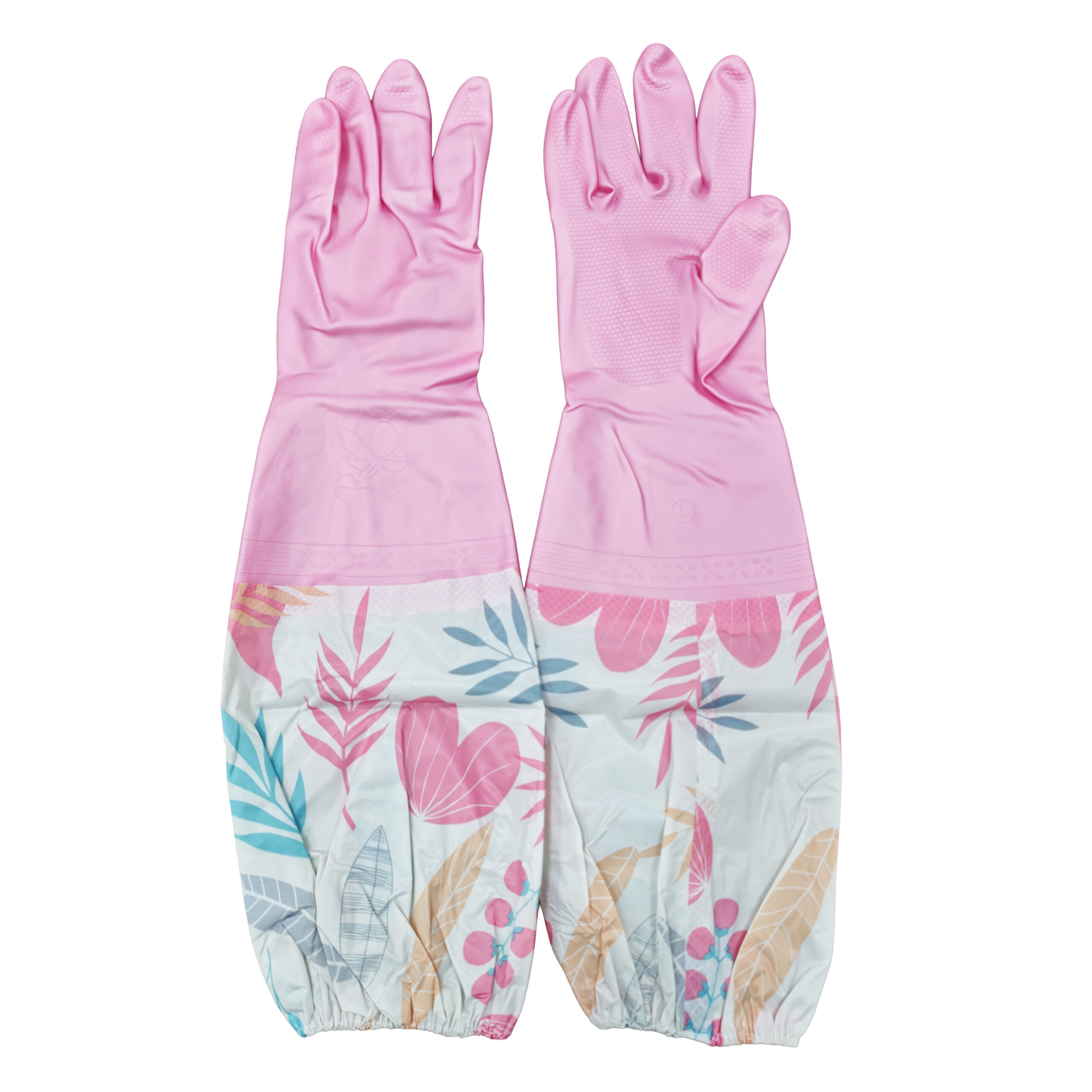
Once chemical suitability is documented, compare the physical glove. Length affects forearm coverage and the way liquid may enter at the cuff. A longer cuff can help in some tasks, but it must be checked against the sleeve, arm position and removal method. Thick material may change feel and dexterity; thin material may be easier to manipulate but should never be assumed adequate for a longer exposure. The correct trade-off comes from the task and test evidence, not a single “more is better” rule.
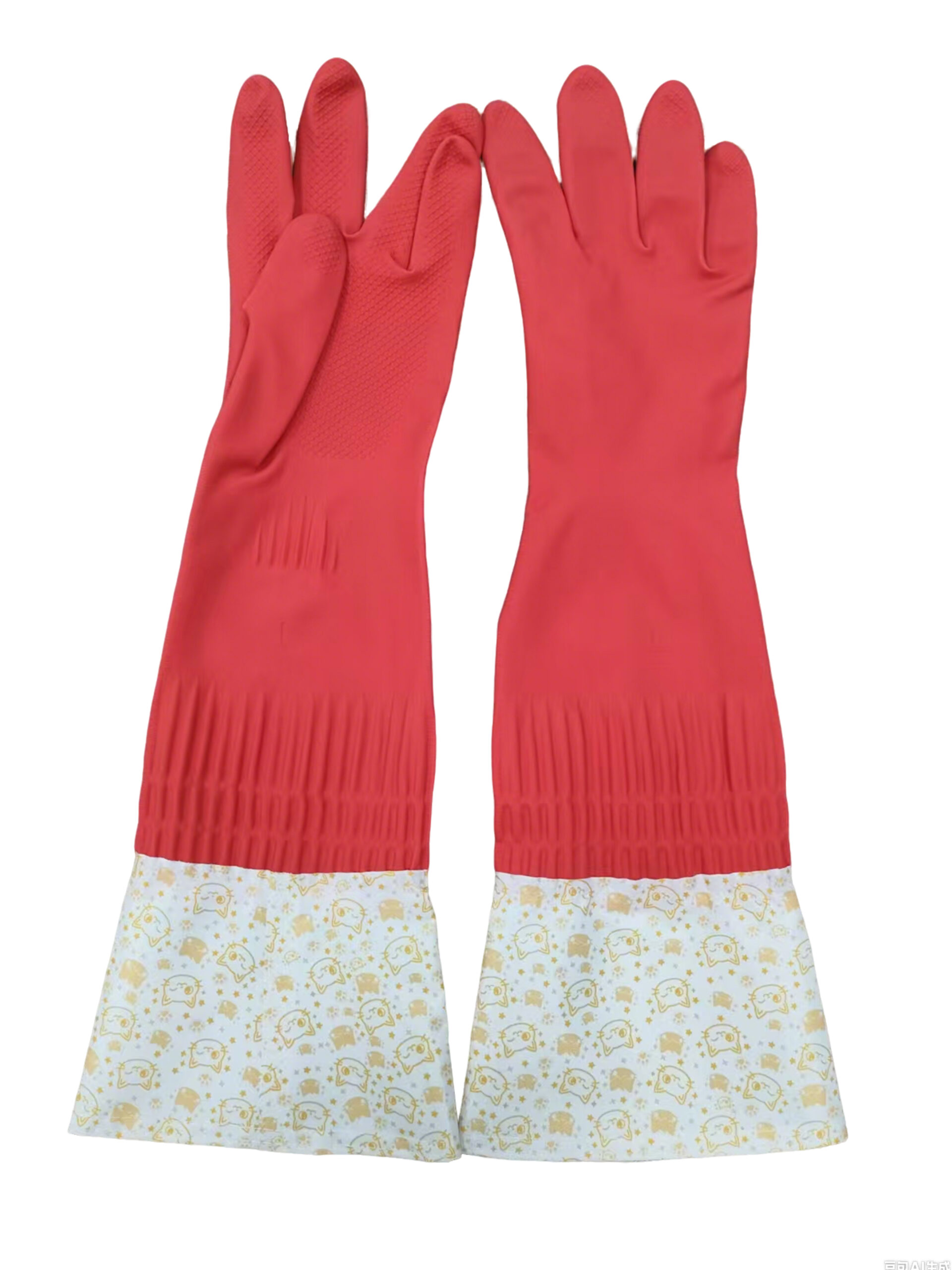
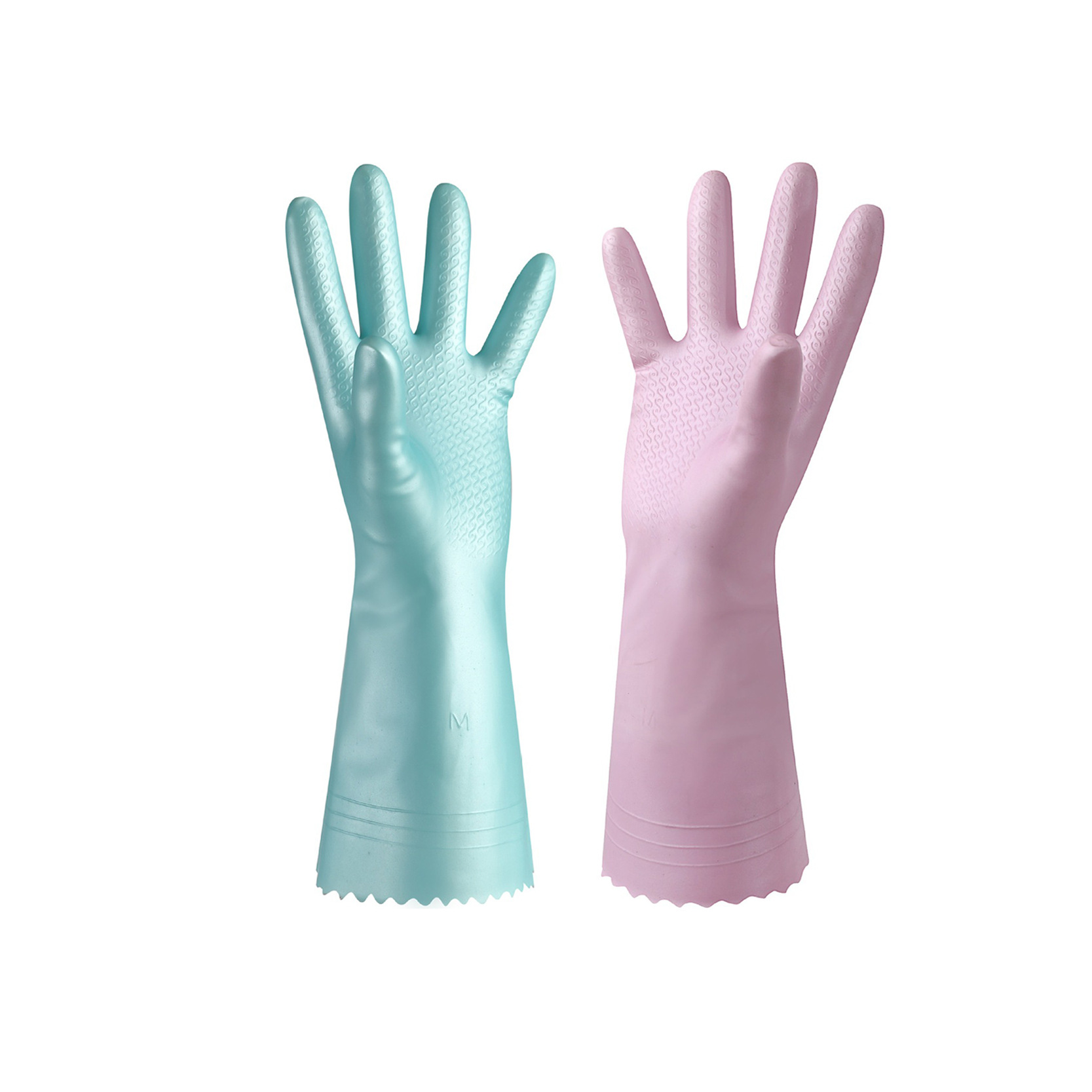
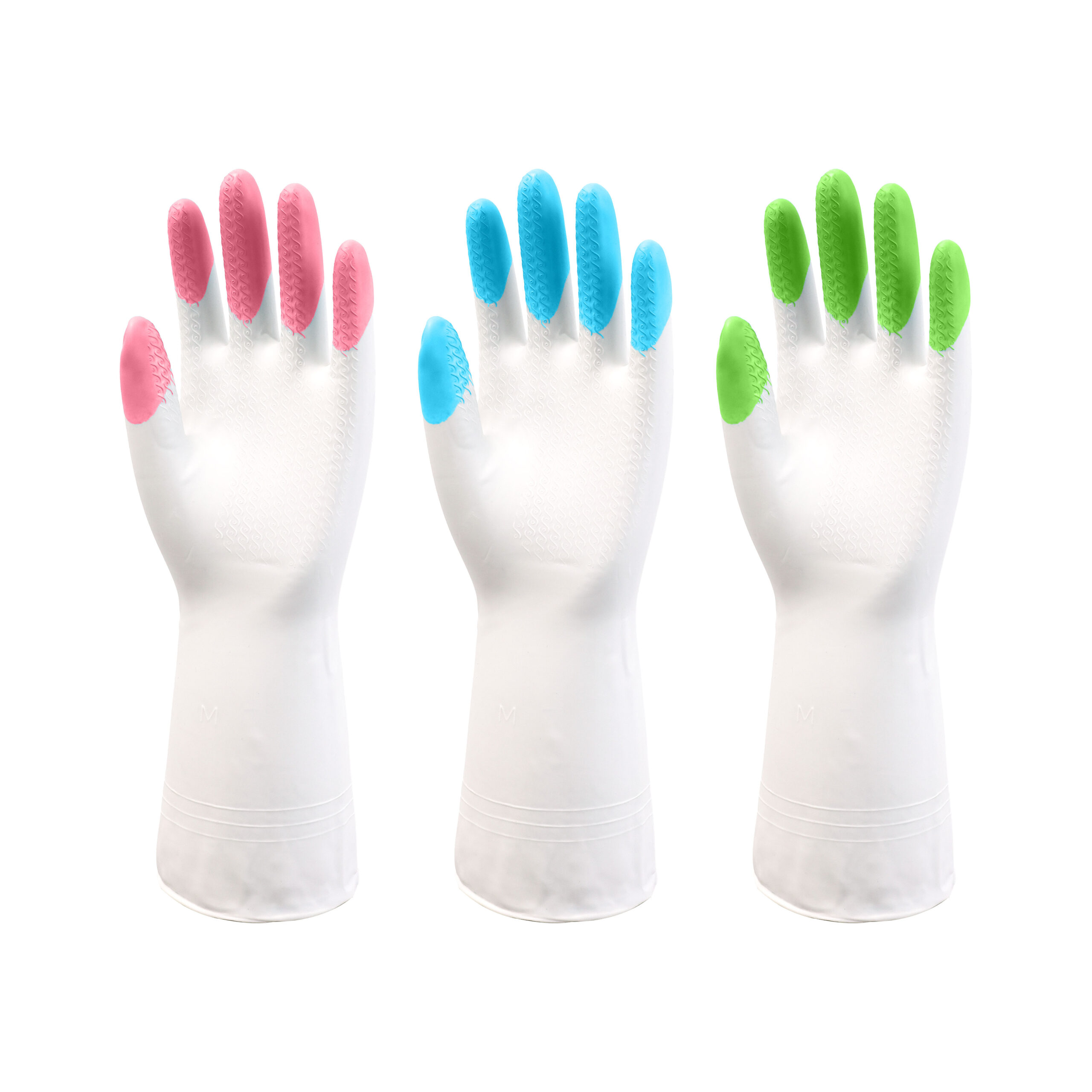
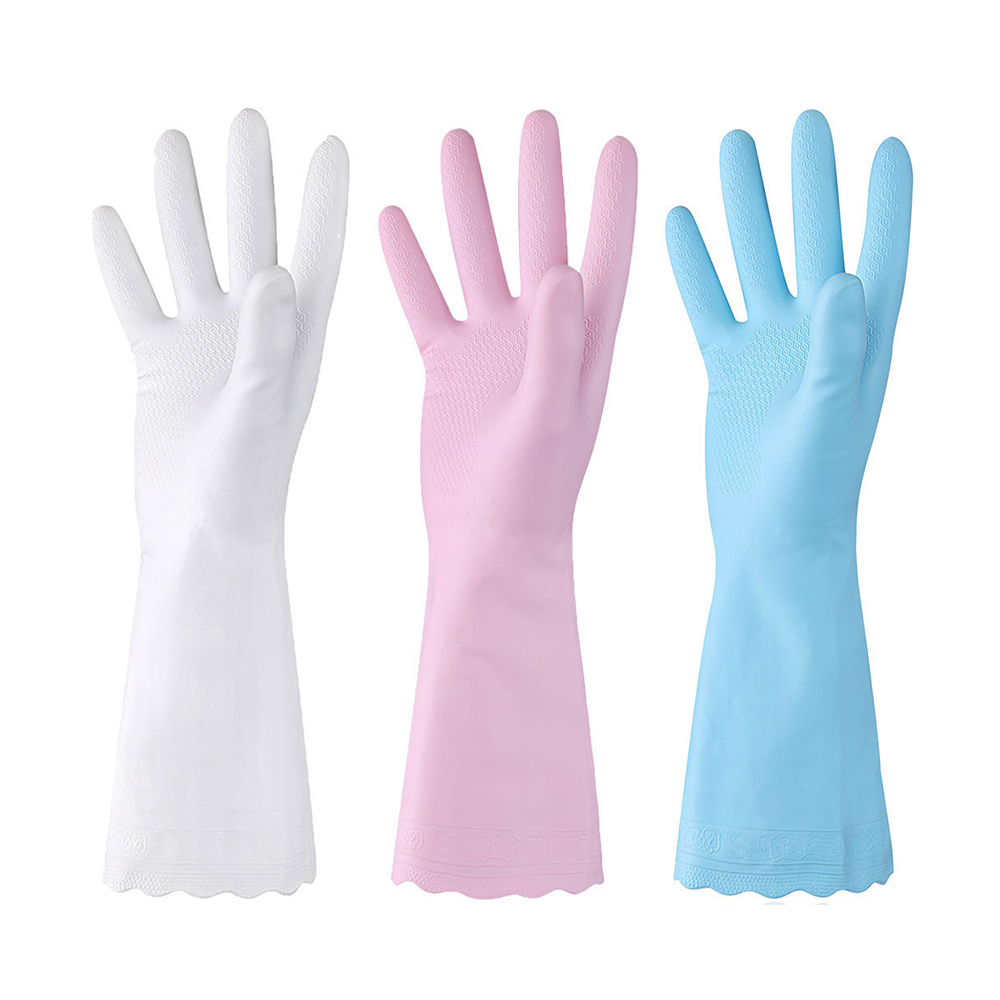
For nitrile chemical gloves used in wet cleaning, grip deserves a hands-on check. Review where the texture is actually molded: palm, fingertips or both. Try the glove with the real handles and tools, wet and dry, without introducing a dangerous chemical during a casual demonstration. Check whether the glove twists on the hand, whether the cuff rolls, and whether the user can remove it without touching a contaminated exterior. Document the model, size and trial conditions so the feedback can be repeated.
Lining is another decision that should be model specific. A lined glove may be easier to put on or more comfortable during repeated work, while an unlined version can simplify some inspection or cleaning routines. Neither construction is automatically superior. Ask how the manufacturer describes the lining, whether it changes drying and decontamination instructions, and whether the buyer’s planned cleaning procedure is compatible with it. Do not infer the presence of a lining from the exterior photo.
Compare samples with a simple scorecard
| Criterion | Question for the trial team | Record |
|---|---|---|
| Fit | Can each user fully flex the hand without excess fingertip material? | Model and size |
| Wet grip | Can the user safely handle the normal tool in the nominated task? | Tool and condition |
| Cuff | Does the cuff stay in place during reaching and removal? | Sleeve combination |
| Dexterity | Can routine controls be operated without removing the glove? | Task and time |
| Appearance | Are texture, color, thickness and seams consistent with the approved sample? | Sample reference |
| Cleaning | Can the site follow the documented decontamination instructions? | Procedure owner |
For nitrile chemical gloves, the scorecard catches usability problems a laboratory report cannot predict; it does not replace chemical testing.
5. Separate a sample approval from a bulk-order approval
An attractive sample is the start of a controlled purchase, not the end. Label each sample with supplier, model, size, color, revision date and any report number that was used in the assessment. Ask for more than one size if several users will wear the gloves. If nitrile chemical gloves are being considered for a multi-site cleaning contract, trial them at a representative site rather than with only the purchasing manager at a desk.
Agree what an approved nitrile chemical gloves sample controls: appearance, length, thickness range, texture, cuff, packaging, labeling and documents. A “similar” glove may change fit or report relevance. Route a proposed model revision through EHS and procurement.
At Red Sunshine, the public OEM service page describes customization of glove color, weight, thickness and packaging. Those options can help a distributor build a range, but they are not interchangeable with chemical-compatibility evidence. The buyer should confirm the actual NIL-series model and the documents that apply to the final agreed construction. Price, sample charges and production timing should be reconfirmed for that exact order rather than copied from an older website FAQ.
Record approval from EHS, operations, quality and purchasing against the same sample reference.
6. Put the approved details into the order documents
A quote request for nitrile chemical gloves should state the model and the conditions under which it was selected. It should also request the size split, pair count, pack format, carton markings, any private-label artwork, destination, requested shipment window and document list. Ask the supplier to identify which items are included in the price and which require separate approval. If order quantity affects color or packaging availability, resolve that before artwork and purchase-order release.
The purchase order for nitrile chemical gloves and the approved sample should use the same model revision. Ask how the supplier records lots and whether cartons trace to a batch. Pre-shipment checks should cover defects, paired sizes, counts, carton identity, color, packaging and documents. Inspection cannot recreate permeation data, but can catch a wrong product.
Compare sample development, tooling, packaging, inspection and freight terms alongside pair price.
Keep claims on artwork narrow. If the market requires a conformity mark or chemical-protection statement, obtain the underlying evidence and have the relevant compliance reviewer approve the exact wording. Nitrile chemical gloves should never acquire a broad “protects against chemicals” promise simply because the packaging team needs a short front-panel headline.
7. Plan the use, inspection and replacement rules
Reusable does not mean indefinitely reusable. Before rollout, the employer should decide how workers inspect nitrile chemical gloves before each use, how contamination is removed, where clean gloves dry, and what causes immediate replacement. Visible punctures, tears, swelling, softening, brittleness, unexplained discoloration or a change in fit all need attention. A glove can also be compromised without an obvious visual sign, which is why the chemical exposure and manufacturer guidance remain central. CCOHS specifically includes decontamination and worker training in its selection process.
Ask the supplier for model-specific care and storage instructions, then check whether the facility can actually follow them. A hanging hook or cord may be useful for some household models, but it must not be assumed on an industrial nitrile model or added to a product image without evidence. If shared gloves cannot be cleaned and dried reliably under the site’s procedure, the organization may need a different issue and replacement system. Record how the decision was made.
Teach users how to remove the glove without transferring contamination to the skin. OSHA’s PPE guidance explicitly includes safe glove removal in chemical-hazard selection. A documented product choice is only as good as the way it is worn, checked and replaced in practice.
A buyer’s decision path in one page
1. Collect the current SDS and describe each cleaning task. 2. Record chemical mixture, concentration, temperature, contact type and duration. 3. Ask suppliers for model-level evidence; exclude unsupported claims. 4. Compare glove length, texture, fit and construction against the task. 5. Trial labeled samples with representative users and record the results. 6. Align purchase order, approved sample, artwork and document set. 7. Train users, inspect each issue and set cleaning and replacement rules.
When any step fails, return to the relevant earlier decision rather than selecting a glove by color or thickness alone. The best nitrile chemical gloves are the ones that meet a defined application with documented evidence and can be used correctly by the people doing the work. “Best” is conditional on the task, not an absolute ranking.
Frequently asked buyer questions
Are nitrile gloves chemical resistant?
Some nitrile gloves can resist specific chemicals under specific conditions, but the material label cannot answer the question by itself. Check the exact model, chemical or mixture, concentration, temperature, exposure duration and test evidence. A manufacturer FAQ from Polyco notes that thickness and intended contact change the protection level and advises checking the particular application.
What is the difference between permeation and penetration?
Permeation is molecular movement through intact glove material. Penetration is leakage through a defect or opening. Both matter: a glove may look intact while permeation occurs, and a pinhole can defeat otherwise suitable material. See the CCOHS definitions.
Can a supplier use one chemical test report for every nitrile model?
Do not assume so. Ask which exact glove construction was tested and whether the proposed item matches it in material, thickness, lining and relevant manufacturing details. If the supplier cannot explain the match, request a model-specific assessment or use a documented alternative.
Should we choose the thickest reusable nitrile glove?
Not automatically. Thickness is one factor alongside chemical evidence, grip, dexterity, task duration and comfort. A thicker glove may restrict fine work, while the wrong material can remain unsuitable despite thickness. Test the proposed model in the real workflow after the safety review.
Can a glove be reused after chemical contact?
Only according to a site procedure supported by the product’s instructions and the exposure assessment. Consider what contacted it, whether it can be decontaminated, whether damage is visible, and how users will inspect it before reuse. When those conditions cannot be verified, replace the glove.
Discuss a model, not a generic promise
If your team is comparing reusable nitrile chemical gloves for industrial cleaning, send Red Sunshine the cleaning product SDS, working concentration, task description, expected contact time, required sizes and destination market. We can discuss which industrial nitrile models may be worth reviewing and what model-specific information is available. The final suitability decision belongs with your qualified safety reviewer and the verified documents for the chosen item.