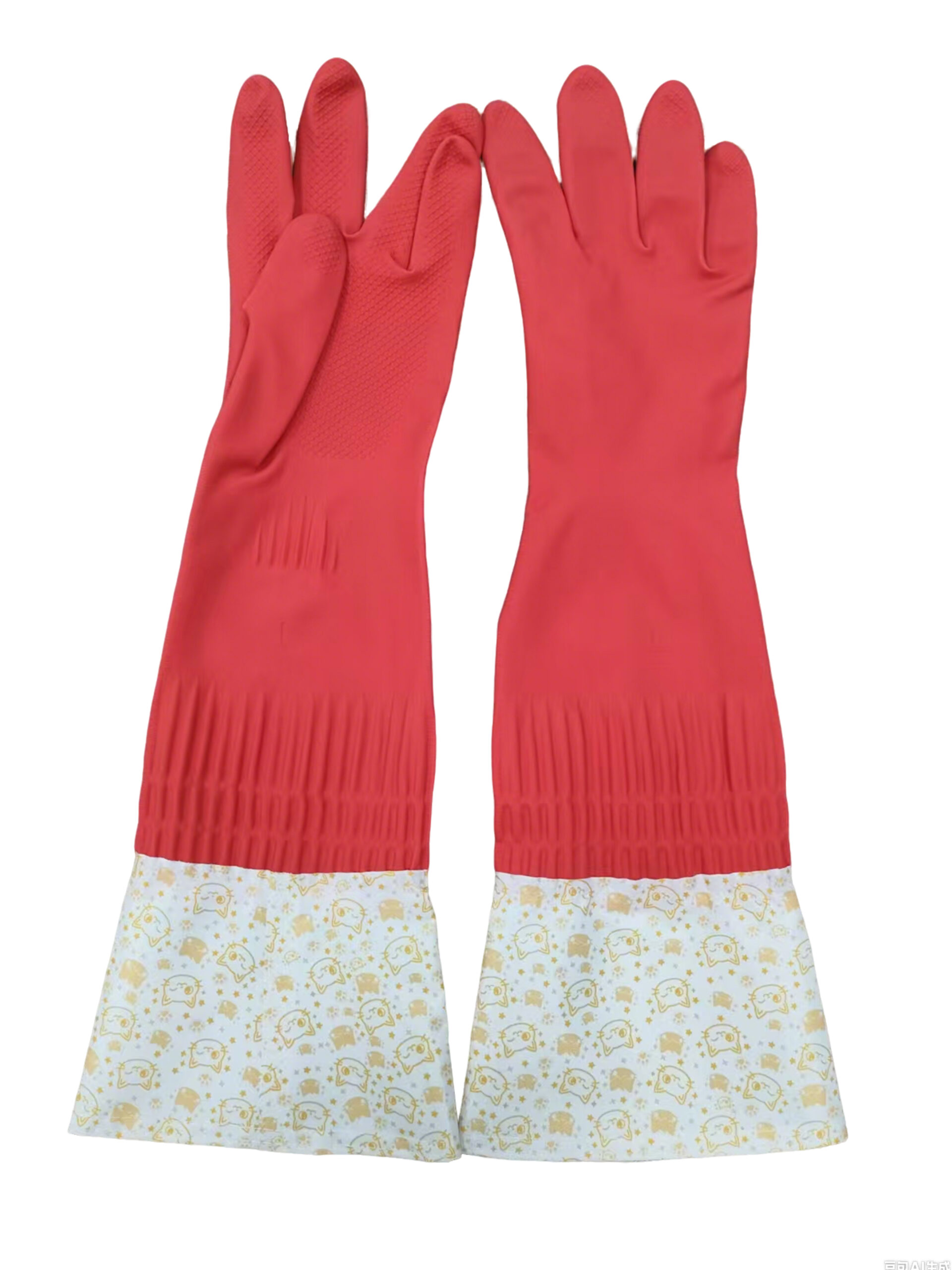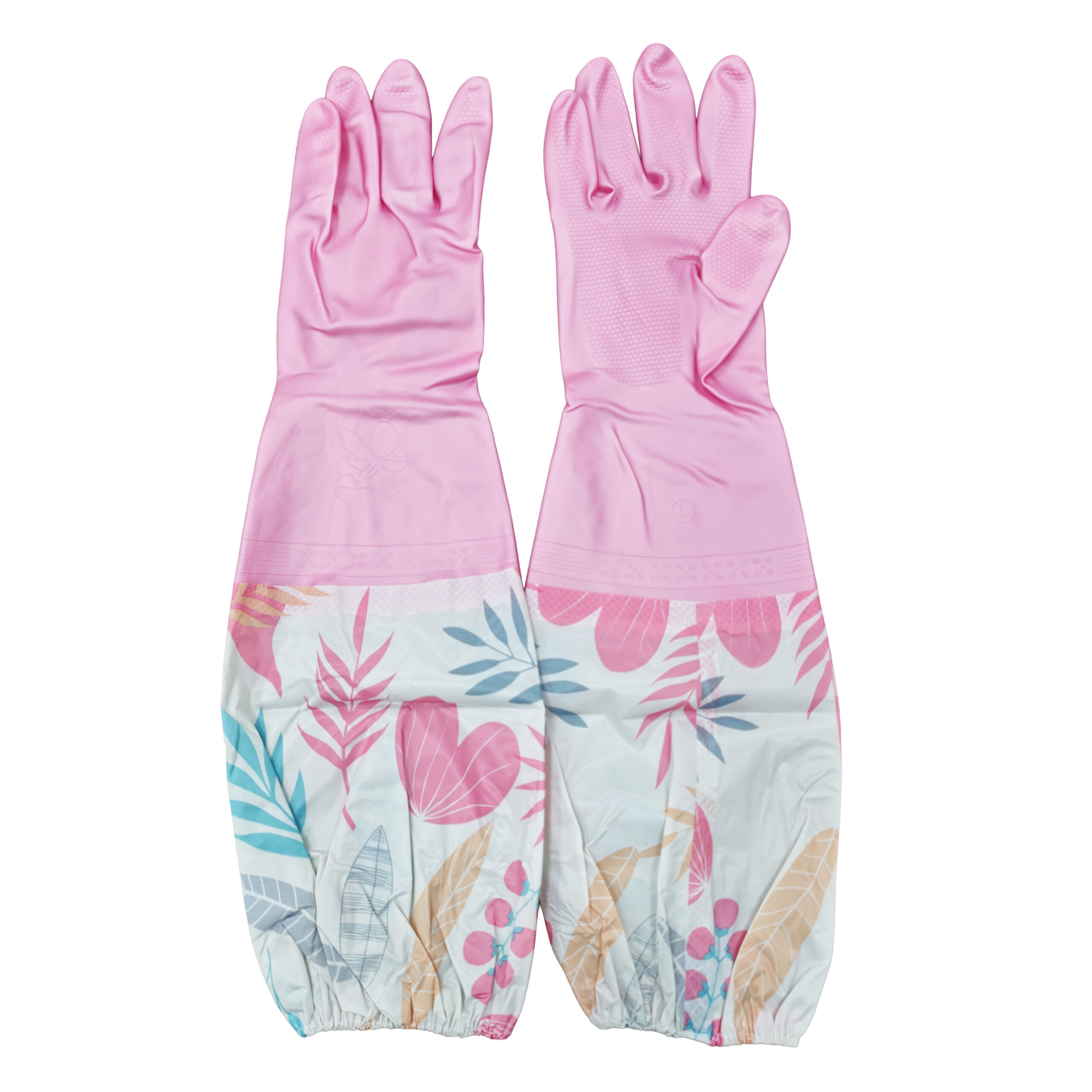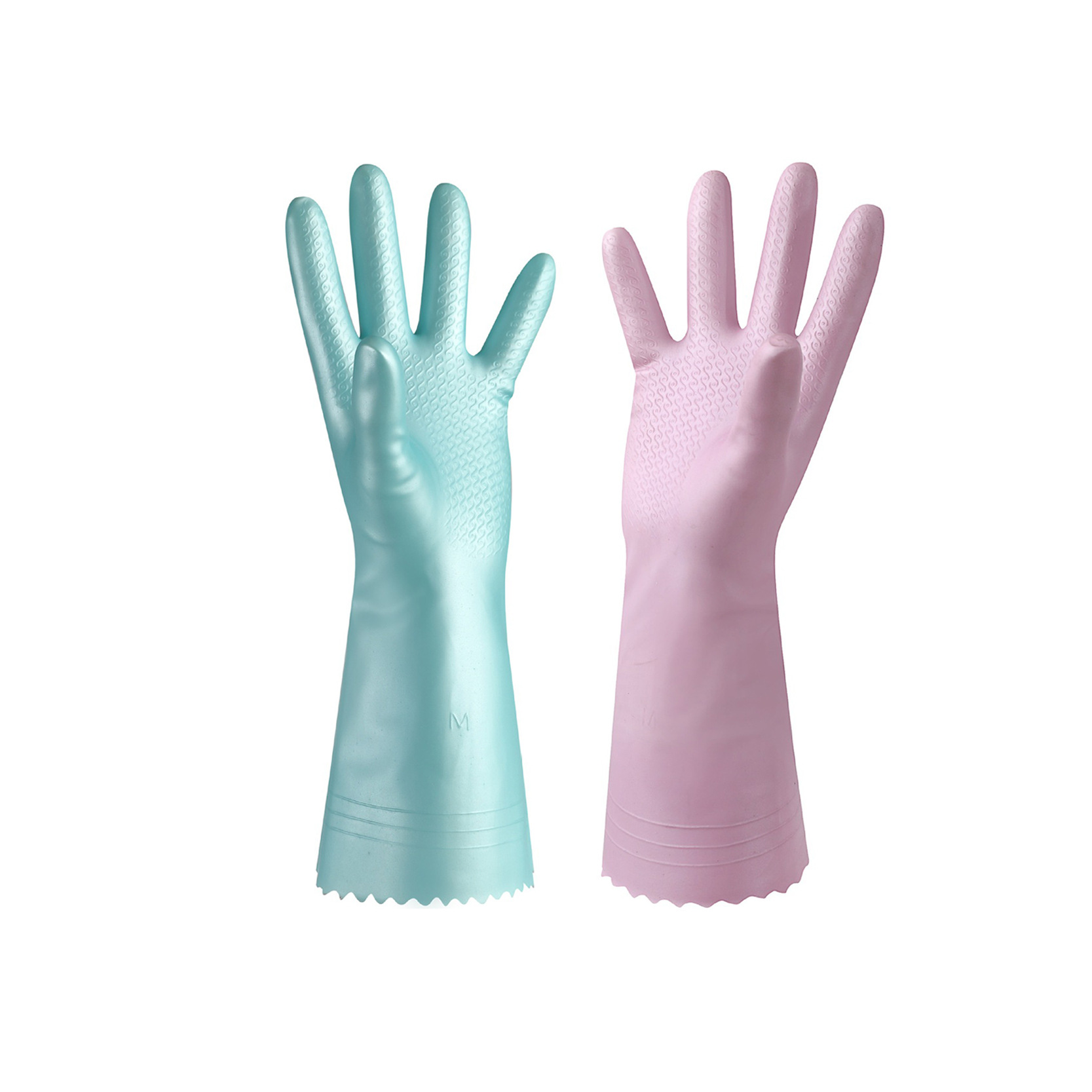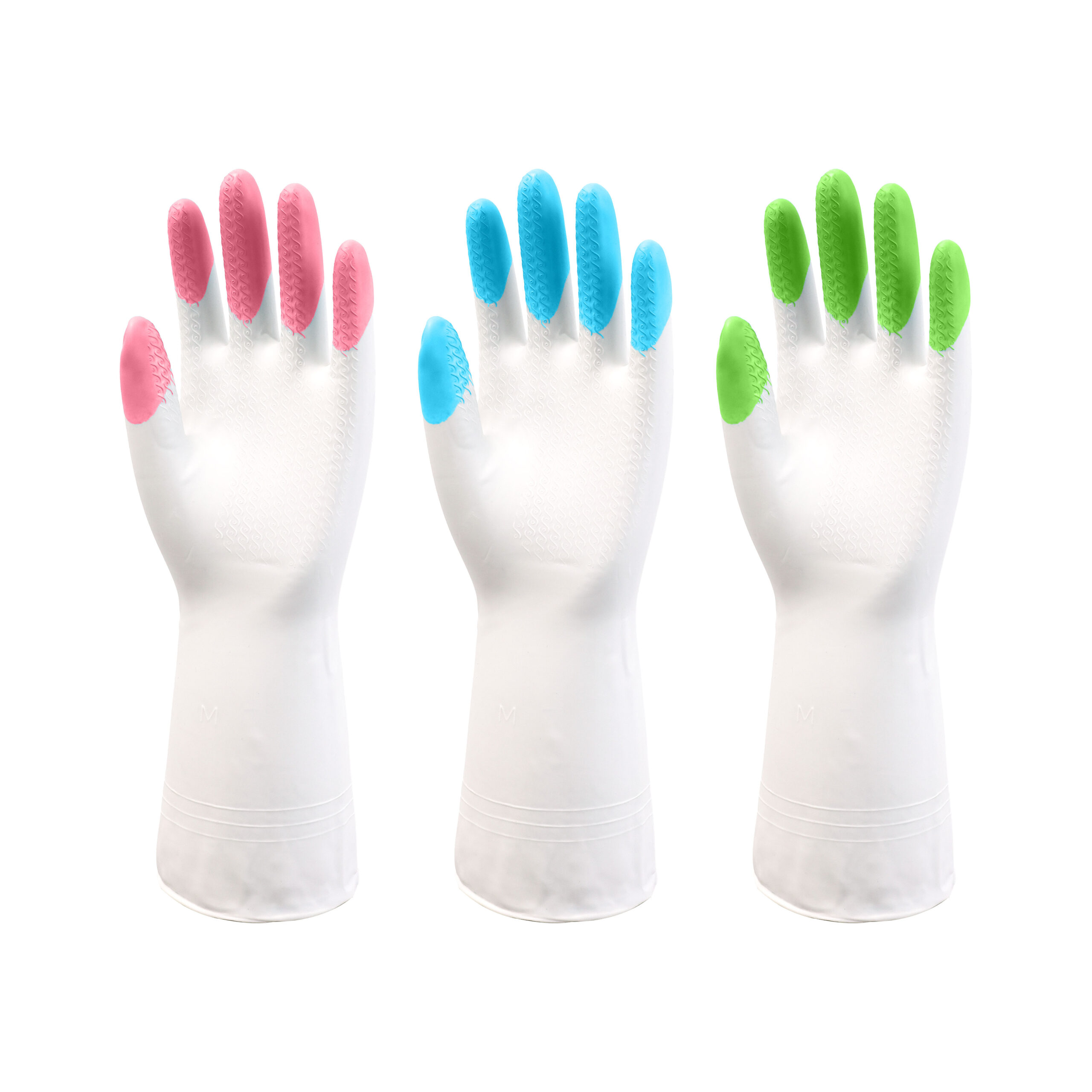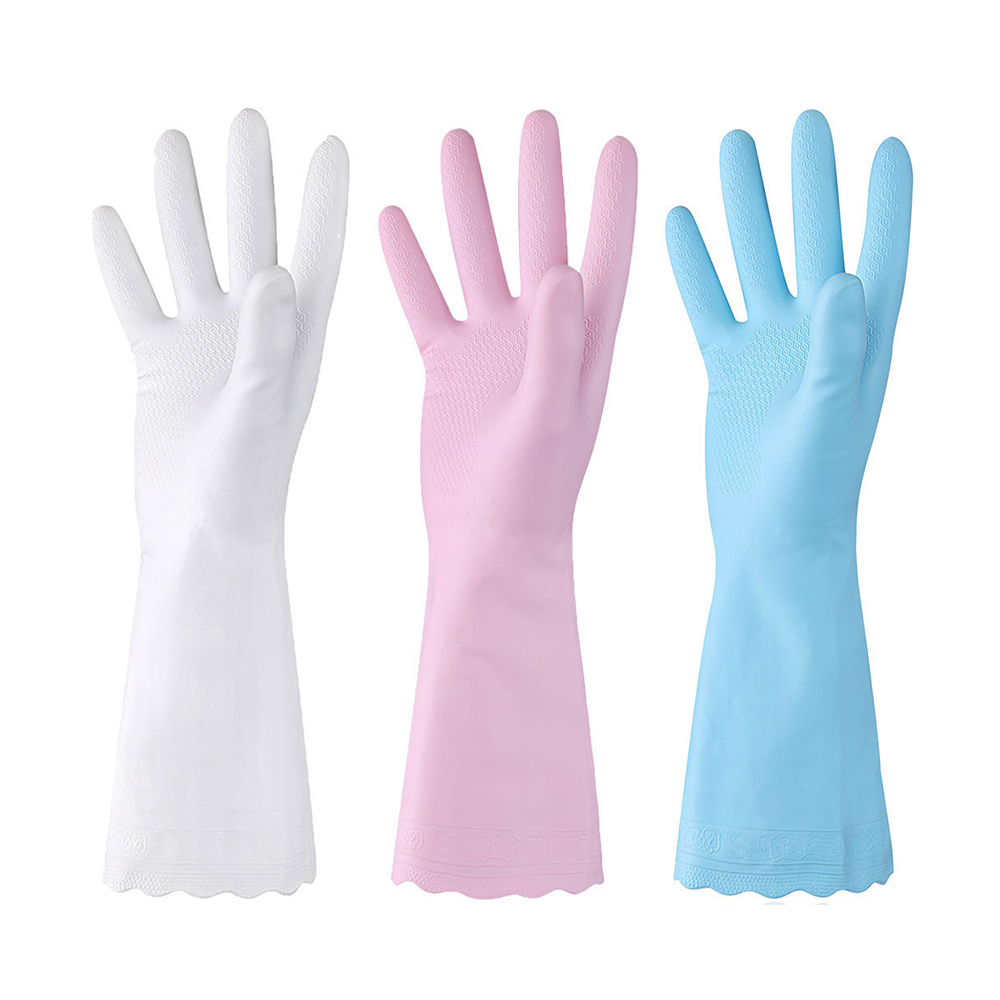
Direct answer: Reusable PVC kitchen gloves can be specified for dishwashing and kitchen cleaning without implying that they are approved for direct food handling. Before printing a food-contact claim, define the task, destination market and exact glove model. Obtain documents for that finished model and review the sample, packaging and artwork together. A material name or food-preparation photograph is not proof.
Write the intended use before choosing a glove
When considering the best options, buyers should prioritize reusable PVC kitchen gloves due to their durability and effectiveness in various cleaning tasks.
“Kitchen gloves” can mean a reusable pair for washing dishes, a pair for cleaning kitchen surfaces, or gloves worn while directly handling food. Those uses have different implications for product selection and claims. A retail buyer should start the sourcing brief with the task and the exact sentence intended for the pack.
Choosing the right PVC kitchen gloves is crucial for ensuring safety and efficiency in the kitchen environment.
Several models of PVC kitchen gloves are available, tailored for specific uses such as dishwashing, cleaning, or food preparation.
It’s essential to verify that PVC kitchen gloves meet health standards to ensure the safety of food products.
Red Sunshine’s current PVC product pages describe household cleaning and dishwashing. One page also mentions washing vegetables. Such wording should be reviewed for the particular model and destination market before it is repeated on new private-label packaging. A kitchen photograph does not turn a cleaning glove into a documented food-contact product.
Buyers should assess the specific protection each model of PVC kitchen gloves offers based on their intended use.
When selecting PVC kitchen gloves, consider factors such as fit, grip, and resistance to various cleaning agents.
The presentation of PVC kitchen gloves should clearly convey their intended use to prevent any confusion for consumers.
Documenting each claim related to PVC kitchen gloves will aid in ensuring compliance and proper messaging.
The European Commission says materials intended to contact food must not release constituents at levels harmful to health or unacceptably change food. The U.S. FDA distinguishes food-service gloves from medical gloves, so an unrelated medical clearance is not a substitute for food-use evidence. See the European Commission’s food-contact legislation overview and FDA medical-glove guidance.
Use three separate claim lanes
Claiming that PVC kitchen gloves are reusable should be backed by evidence of proper care and maintenance guidelines.
Understanding the chemical resistance of PVC kitchen gloves is vital when selecting them for various tasks.
Check the performance characteristics of PVC kitchen gloves to ensure they meet the specific needs of your kitchen tasks.
Be sure to request model-specific evidence for the PVC kitchen gloves to confirm their suitability for intended uses.
Having a clear set of specifications for PVC kitchen gloves will streamline the approval process for new purchases.
Every aspect of PVC kitchen gloves, from material to design, should be carefully evaluated before final approval.
Ensure that the intended use of PVC kitchen gloves is communicated effectively to avoid any ambiguity.
Proper documentation for PVC kitchen gloves will safeguard against potential compliance issues.
| Planned position | Example brief | Approval question |
|---|---|---|
| Dishwashing and wet kitchen cleaning | Reusable gloves for washing dishes and cleaning kitchen surfaces | Does the exact sample and pack match this everyday use? |
| General household cleaning | Reusable PVC cleaning gloves | Which cleaners, concentrations, temperatures and contact times are intended? |
| Direct food handling | Only wording supported for the exact model and market | Do current documents cover the finished glove, food type and contact conditions? |
These lanes are a buyer planning tool. They do not certify a Red Sunshine model for a particular use. Do not treat “PVC,” “latex-free,” or “kitchen” as a universal safety statement.
When preparing for audits, keep comprehensive records related to the use of PVC kitchen gloves easily accessible.
Ensure that PVC kitchen gloves are tested for performance against the claims made before they hit retail shelves.
Comparing performance metrics of different PVC kitchen gloves can help determine the best choice for your needs.
Test various models of PVC kitchen gloves to ensure a good fit and functionality during use.
Collect data on how different PVC kitchen gloves perform under similar conditions for accurate assessments.
The distinction matters at the shelf, not only in a compliance file. A shopper may see a glove beside a sink and understand “dishwashing”; a photograph of the same glove holding cut fruit can suggest a different use. Ask the category manager and the person approving claims to review the whole presentation as a customer would: front and back of pack, product name, icons, photographs and online listing. If the intended use is limited to cleaning, make that limitation plain wherever the product is sold. A small disclaimer on the back should not be expected to undo a stronger message on the front.
Turn the use decision into a claim matrix
Before requesting artwork, put every proposed phrase in a small approval table. Include the exact sentence, the place it will appear and the evidence that supports it. Do this for the retail pack, online listing, sales catalogue and social image. The same glove can appear in all four places, yet a small wording difference can change what a customer reasonably expects.
For example, “for washing dishes” describes a cleaning task. “For food preparation” suggests direct contact with food. “Food safe” is broader still and should never be inserted by a designer simply because the gloves appear in a kitchen. Likewise, “latex-free” describes the absence of natural-rubber latex in the specified product; it should not be expanded into “hypoallergenic” or “safe for all sensitive skin” without appropriate support.
| Proposed wording | What the buyer should ask before approval |
|---|---|
| “Reusable” | Does the care information describe cleaning, drying, inspection and replacement? |
| “Waterproof” | What is the test or inspection basis for the finished model and its intended wet task? |
| “Non-slip grip” | Where is the texture, and under which wet or soapy conditions was grip evaluated? |
| “Food contact” | Which market, food type, temperature and contact duration do the documents cover? |
| “Chemical resistant” | Which named chemical, concentration and exposure conditions were assessed? |
The table is not a list of claims to print. It is a way to prevent an unsupported sentence from moving from a product mockup into a mass-produced carton. When evidence is missing, either remove the claim or commission the applicable assessment before approval. A buyer should also review the translation: a short phrase in another language can imply a stronger promise than the English master copy.
Ask the PVC gloves manufacturer for model-specific evidence
Send a dated brief identifying the use, country of sale, sales channel, user, size range, length, lining, palm texture, cuff, color, print, pair packaging and expected quantity. If the glove is to be used with a cleaner, name the product and its concentration. A general promise of “chemical resistance” is not enough to establish suitability.
Request a specification sheet for the finished pair, including model code, material and construction, size measurements and tolerances, weight or thickness where controlled, texture location, lining and cuff design. For a concealed hanging loop or elastic cuff, request photographs in the normal worn position. The glove shown on a box should match the glove inside.
If direct food contact is proposed, ask what exactly was assessed: final formulation, pigments, printing, food types, temperature and contact duration. The FDA notes that phthalates have been used to soften PVC in food-contact applications. That supports a request for formulation and test evidence; it does not establish that every PVC glove has the same composition or risk. FDA: Phthalates in food-contact applications.
For EU consumer sales, assess general product-safety and traceability obligations alongside any food-contact rules. The EU General Product Safety Regulation has applied since 13 December 2024. Other rules depend on the final use and claims. Obtain market-specific review rather than copying a certificate or label from another SKU.
Clear communication about PVC kitchen gloves ensures all stakeholders understand their intended use and safety standards.
Read the document scope, not just its cover page
A buyer does not need to become a laboratory specialist to spot common mismatches. Compare the company named on the report, model number, material, color or formulation, sample description, test date and stated method with the glove being ordered. If a report refers to a disposable vinyl glove, a different color formulation or an unfinished material, ask the supplier to explain why it would apply to a reusable kitchen glove. Do not infer equivalence from a shared brand name.
For a proposed EU plastic food-contact article, the European Commission’s guidance on plastic food-contact materials describes declarations of compliance and supporting documentation through the supply chain. The required documentation and testing must be assessed against the actual article and use conditions. A generic certificate image on a website does not perform that check for a buyer.
Keep an evidence register with document owner, version, model, expiry or review date where applicable, and the exact claim it supports. If the product is revised, revisit the register before reusing the artwork. This makes later questions from a retailer, importer or market authority easier to answer without searching through an email thread.
For direct food-contact claims in particular, distinguish a supplier’s material statement from evidence about the finished article. A formulation description, a raw-material declaration and a test on a finished glove answer different questions. Printing, pigments, lining and changes in production can also affect whether an old document still describes the item on the shelf. Keep the approval decision tied to the finished SKU and its stated conditions of use. The European Commission’s legislation overview explains the framework for food-contact materials and the role of supporting documentation; it does not certify an individual glove by itself.
Compare samples in the job the pack promises
Monitor changes in the production process of PVC kitchen gloves to ensure compliance with safety regulations.
Document any changes made to PVC kitchen gloves after approval to maintain a clear audit trail.
A quotation cannot show whether the pair fits at a sink or whether its label is accurate. Test physical samples of the proposed model and keep written observations.
| Check | What to record |
|---|---|
| Fit | Fingertip, thumb and palm fit across intended wearers; size label and measurements. |
| Wet handling | Observed grip for the intended dishes or tools under stated test conditions. |
| Cuff | Opening, length, elastic position and hanging-loop location; front and back photographs. |
| Interior | Lined or unlined construction and consistency across pairs. |
| Finish | Color reference, print, texture position, left/right pairing and visible defects. |
| Pack | Pair count, barcode, language, warnings, intended-use wording and artwork version. |
Retain an approved “golden sample.” Approve the physical glove and printed pack as one matched set. If color, formulation, print, cuff or lining changes, ask whether existing test evidence still covers the revision.
For repeated purchases, ensure that PVC kitchen gloves maintain consistent quality and compliance with previous orders.
Keep in mind the specific requirements of PVC kitchen gloves when drafting your order specifications.
Test several sizes, not only the presentation sample
Brand teams often receive a carefully presented medium sample. A retail line, however, may include small, medium and large sizes, sometimes with different colors or pack formats. Ask for the intended size range and a proposed size split. Test the smallest and largest sizes as well as the middle size, because thumb placement, fingertip length and cuff opening can feel different across the range.
Use a repeatable trial sheet. Record the wearer, task, time, water conditions and observations, then compare more than one pair where possible. A wet-grip trial should use the objects and conditions shoppers will encounter; it should not be converted into an unqualified performance rating. If the pair is lined, check whether the interior dries as expected under the intended care instructions. If the cuff contains an elastic finish or hanging loop, confirm that it sits in the correct position during ordinary wear and storage.
The aim is to establish a reference that purchasing, quality and marketing can all recognize. A sample that “looks close” in a photograph may still differ in weight, feel, lining or hand shape. Written approval should name the exact sample revision and the deviations that are accepted.
Make the trial realistic without presenting it as a laboratory test. Ask wearers to put the gloves on and remove them with hands in the condition expected during use. Check whether the thumb and finger lengths permit the intended movement, whether the cuff stays comfortable during repeated bending, and whether a damp interior can be cleaned and dried according to the proposed care instructions. Record the method and observations. A single enthusiastic comment such as “good grip” is less useful than a note describing the object held, whether it was wet and what happened.
Inspect several production-like pairs, not only the most polished display sample. Photograph each side of the glove in the same orientation, including the fingertips and cuff. This is particularly helpful when artwork shows a palm texture that is absent from the back, or when the pack promises a hanging feature that is hidden inside the cuff. The approved images then become a reference for the designer and incoming inspection. They should show the real product clearly rather than smooth away a construction detail.
Control images and wording together
Marketing imagery can imply more than the written copy. A glove photographed holding raw food may imply food-contact suitability. A glove photographed beside a concentrated cleaner may imply protection against that chemical. Review photographs, icons and captions against the approved use and supporting documents before publication.
This is especially important in private-label work. Designers may use an early prototype while procurement changes the construction. AI-generated scenes should never stand in for a photograph of the physical SKU. If a lifestyle image is used, the glove’s fingers, palm/back orientation, texture, cuff, lining and color must match an approved product reference.
Verify the claims made for PVC kitchen gloves by cross-checking them with industry standards and regulations.
Keep the first order manageable
Assessing the usage instructions of PVC kitchen gloves can prevent misuse and potential safety issues.
The packaging of PVC kitchen gloves plays a key role in communicating their features and intended use.
To maintain high standards, regularly assess the quality and effectiveness of PVC kitchen gloves in the market.
A first retail order may need several sizes and colors, but every added variation creates another combination of glove, packaging, barcode and artwork to approve. Separate the decisions. First, choose one construction and confirm its intended use. Then agree the size range and size ratio. Add color or print variants only when the supplier can state which components, tests and packaging elements change.
Ask for a quotation by SKU rather than a single price for “PVC gloves.” The comparison should include pair weight or controlled thickness, dimensions, lining, cuff, texture, pack count, carton size, the named Incoterm, lead time assumptions and any one-time tooling or artwork charges. A stock-color trial and a custom-color run may have different minimums. The final MOQ belongs in a written quote for the actual model and size/color mix.
For importers, the landed cost also depends on freight, cartons, duties, inspection and unusable stock. A lower unit price may be less useful if the pack is oversized for the shelf, barcodes need relabeling or an unsupported claim delays launch. The buyer should calculate cost per sellable pair against the approved configuration rather than comparing unlike quotations.
This is where Red Sunshine can enter the conversation naturally: its Guangzhou team can discuss models, samples and packaging with buyers, while its original production base is in Foshan, Guangdong, as described on its current sourcing guide. That location information does not replace a model-specific quotation or product evidence; it simply tells buyers whom to approach for the next step.
Before approving a price, ask the supplier to identify what is included in that line. Does it cover one color or several, one size or a size assortment, a plain bag or a printed retail pack? Who supplies the barcode, translated copy and final artwork? Which sample version is the price based on? These questions prevent an attractive initial number from turning into a different product after packaging and approvals are added. Keep a dated comparison sheet so each bidder is evaluated against the same brief.
Ensure that all claims regarding PVC kitchen gloves are supported by reliable evidence to build consumer trust.
Order timing needs the same precision. A quoted production period may begin after deposit, final artwork approval, material confirmation or another agreed milestone. Ask the supplier to state the trigger and any dependencies, including sample approval and packaging procurement. If the retailer has a fixed delivery window, work backward from the required arrival date and allow for inspection and freight. Do not turn an indicative lead time into a guaranteed shelf date until the actual order, materials and shipping plan are confirmed.
For successful marketing, the benefits of using PVC kitchen gloves should be highlighted clearly to consumers.
Prepare for changes after approval
Private-label projects rarely stay entirely static. A retailer may ask for a different color, translated care instructions or a revised display bag after approving the glove. Treat these as controlled changes. Record who requested the change, which SKU and packaging version it affects, whether new samples or tests are needed, and which party signs off before production resumes.
The same discipline helps with complaints. If customers report leaks, poor fit or unexpected color variation, a batch code and retained sample can help the parties compare the shipped lot with the approved reference. Ask in advance how the supplier identifies lots, keeps inspection records and handles nonconforming stock. Avoid promising a zero-defect rate; agree observable criteria and a practical remedy process instead.
Each model of PVC kitchen gloves should be evaluated for its intended purpose to ensure optimal performance.
For repeat orders, request confirmation that the model, formulation, color standard, tooling, pack artwork and claimed use are unchanged. If any item changes, do not assume the old sample or old report still covers the new order. The simplest procurement habit is to make every purchase order point to one approved specification revision.
Seven steps from brief to purchase order
- Define the use. Separate dishwashing, general cleaning and direct food handling; name the destination market.
- Select a model. Request model code, dimensions, finish, lining, texture and cuff details.
- Match the documents. Record the model, document date, scope, issuing laboratory or body and claimed use.
- Test the sample. Evaluate fit, wet handling, cuff, finish and packaging; retain the approved version.
- Confirm commercial terms. Request written MOQ, size/color split, sampling and artwork charges, packaging count, Incoterm and lead time for the exact specification.
- Approve final artwork. Match claims, warnings, barcode and size markings to the product and purchase order.
- Agree lot inspection. Set acceptance criteria and traceability before shipment; evidence for another model is not evidence for this lot.
For a first conversation with Red Sunshine, send the intended use, sales country, preferred model or reference image, size and color plan, pack concept and forecast quantity. Ask which existing or custom options are feasible and what evidence is available for that configuration. Review a PVC household glove model and the OEM/private-label service, then confirm current wording and terms in a quotation.
Frequently asked questions
Are reusable PVC kitchen gloves the same as disposable vinyl food-service gloves?
No. PVC names a polymer, but construction and intended use differ. A reusable cleaning glove and a disposable food-service glove cannot share claims merely because both contain PVC.
Can reusable PVC gloves be marketed for food preparation?
Only after the exact finished model and proposed use have been checked against the requirements of the destination market. A generic “food-grade PVC” phrase or a vegetable photograph is insufficient.
Does latex-free mean suitable for every sensitive-skin customer?
No. A PVC glove need not contain natural-rubber latex, but the complete formulation and finished product matter. Avoid a universal “allergy-free” claim.
Are PVC cleaning gloves suitable for strong chemicals?
Do not assume so. Compatibility depends on the exact glove, chemical, concentration, temperature and contact time. Request relevant model-specific data and follow the cleaner’s instructions.
What must be approved before private-label packaging is printed?
Approve the finished sample, use wording, size mark, color and print, barcode, pack count, warnings, artwork revision and claim evidence as one controlled set.
Is there one MOQ for custom PVC kitchen gloves?
No. The minimum depends on model, color, size split, formulation, print and packaging. Ask for a written quote for the approved specification.
Conclusion
The question is whether a PVC kitchen glove fits the task, carries supported claims and arrives in the approved pack. A clear brief, matched samples and model-specific documents make that decision possible.