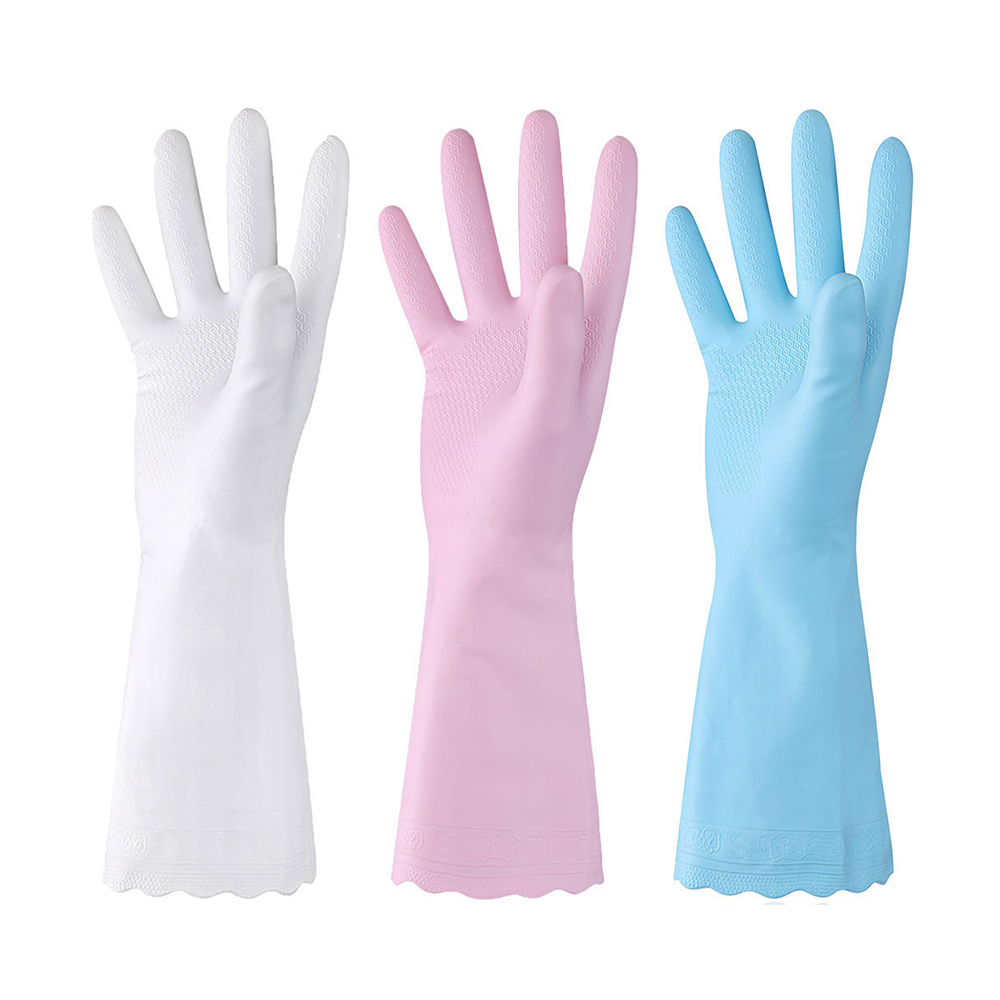
How to Choose and Verify a Private Label Household Gloves Supplier
Choosing a private label household gloves supplier requires more than comparing catalogues and unit prices. A reliable sourcing process should define the product, verify the supplier’s legal and production identity, compare physical samples, confirm target-market requirements and lock the approved specification before bulk production.
This household glove sourcing guide is written for importers, distributors, retailers, cleaning-product wholesalers, buying offices and brands developing reusable cleaning gloves under their own labels.
Start With a Product Brief, Not a Supplier Catalogue
A common sourcing mistake is to send the same product photograph to several suppliers and ask each one for the “best price.”
One supplier may quote a lighter glove, another may use a different lining, and a third may change the packaging or size ratio. The quotations appear comparable, but the products are not.
Before contacting a private label household gloves supplier, prepare a product brief covering:
- Intended use, such as dishwashing, laundry, general cleaning, light gardening or professional housekeeping
- Destination country and sales channel
- Preferred material and acceptable alternatives
- Required sizes and size ratio
- Glove length
- Pair weight or thickness
- Lined or unlined construction
- Grip pattern and texture location
- Cuff construction
- Standard or custom colors
- Glove printing, logo or decorative pattern
- Retail or bulk packaging
- First-order quantity
- Estimated annual volume
- Target sample and delivery dates
If you already sell a similar product, provide a physical reference sample where practical. A photograph can help identify the style, but it cannot communicate exact weight, hand shape, elasticity, lining quality or surface feel.
Buyers who are still defining their range can review Red Sunshine’s household latex, nitrile and PVC glove portfolio before preparing the first RFQ.
Where Can Buyers Find an OEM Household Gloves Supplier?
No single sourcing channel is sufficient for every project. A buyer can build an initial supplier list through several routes.
Search engines
Google and Bing are useful for discovering independent suppliers. More specific searches usually produce better results than a broad phrase such as “rubber gloves.”
Useful B2B searches include:
- private label household gloves supplier
- OEM household gloves supplier
- reusable cleaning gloves wholesale supplier
- household gloves manufacturer China
- custom household gloves packaging
- long-cuff cleaning gloves supplier
- household glove supplier low MOQ
- household glove RFQ
Review the company’s product pages, production information, business identity and contact details. A website alone does not prove manufacturing capability, but it can show whether the company understands household glove construction and B2B purchasing requirements.
B2B marketplaces
Alibaba, Made-in-China, Global Sources and other supplier directories can help buyers identify potential companies and compare common product configurations.
Platform badges should be treated as one source of information, not as a substitute for verification. Confirm the supplier’s legal company, business role, production address and payment beneficiary independently.
Trade fairs and industry events
Trade fairs allow buyers to handle samples and speak with multiple suppliers efficiently. However, an attractive stand does not automatically prove factory ownership, quality control or suitability for a private-label project.
Use an exhibition to create a shortlist. Complete legal-entity checks, sample testing and commercial verification afterward.
Professional referrals
Freight forwarders, testing laboratories, inspection companies, buying agents and existing distributors may recommend suppliers. A referral is helpful, but the supplier should still be evaluated against your own product, quantity, market and packaging requirements.
Manufacturer or Trading Company: Which Should You Choose?
The more useful question is not always “factory or trader?” It is:
Who controls the product, production, quality and corrective action?
A direct manufacturer may provide stronger control over construction, production scheduling and repeat orders. A professional trading company may provide a broader product range, mixed-order support or coordination between different factories.
Risk arises when a company presents itself as a manufacturer but does not clearly disclose who produces the goods or controls quality.
Ask each potential private label household gloves supplier to explain:
- Its complete legal company name
- Its role in the transaction
- The actual production address
- Which production stages are completed in-house
- Which stages are subcontracted
- Who controls the glove formers or molds
- Who issues the invoice
- Who receives payment
- Who handles complaints and corrective actions
An office and factory may be located in different cities. This is not automatically a warning sign. However, the relationship between the sales company, production factory, exporter and payment entity should be understandable and verifiable.
Red Sunshine’s customer communication is coordinated from Guangzhou, while its original production base is in Foshan. Buyers can also review the published household glove manufacturing process to understand the principal production stages before arranging further verification.
Verify the Legal Company and Production Identity
Before paying for tooling, packaging or bulk production, compare the supplier’s company information across all commercial documents.
Check:
- Registered company name
- Business licence
- Registered address
- Operating address
- Factory address
- Website and business email domain
- Quotation
- Pro forma invoice
- Bank beneficiary
- Exporting entity
- Certification holder
If different companies are involved, request a written explanation of their relationship.
The U.S. International Trade Administration recommends conducting due diligence on overseas business partners and using independent information where appropriate. For important relationships, buyers may also consider third-party background checks or a site visit.
A live factory video call can support an initial review. Ask the supplier to show production equipment, current production, raw-material storage, inspection areas and packaging operations—not only a prepared showroom.
Check Certificates by Scope, Not by Logo
A certificate logo on a website is not enough to approve a supplier or product.
For every certificate or test report, check:
- Legal holder
- Factory address
- Certificate or report number
- Issuing organization
- Standard or test method
- Covered product or product family
- Issue and expiry dates
- Relevance to the model being purchased
The ISO guide to ISO 9001 in the supply chain explains how a quality management system can support supplier selection. However, ISO 9001 does not automatically prove that every product made by the supplier meets every destination-market requirement.
Where applicable, accredited management-system certificates can be checked through the issuing body and IAF CertSearch.
Instead of asking only, “Do you have CE?”, ask:
Which requirements apply to this exact glove model, intended use and destination market, and which documents support those claims?
A reusable household cleaning glove, occupational protective glove and food-contact glove may follow different regulatory and testing pathways. Documents and claims should therefore be model-specific and market-specific.
What Should a Private Label Household Gloves Supplier Include in an RFQ?
A structured household glove RFQ makes it easier to compare several suppliers on the same basis.
| RFQ field | Information to provide |
|---|---|
| Product | Reusable household cleaning glove |
| Application | Dishwashing, general cleaning or professional housekeeping |
| Destination | Country and sales channel |
| Material | Required material or permitted alternatives |
| Sizes | Required sizes and estimated ratio |
| Length | Target length and tolerance |
| Weight or thickness | Pair weight or thickness at specified positions |
| Lining | Unlined, flock-lined or other construction |
| Grip | Fingers, palm, full hand or specified area |
| Cuff | Rolled, bound, gathered, elastic, knitted or other design |
| Color | Standard color or Pantone reference |
| Branding | Glove logo, print or pattern |
| Packaging | Polybag, hanging card, box, barcode and carton |
| Quantity | Trial order and estimated annual volume |
| Documents | Required model-specific reports |
| Trade term | Named Incoterms rule and location |
| Timing | Sample and delivery deadlines |
Ask suppliers to identify every assumption or proposed alternative in their quotation. If a supplier changes the glove weight, size ratio, lining, packaging or carton quantity to reduce the price, the change should be clearly stated.
Red Sunshine’s private-label and OEM/ODM glove services cover product construction, color, printing, cuff and packaging development. Final feasibility, MOQ and lead time still depend on the approved specification.
What Should a Complete Supplier Quotation Include?
A useful quotation should show more than the unit price.
Request:
- Exact model and construction
- Material
- Size range and size ratio
- Pair weight or thickness
- Measurement tolerances
- Glove length
- Lining
- Color
- Grip pattern
- Cuff construction
- Printing
- Packaging configuration
- Pairs per inner pack and carton
- Carton dimensions
- Gross and net weight
- MOQ
- Price tiers
- Sample cost
- Printing, plate, mold or artwork fees
- Production lead time
- Quote validity
- Payment terms
- Incoterms rule and named place or port
- Estimated container loading quantity
Do not accept “FOB” or “CIF” without a named port and agreed version. The International Chamber of Commerce publishes the current Incoterms® 2020 rules. For containerized or multimodal shipments, confirm the appropriate rule with your freight forwarder.
The lowest quoted price does not always create the lowest landed cost. Packaging efficiency, freight, tariffs, inspection costs, defects and inventory requirements all affect the final cost per sellable pair.
For broader online purchasing considerations, see Red Sunshine’s durable rubber glove buying guide.
How Should Buyers Compare Household Glove Samples?
A quotation can repeat the requested numbers. A physical sample shows how those numbers have been converted into an actual glove.
A responsible private label household gloves supplier should be willing to identify the sample model and explain any difference between a standard sample and the proposed customized product.
Check the physical structure
Evaluate:
- Correct five-finger anatomy
- Natural finger proportions
- Clear left- and right-hand construction
- Consistent overall hand shape
- Correct thumb position
- Cuff width relative to the palm
- Cuff length and symmetry
- Grip texture in the specified position
- Uniformity of the lining
- Printing position and coverage
- Surface defects, discoloration or deformation
A cuff that is wider than the palm, an abnormally shaped index finger or misplaced palm texture can indicate that the sample does not match the intended structure.
Record measurements
Measure and record:
- Pair weight
- Overall length
- Palm width
- Finger lengths
- Cuff opening
- Thickness at agreed positions
- Packaging dimensions
Test several pairs where possible. One good sample does not demonstrate production consistency.
Perform controlled functional checks
Check:
- Ease of donning and removal
- Fit and dexterity
- Wet grip
- Cuff stability
- Water leakage
- Visible pinholes
- Odor
- Lining shedding
- Print adhesion
- Comfort during the expected wearing period
Informal cleaning trials should not be used to make unsupported claims about chemical resistance, food contact, heat resistance or safety performance. Such claims require appropriate evidence for the exact model and application.
Approve a Golden Sample and Written Specification
Once the product is accepted, do not rely on photographs or chat records alone.
Prepare an approval package containing:
- Signed or sealed physical sample
- Final specification sheet
- Approved color reference
- Approved artwork
- Barcode information
- Carton markings
- Measurement tolerances
- Visual-defect criteria
- Performance checks
- Required documents
- Inspection method
- Written change-control requirements
The supplier should not substitute the material, lining, pigment, packaging, printing method or production location without written approval.
Both buyer and supplier should retain the approved sample. This golden sample becomes the practical reference for bulk production and inspection.
Evaluate Production and Quality-Control Capability
A qualified OEM household gloves supplier should be able to explain how the product is controlled from incoming material to shipment.
Useful questions include:
- How are incoming materials identified and approved?
- How are formers cleaned?
- How are dipping conditions controlled?
- How are weight, length and thickness monitored?
- How are pinholes and visible defects detected?
- How is lining quality checked?
- How is printing inspected?
- How are nonconforming products separated?
- How are production batches identified?
- How are customer complaints investigated?
- Can order-specific production and inspection records be supplied?
Buyers unfamiliar with the process can review how reusable rubber gloves are manufactured before conducting a supplier audit.
For high-volume, strategic or technically sensitive projects, consider an on-site audit, production monitoring or independent pre-shipment inspection.
Confirm Target-Market Requirements Before Final Packaging
Do not approve retail packaging until the requirements of the destination market and sales channel have been reviewed.
Depending on the product and market, required information may include:
- Product identifier
- Material
- Size
- Batch or traceability code
- Manufacturer information
- Importer information
- Responsible-person information
- Country of origin
- Warnings
- Care instructions
- Required languages
- Barcode
- Recycling information
- Online-listing information
For example, the EU General Product Safety Regulation contains product-safety, traceability and economic-operator requirements for consumer products placed on the EU market.
Requirements vary by market, intended use and product claim. A supplier’s previous export experience may help, but it does not replace the importer’s compliance review.
Red Flags When Evaluating a Household Gloves Supplier
No single warning sign proves that a supplier is unsuitable. Several warning signs together justify additional verification.
Watch for:
- A quotation issued before the supplier understands the product
- One certificate presented as covering every product and country
- Refusal to identify the legal company or production location
- Unexplained changes to bank details
- Price changes after basic specifications are confirmed
- A sample that differs from the quotation
- No distinction between standard and customized products
- Unlimited customization claims without tooling or MOQ explanations
- Production-capacity claims unsupported by equipment or records
- Pressure to approve packaging before the glove is approved
- Refusal to record tolerances and inspection criteria
- Absolute guarantees that cannot be verified
A professional private label household gloves supplier should also ask the buyer questions. Clarifying the market, application, order quantity, size ratio, packaging and performance expectations is part of responsible supplier communication.
How Should Buyers Make the Final Supplier Decision?
Use a weighted scorecard rather than selecting a supplier solely by price.
| Evaluation category | Main question |
| Product match | Does the proposed construction fit the intended application? |
| Sample quality | Does the physical sample meet the product brief? |
| Consistency | Are dimensions, weight and workmanship repeatable? |
| Documentation | Are company and product documents relevant and verifiable? |
| Communication | Are answers clear, specific and timely? |
| Commercial terms | Are MOQ, pricing, payment and lead time workable? |
| Production control | Can the supplier explain and document its processes? |
| Customization | Can the supplier reproduce the required glove and packaging? |
| Supply continuity | Can it support repeat orders and growth? |
| Corrective action | Is there a clear process for resolving nonconformity? |
The right supplier is not necessarily the one with the largest catalogue or lowest quotation. It is the supplier that can repeatedly produce the approved product, document what is being supplied and communicate clearly when conditions change.
Working With Red Sunshine
Red Sunshine manufactures reusable household and industrial gloves and supports OEM and private-label programs for brands, importers, retailers and distributors.
The customer-service and export team operates from Guangzhou, while the original production base is in Foshan. This arrangement allows customer discussions, sample coordination and export communication to be managed separately from factory production.
Buyers can begin with:
- An existing physical sample
- A product photograph
- A specification sheet
- A packaging concept
- A completed household glove RFQ
For a useful initial review, include the intended application, destination market, product construction, packaging, estimated quantity and target delivery period.
The objective is not to recommend the most expensive glove or claim that one product is universally “best.” It is to establish a specification that fits the buyer’s market and can be reproduced consistently.
Frequently Asked Questions
How do I find a private label household gloves supplier?
Prepare a written product brief and search using manufacturer, supplier, OEM, private-label and wholesale terms. Shortlist suppliers with relevant products, then verify the legal company, production location, samples, documents, quotation and quality-control process.
What should I send to an OEM household gloves supplier?
Send the intended use, destination market, material, sizes, length, weight or thickness, lining, grip, cuff construction, colors, printing, packaging, quantity, document requirements and delivery target. A physical reference sample is also useful.
How can I verify whether a household glove supplier is a factory?
Review the business licence, production address, equipment, live production evidence and manufacturing records. Ask which processes are completed in-house and which are subcontracted. If several legal entities are involved, request a written explanation.
What is the normal MOQ for private label household gloves?
There is no universal MOQ. It depends on whether the model is standard or customized, as well as material, color, size ratio, printing, cuff, packaging, tooling and production schedule. Existing products may allow smaller trial arrangements than fully customized models.
Should buyers request household glove samples before ordering?
Yes. Evaluate the five-finger structure, dimensions, pair weight, fit, grip, cuff, lining, printing, odor and packaging. Compare several pairs when possible and approve a final golden sample before production.
Is ISO 9001 enough to approve a household glove supplier?
No. ISO 9001 concerns the supplier’s quality management system. Buyers should still verify the certificate holder and scope and evaluate the product, samples, factory capability, test reports and production controls.
How can a buyer prevent bulk gloves from differing from the sample?
Use a signed golden sample, final specification, measurement tolerances, approved artwork, defect criteria, inspection plan and written change-control requirement. Arrange production monitoring or pre-shipment inspection when the risk justifies it.
What documents should a private label household gloves supplier provide?
Depending on the product and destination market, documents may include the business licence, quality-system certificate, model-specific test reports, specification sheet, packaging information, declarations, batch records and inspection reports.
Conclusion
Choosing a private label household gloves supplier is a process of reducing purchasing uncertainty.
Define the product, send a consistent household glove RFQ, verify the company, compare physical samples, confirm market requirements and lock the approved specification before production.
A reliable private label household gloves supplier should be able to explain what it makes, how it controls production and how the bulk order will remain consistent with the approved sample. That ability is more valuable than a low quotation that cannot be clearly verified or reproduced.