The Problem: Why is it so hard to get a “fixed” price?
If you manage procurement for a supermarket or an e-commerce brand, you’ve likely faced this frustration: you ask for a quote, but the price is only valid for 15 days. Or worse, you’re ready to reorder, and the cost has suddenly jumped.
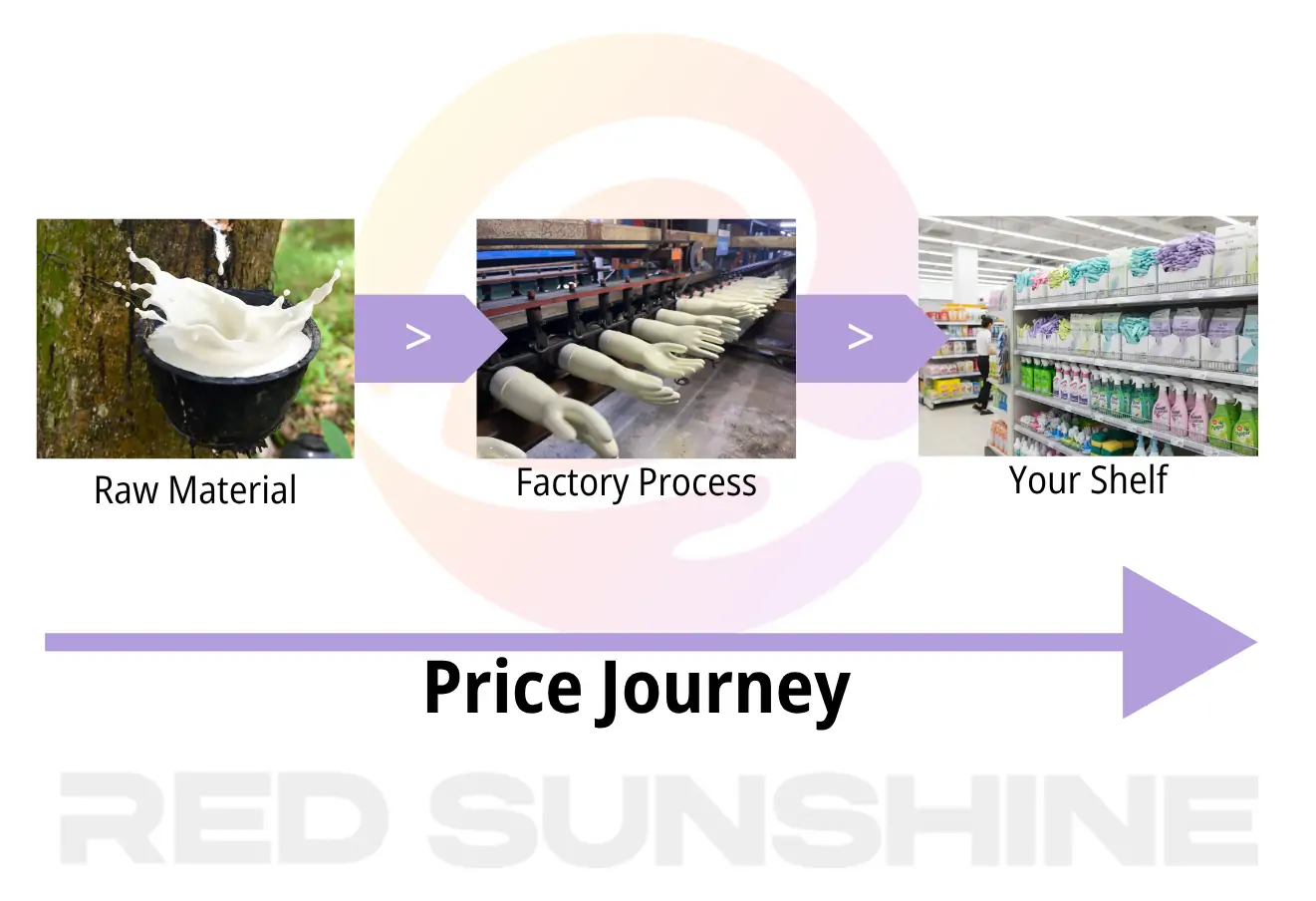
Glove prices do not move in a straight line. When raw material costs change, buyers feel it in three ways: higher pricing, longer lead times, and difficult order planning. At Guangzhou Red Sunshine (RSGlove), we’ve managed these cycles for 20 years. We’ve learned that the best way to help our partners in Japan and Korea isn’t just to give a price, but to explain why it’s moving so they can plan better.
1 — Natural Latex: You can’t rush a tree
Natural rubber is an agricultural product, not just an industrial one. This is a point we often discuss with new buyers.
Because latex comes from trees, the supply is at the mercy of nature. A rubber tree takes about seven years to mature. This means the industry cannot simply “turn on a switch” to produce more latex when demand goes up.
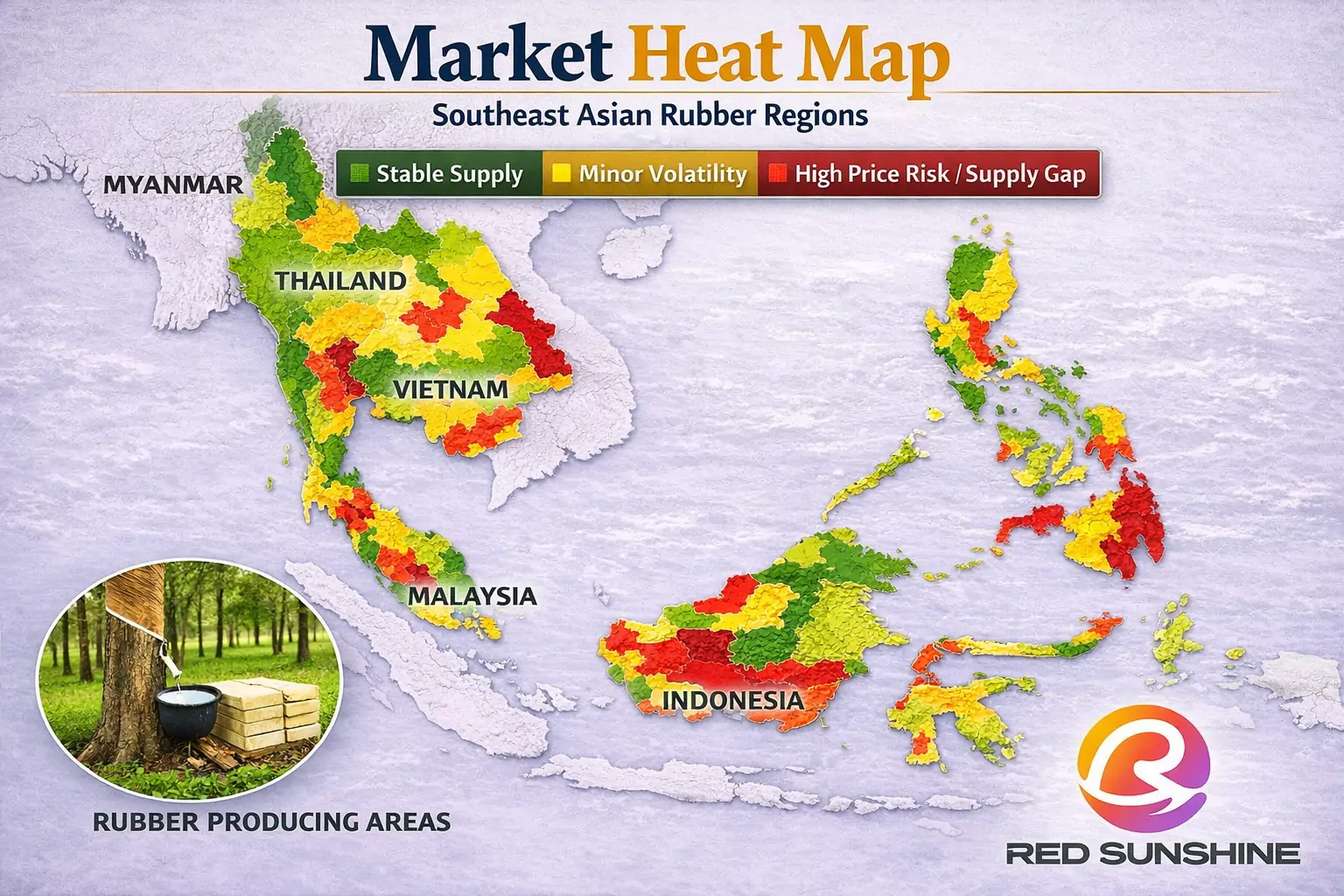
In our experience, these two things affect your latex orders most:
- Weather: In regions like Thailand and Vietnam, heavy rain stops the “tapping” process. If it rains for two weeks straight, global supply drops and prices rise.
- The 70% rule: Raw materials usually make up about 70% of a glove’s cost. Even a small shift in rubber prices will change your final invoice.
2 — Nitrile and PVC: The link to the gas tank
Nitrile and PVC are synthetic, meaning they are man-made from chemicals derived from oil. Nitrile vs. Vinyl (PVC): When to Recommend Premium Protection for Household Tasks
When you see oil prices rising in the news, you can usually expect nitrile price trends to follow a few weeks later. We see this often in long-term orders: synthetic glove costs are more stable than latex day-to-day, but they are very sensitive to global energy shifts and shipping port congestion.
3 — What this means for your retail margins
For a buyer, raw material volatility isn’t just a “market fact”—it’s a risk to your budget. It’s hard to plan a summer promotion in April if you don’t know what the landed cost will be.
From our side, the biggest lesson is simple: Buyers who chase the lowest “spot price” usually face the most trouble. When material costs spike, the cheapest factories often cut corners on quality or delay shipments to save money.
4 — How we use our 20-year history to protect you
Over two decades in the Guangzhou industrial hub, we’ve built a system to keep our partners’ supply stable:
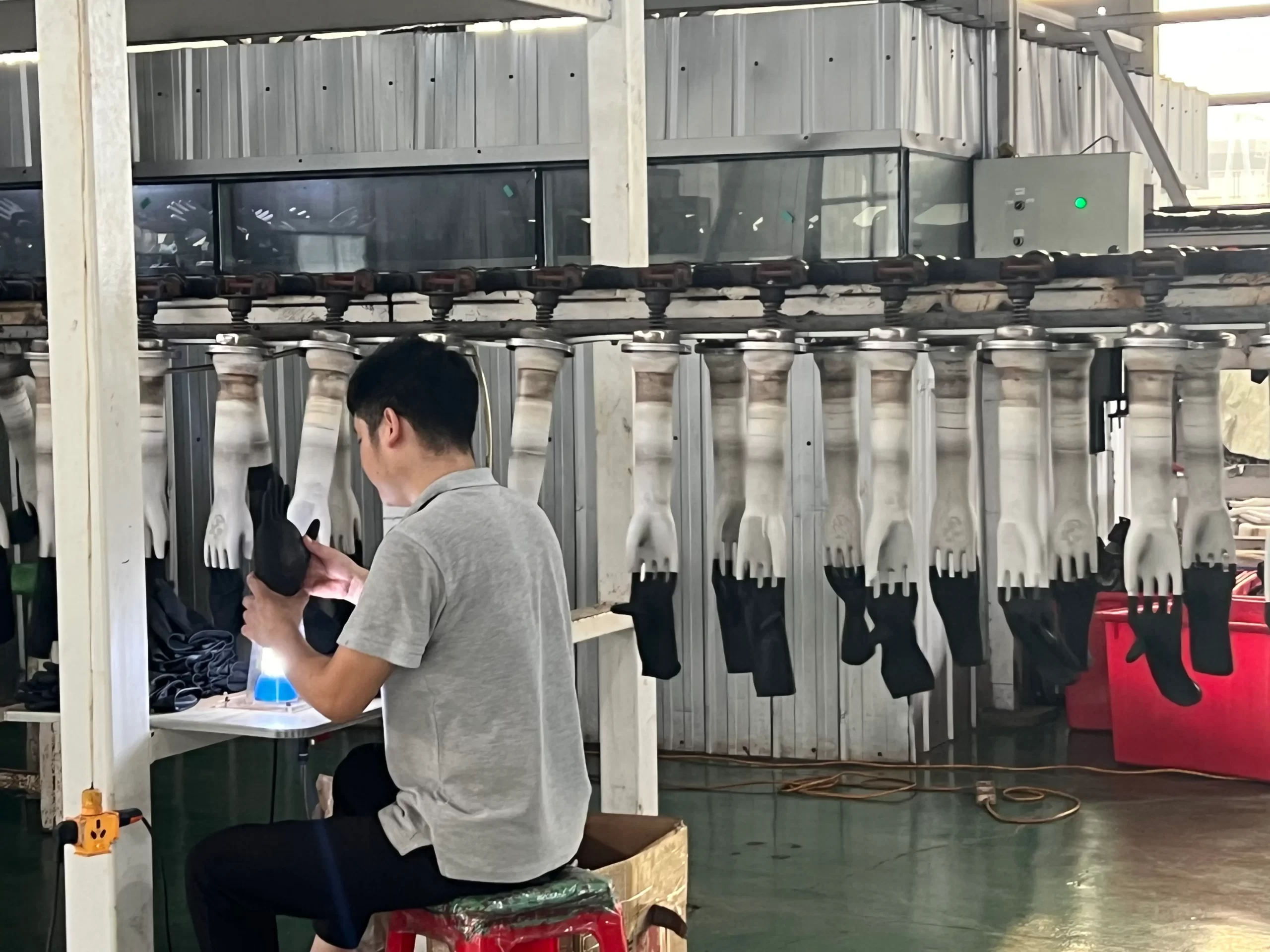
- We plan early: We don’t buy rubber day-to-day. We use long-term contracts with material suppliers to lock in volumes months in advance. This helps us keep your pricing more predictable.
- The Guangzhou Advantage: We are located minutes from Nansha Port. Even when material prices are high, our low logistics costs help act as a buffer for your total landed cost.
- Technical Balance: We’ve mastered the chemistry of the “blend.” We can adjust our formulas to maintain the durability and grip your customers expect, even when raw material markets are tight.
5 — Our advice for your 2026 orders
If you are planning your inventory for the next year, here is what we recommend:
- Don’t wait for the “bottom” price: Chasing the absolute lowest price often leads to quality issues (like thin spots or bad protein leaching). It is better to secure a fair price with a reliable factory.
- Mix your materials: Stocking both Latex and Nitrile helps reduce your risk. If one material gets too expensive, you have an alternative ready for your customers.
- Think in “Cost Per Use”: Our reusable gloves last much longer than cheap alternatives. Remind your customers that spending a little more on a durable glove saves them money in the long run.
FAQ (Buyer Questions)
Q: Can we lock in a price for a full year?
A: For our long-term partners, we can often create a “Price Bracket” agreement. This gives you a stable range so you can plan your retail pricing with confidence.
Q: Why do some factories offer much lower prices?
A: In our experience, “too good to be true” prices usually mean the factory is using lower-grade fillers. This makes the gloves brittle and prone to tearing after just a few uses.
Q: How does the location in Guangzhou help me?
A: It’s all about speed and cost. Faster access to the port means lower storage fees and more reliable shipping dates for your containers.
Closing: Let’s build a stable supply chain
At Red Sunshine, we believe our job is to take the “stress” out of your procurement. By being transparent about material costs and using our 20 years of experience to manage the risk, we help you focus on what matters: growing your brand.
Want a transparent look at current market pricing?