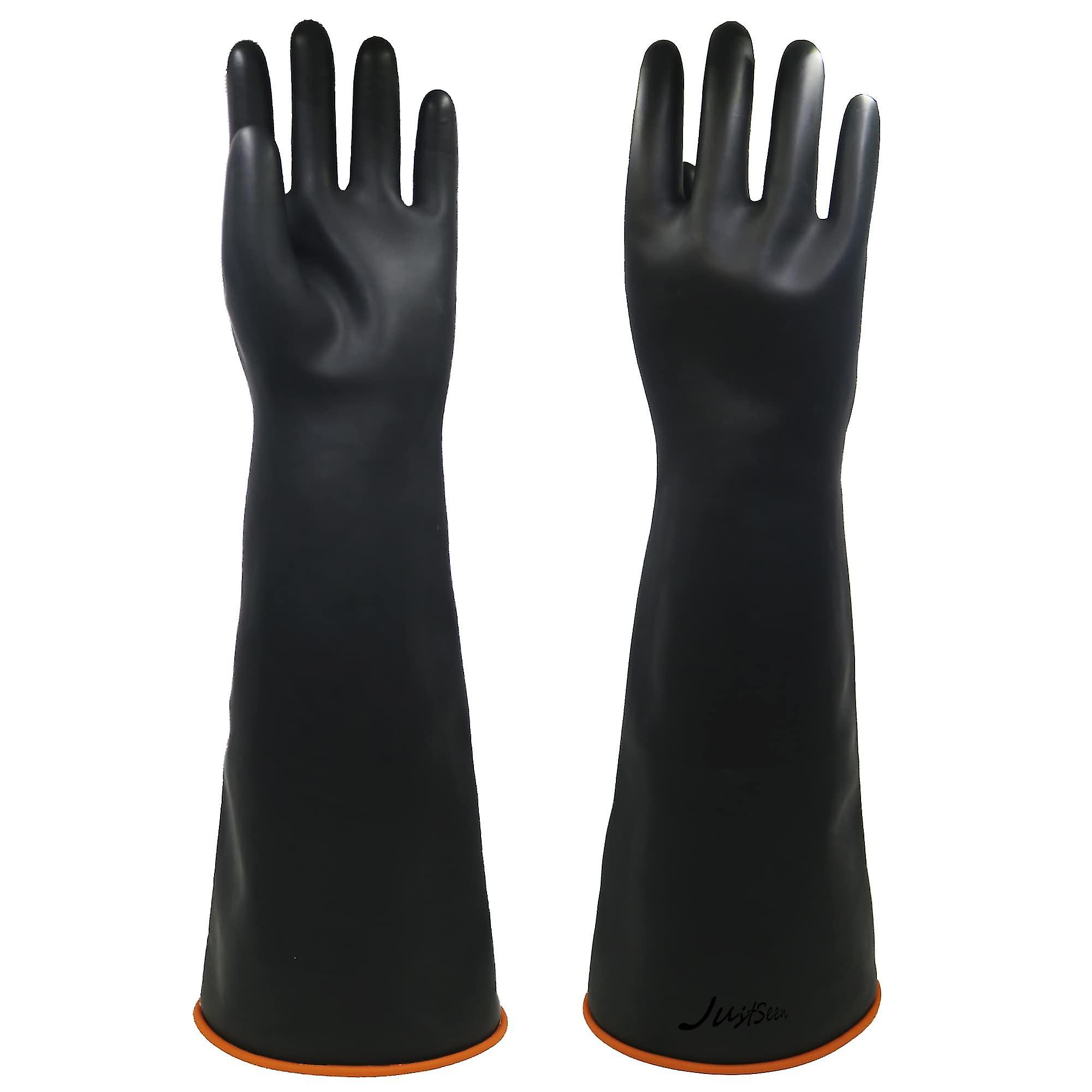
Introduction: The Smart Shift to Durable Hand Protection
In the world of household and commercial tasks, protective handwear is non-negotiable. Yet, the continuous cycle of single-use disposable gloves has proven costly, environmentally taxing, and often inadequate for heavy-duty work involving aggressive cleaners, chemicals, or mechanical stress.
A strategic pivot to high-durability, reusable gloves offers a sophisticated solution for homeowners and small business owners alike. While disposables have a lower upfront cost, high-quality reusable options are built with thicker materials designed to withstand numerous cleaning and disinfection cycles and heavy mechanical stress. For demanding applications, this increased lifespan translates directly into lower Total Cost of Ownership (TCO) and a reduced ecological footprint.
However, reusable gloves require vigilance. Their multi-use nature introduces an inherent hygiene risk if not properly managed. This guide provides the strategic framework—based on commercial standards—to design an effective glove color-coding system and implement the maintenance protocols necessary to maximize product lifespan and maintain a reliable hygiene barrier.
1. Why Color-Coding is Essential for Reusable Gloves
Color coding transforms the hygiene strategy from guesswork into a non-negotiable visual rule, ensuring the equipment used for high-risk sanitary tasks is never transferred to food preparation or general living areas.
1.1. Strategic Benefits of Segregation:
- Fewer Cross-Contamination Incidents: By strictly restricting glove use to designated areas (e.g., Red for toilets, Green for food), a visible ‘mental barrier’ is created that prevents the transfer of pathogens or residual cleaning chemicals between sensitive surfaces.
- Maximizing Total Cost of Ownership (TCO): High-durability gloves are initially more expensive. Color coding ensures the correct, specialized glove is used for the correct task (e.g., Neoprene for solvents) preventing premature material degradation and replacement
- Easier Training & Enforcement: Simple, standardized color rules stick better than complex procedural manuals, making it easy to enforce proper hygiene in a busy household or small team
2. Design Your Color Map: Adapting Professional Standards
To establish true authority and clarity in your system, we adapt the robust color-coding framework used by professional janitorial services, such as the British Institute of Cleaning Science (BICSc), and harmonize it with food safety mandates.
2.1. The Janitorial Standard (Cleaning & Sanitary):
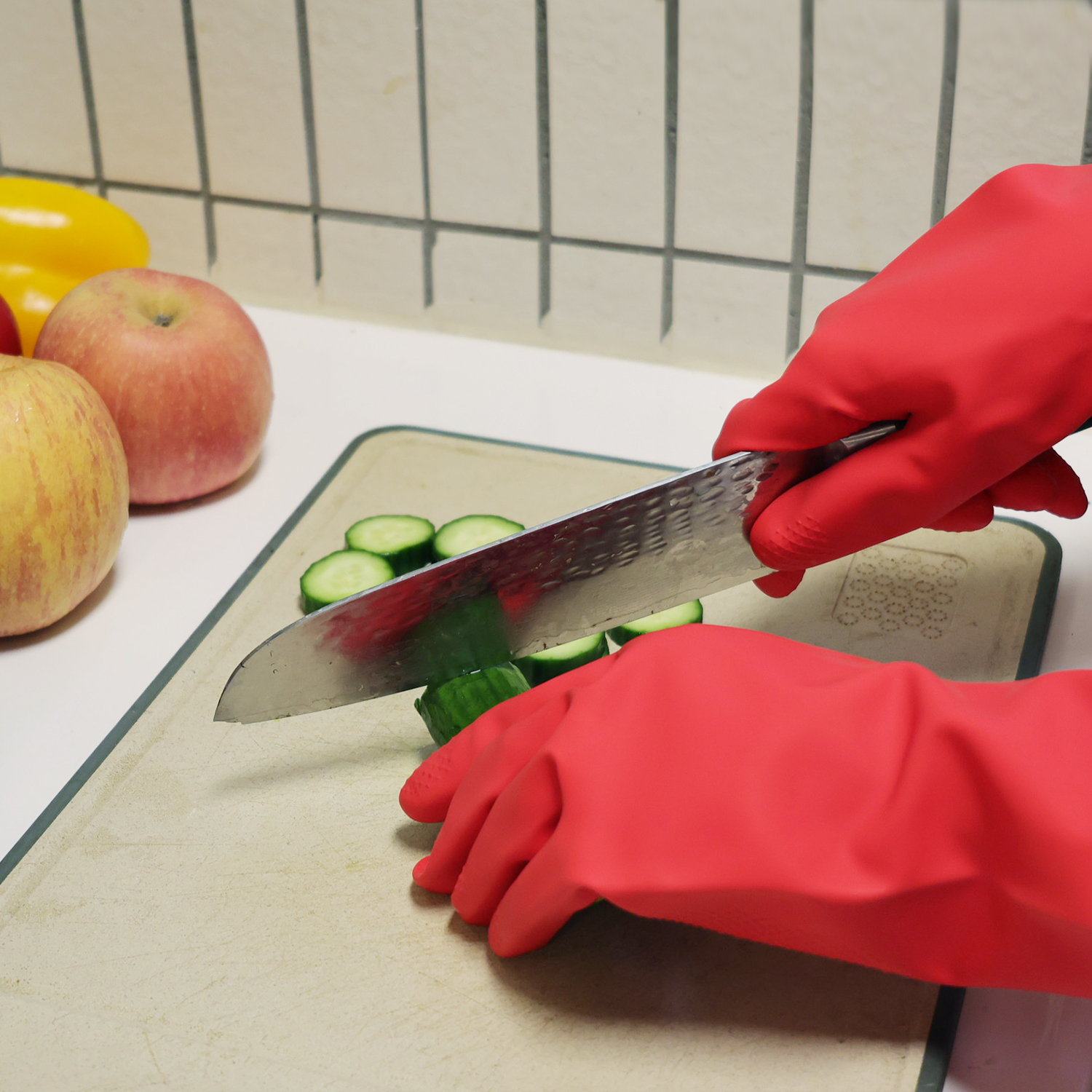
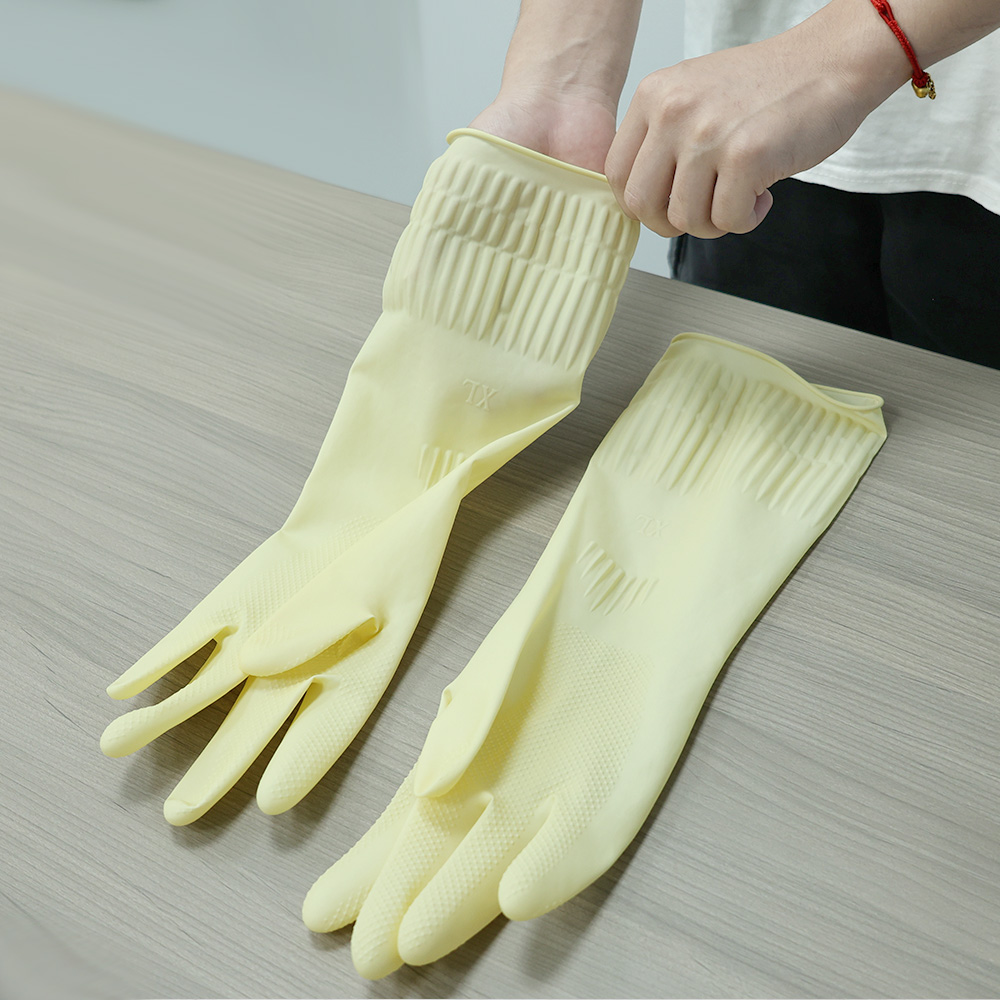
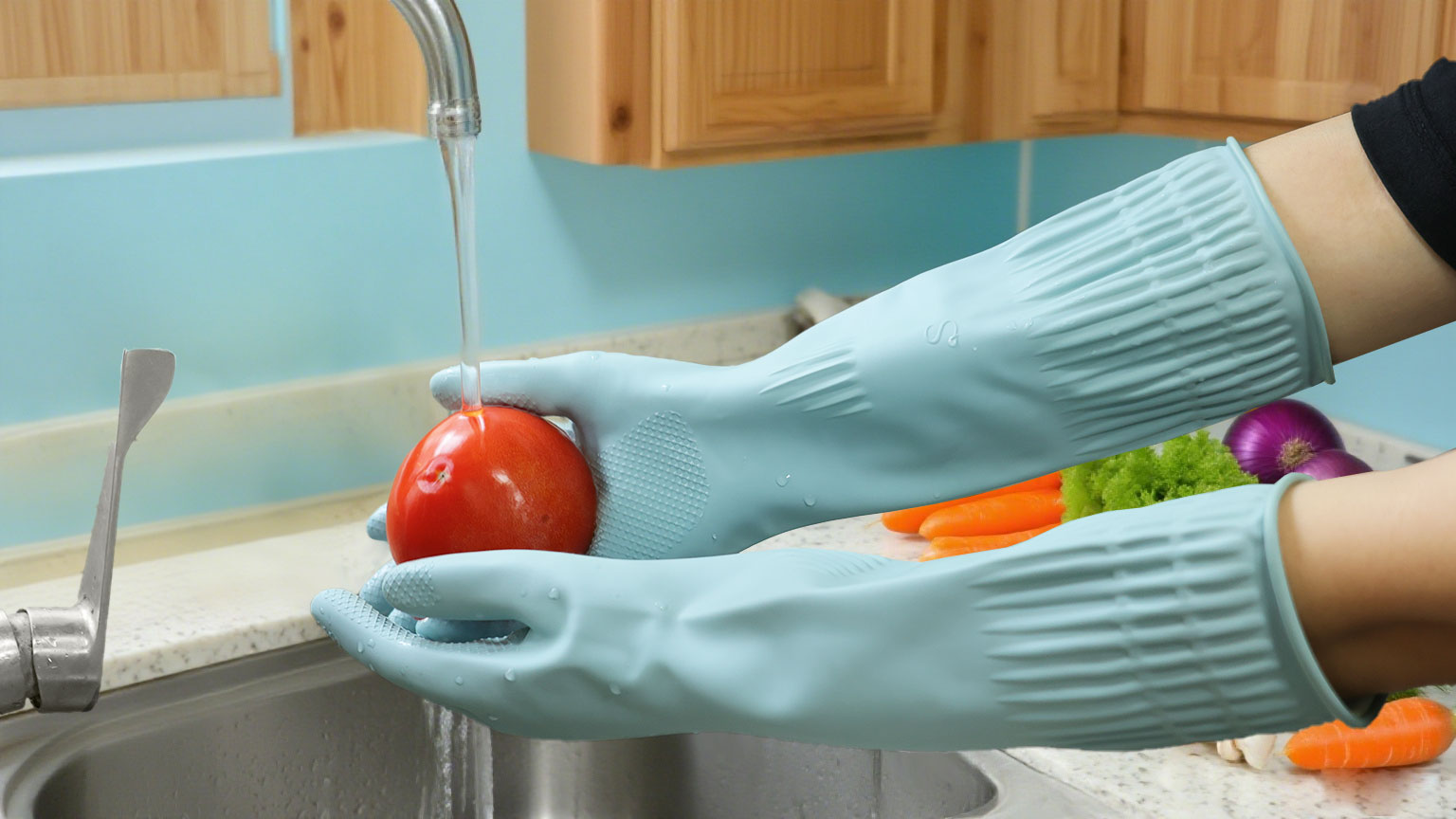
This framework is non-negotiable for cleaning tasks and helps differentiate high-risk areas.
- Red: Dedicated exclusively to HIGH-RISK SANITARY areas. This includes cleaning toilets, urinals, and surfaces that may contact fecal matter or highly infectious biological waste.
- Yellow: Assigned to MID-RISK SANITARY areas, such as sinks, bathtubs, and showers, as well as areas designated for clinical or isolation purposes.
- Blue: Reserved for GENERAL LOW-RISK areas, covering tasks such as dusting, polishing, cleaning windows, and general administrative areas.
2.2. Integrating Food Safety and Specialized Hazards:
A clear distinction must be maintained between cleaning colors and food preparation colors.
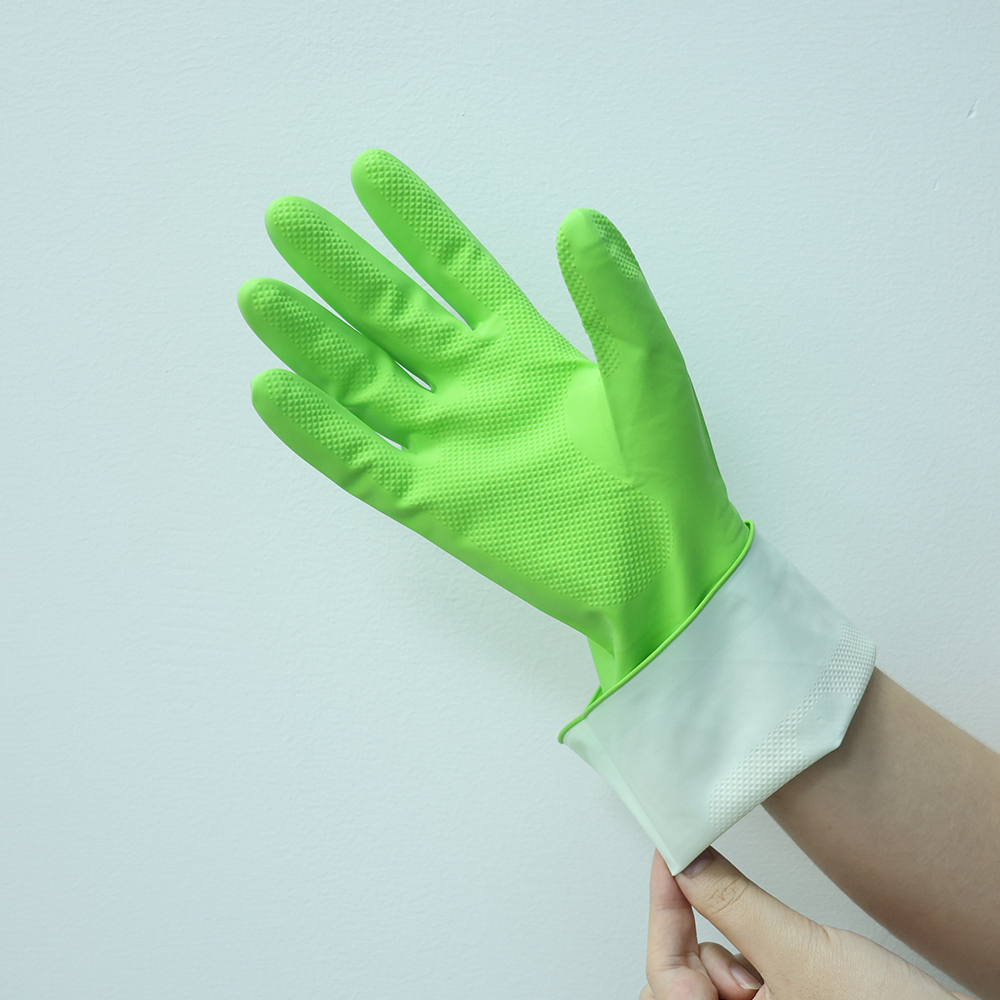
- Green: Dedicated strictly to FOOD/PRODUCE handling, aligning with the industry standard for salad and fruit preparation. This glove must never be used for cleaning.
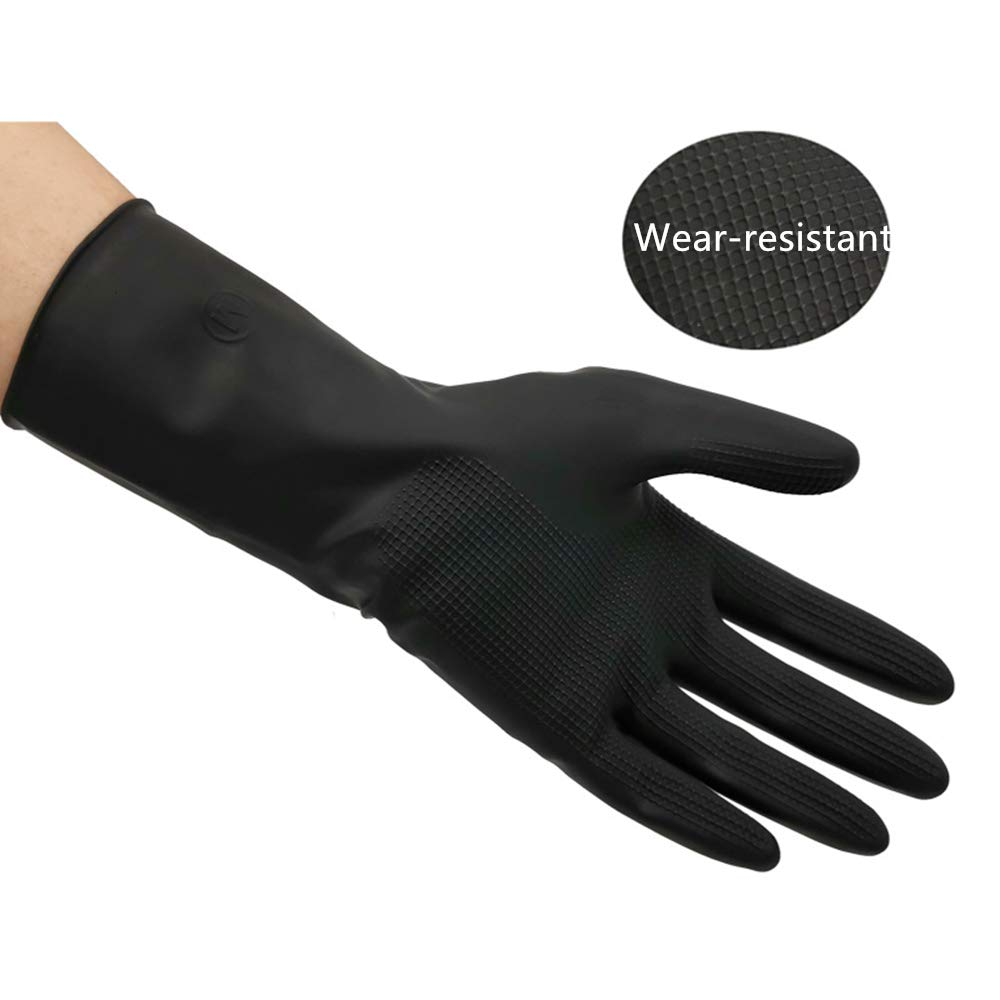
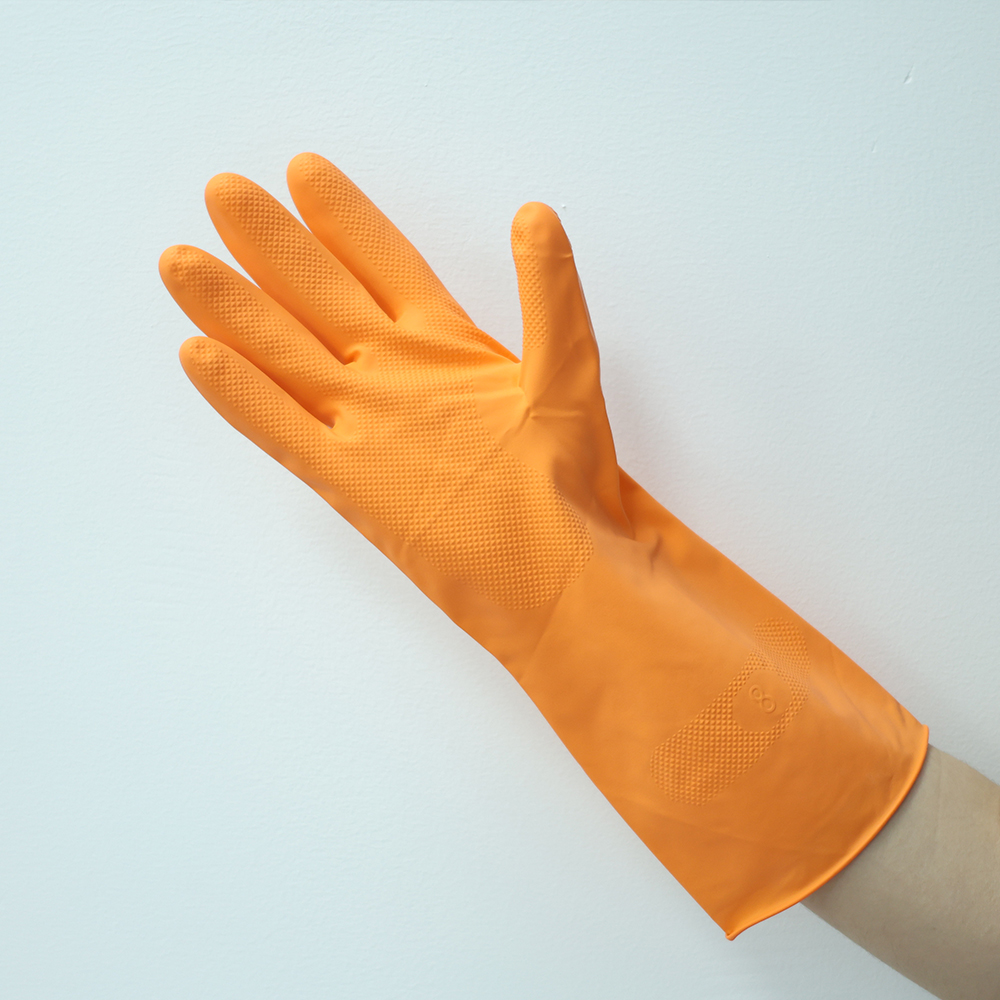
- Orange/Black: Assigning a distinct color like Orange or Black for maintenance, automotive tasks, or pet cleanup provides an extra layer of segregation for oil-based or high-contamination tasks.
Table 2: Color-Coding Protocol for Household and Light-Duty Cleaning (Adapted from BICSc & Food Safety Standards)
| Glove Color | Designated Area/Task | Primary Cross-Contamination Risk | Professional/Hygienic Rationale |
| Red | HIGH-RISK SANITARY (Toilets, Urinals, Bio-waste) | Fecal matter, severe pathogens. | Standardized professional method to restrict contamination (BICSc standard) . |
| Yellow | MID-RISK SANITARY (Sinks, Bathtubs, Showers) / Cooked Meat Prep | General bathroom grime, residual cleaners / Post-cooking bacterial transfer. | Differentiates medium-risk surfaces from high-risk toilets; Food Safety standard for cooked product. |
| Green | FOOD/PRODUCE (Salad, Fruits, Vegetables) | Raw meat transfer, general food pathogens. | Dedicated to safe handling of fresh produce (Industry Standard). |
| Blue | GENERAL LOW-RISK (Offices, Dusting, Windows, Hallways) / Raw Fish/General Kitchen | Surface dust, low bacterial load. | For general areas excluding washrooms; high visibility against food products. |
| Orange | ALLERGEN/MAINTENANCE (Pet areas, Seafood, Nuts, High-Visibility Tasks) | Allergen segregation (especially in kitchen) or highlighting contamination/high-visibility maintenance. |
3. Material Science: Selecting Reusable Gloves for Durability
The key to longevity in a reusable glove is matching its material properties to the specific chemicals and mechanical stress it will encounter. Choosing the wrong material is the fastest way to premature failure.
3.1. Comparative Material Properties:
| Material | Key Advantages (Reusable) | Chemical Resistance Profile | Allergy Risk | Ideal Reusable Application | Chemical Breakdown Warning |
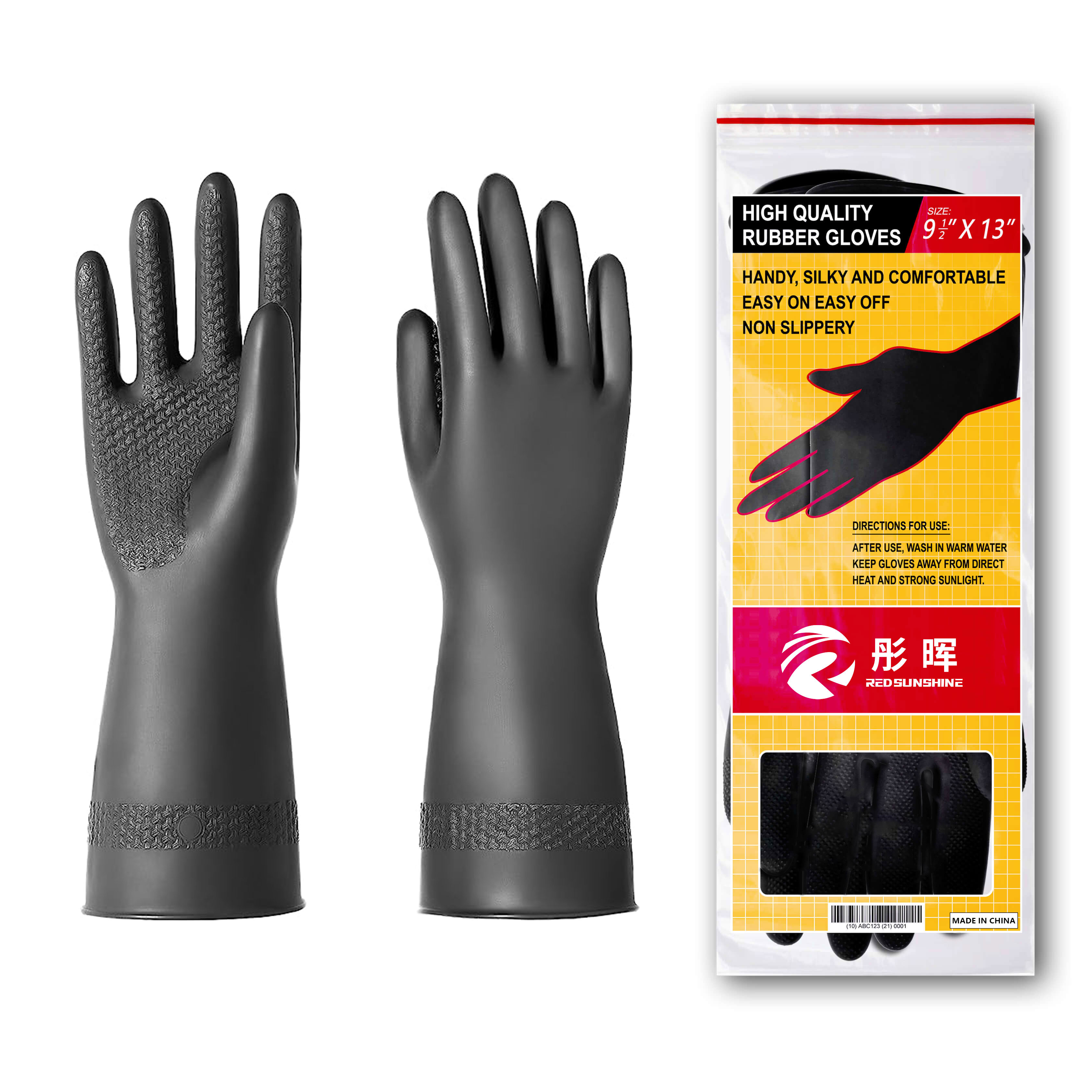
| Natural Rubber (Latex) | High flexibility, dexterity, tactile sensitivity. | Alcohols, caustics, ketones, organic acids. | High risk (Type I allergy). | General dishwashing, basic water-based cleaning. | Poor resistance to oils, grease, and many harsh solvents. |
| Neoprene | Excellent resistance to oils, durable, thermal protection. | Acids, bases, alcohols, petroleum solvents. | Low risk (Latex-free alternative). | Heavy-duty cleaning, dealing with harsh chemicals, industrial work. | Less effective against harsher solvents (e.g., certain ketones). |
| Nitrile | Puncture/abrasion resistant, strong barrier properties. | Oils, greases, solvents, caustics, organic acids. | Low risk (Latex-free preferred). | Automotive repair, janitorial tasks with strong detergents, light lab use. | Can be less flexible/form-fitting than latex. |
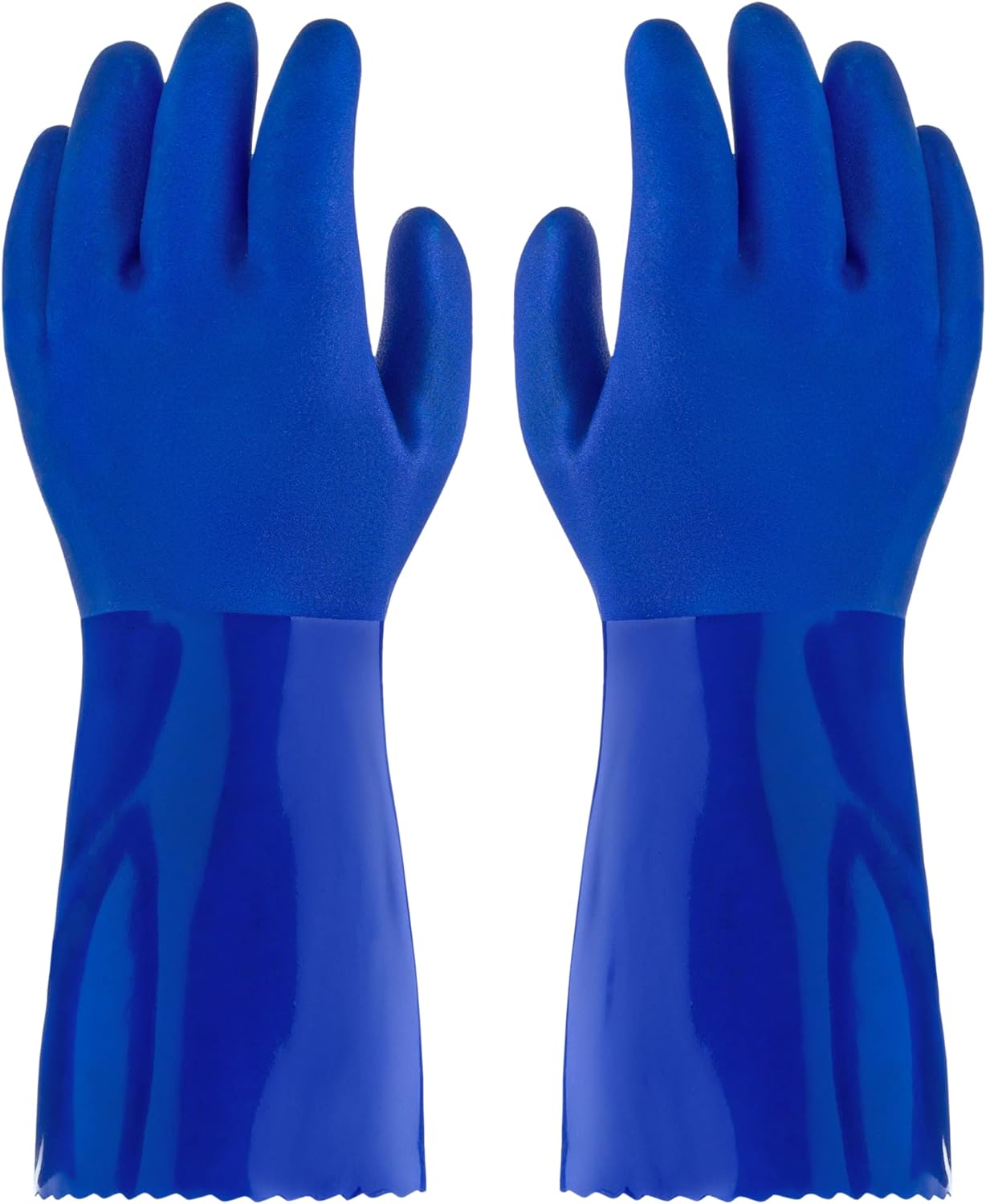
| PVC (Vinyl) | Good abrasion resistance, latex-free option, cost-effective. | Mineral acids, caustics, organic acids, and alcohols. | Low risk. | Lower temperature exposure, general utility cleaning. | Less durable than Neoprene or Nitrile for heavy mechanical stress. |
3.2. Why Neoprene and Nitrile Excel in Cleaning:
For household and commercial cleaning, materials like Neoprene and Nitrile are preferred due to their superior chemical resistance profiles.
- Neoprene is the chemical workhorse, providing robust protection against mineral acids, caustics, alcohols, and, critically, petroleum solvents and oils that rapidly degrade traditional latex “.
- Nitrile provides excellent mechanical resistance, resisting oils, greases, and strong detergents, making it the preferred latex-free, all-purpose heavy-duty choice “.
3.3. Understanding Abrasion Resistance (The Longevity Rating):
The actual lifespan of a scrubbing glove is measured by its Abrasion Resistance rating, standardized by EN 388 (EU) and ANSI/ISEA 105 (US). This metric quantifies how many cycles a glove can withstand before wearing through.
- EN 388 uses a 1–4 scale, where Level 4 signifies resistance up to at least 8,000 cycles.
- ANSI 105 uses a 0–6 scale, with Level 6 indicating resistance to over 20,000 cycles.
For consumers purchasing premium gloves for tasks like scrubbing grout, concrete, or deep cleaning, insisting on a high abrasion rating (Level 4 EN 388 or Level 6 ANSI) ensures the product delivers the long-term durability that justifies the higher initial cost.
4. Maintenance Protocols: Stopping Sticky Rubber Degradation
Improper care is the leading cause of premature failure in reusable gloves, often manifesting as a sticky or tacky surface. This material breakdown compromises both hygiene and the protective barrier.
4.1. The Mechanism of Degradation:
Rubber and synthetic polymers develop a sticky surface when the vulcanized polymer structure breaks down (reversion) due to the severance of the polymer crosslinks. This degradation is chemically initiated by three primary factors:
- Chemical Incompatibility: Exposure to incompatible cleaning agents, especially certain solvents, oils, and greases.
- Heat: High temperatures accelerate the breakdown of rubber molecules, which is why placing rubber gloves in a dishwasher is not recommended “.
- Improper Storage: Heat, humidity, and direct sunlight exacerbate natural degradation over time.
4.2. Step-by-Step Cleaning and Disinfection Protocol:
Follow this step-by-step protocol immediately after use to ensure both sanitation and structural integrity :
- Immediate Exterior Wash: While the gloves are still on, wash the exterior thoroughly using soap or a mild detergent and warm water. Rub the surfaces together to physically remove dirt and organic matter.
- Hand Hygiene: Properly remove the gloves to prevent hand contamination, and immediately wash hands with soap and water.
- Interior Wash: Turn the gloves inside out and submerge them in a basin of warm water and mild detergent for a few minutes to address sweat and internal residue.
- Rinse and Air Dry: Rinse the gloves thoroughly and hang them in a clean, well-ventilated area until they are completely dry before being stored. Trapped moisture promotes mildew.
- Targeted Disinfection: For Red and Yellow gloves used in high-risk zones, after they are completely dry, apply appropriate germicidal or ethanol products to the exterior surface, following label instructions carefully.
4.3. Optimized Storage for Longevity:
Store cleaned gloves in a dry, well-ventilated area, away from direct sunlight, radiators, or other sources of high heat, which accelerate material breakdown “. Before every use, inspect the gloves for any punctures, discoloration, fading, or tears, which signal a failure of the protective barrier and require discarding the glove.
5. Beyond the Sink: Fit, Dexterity, and Versatile Utility
For reusable gloves to be effective, they must be comfortable and allow for maximum dexterity. An ill-fitting glove compromises grip and causes hand fatigue.
5.1. The Importance of Correct Fit and Coverage:
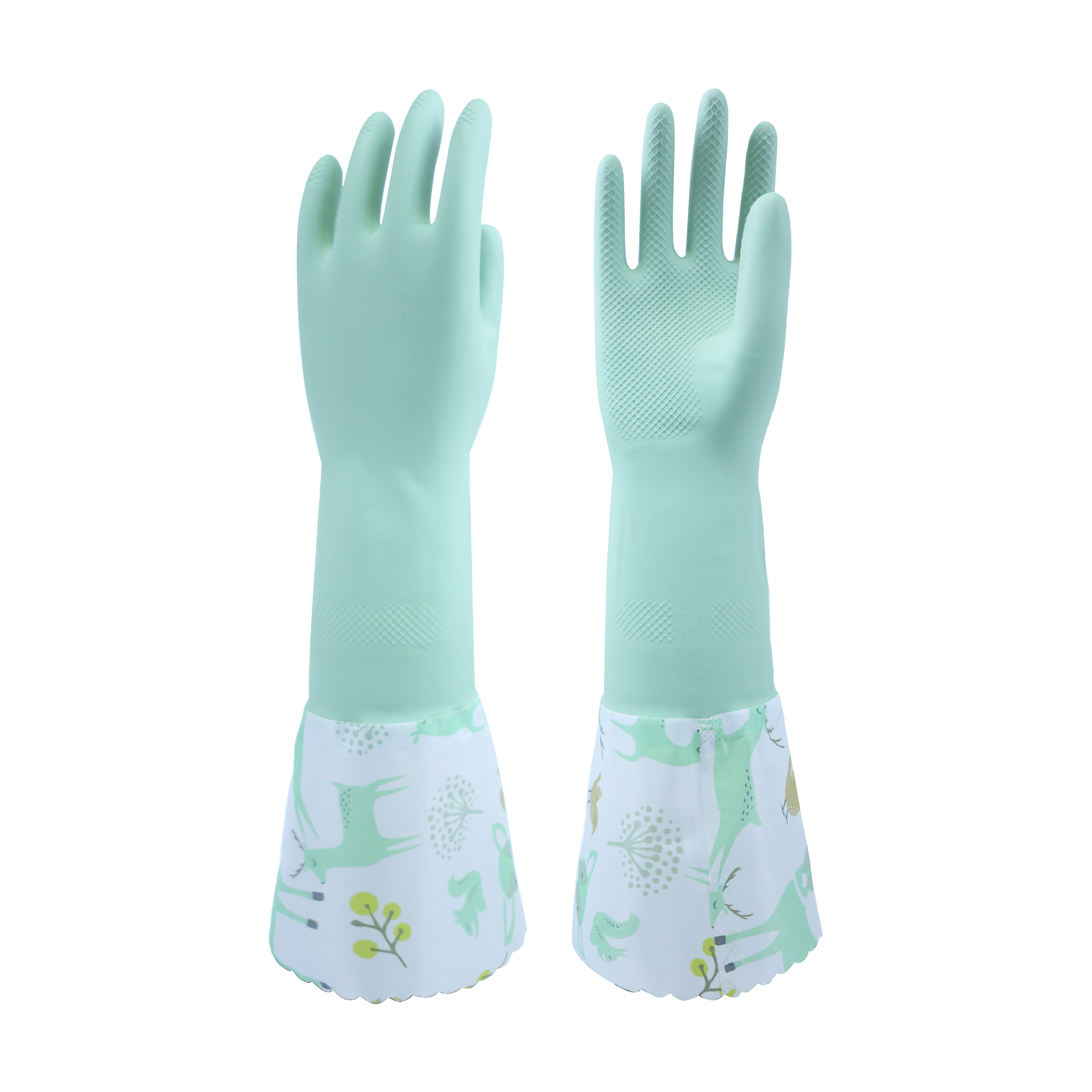
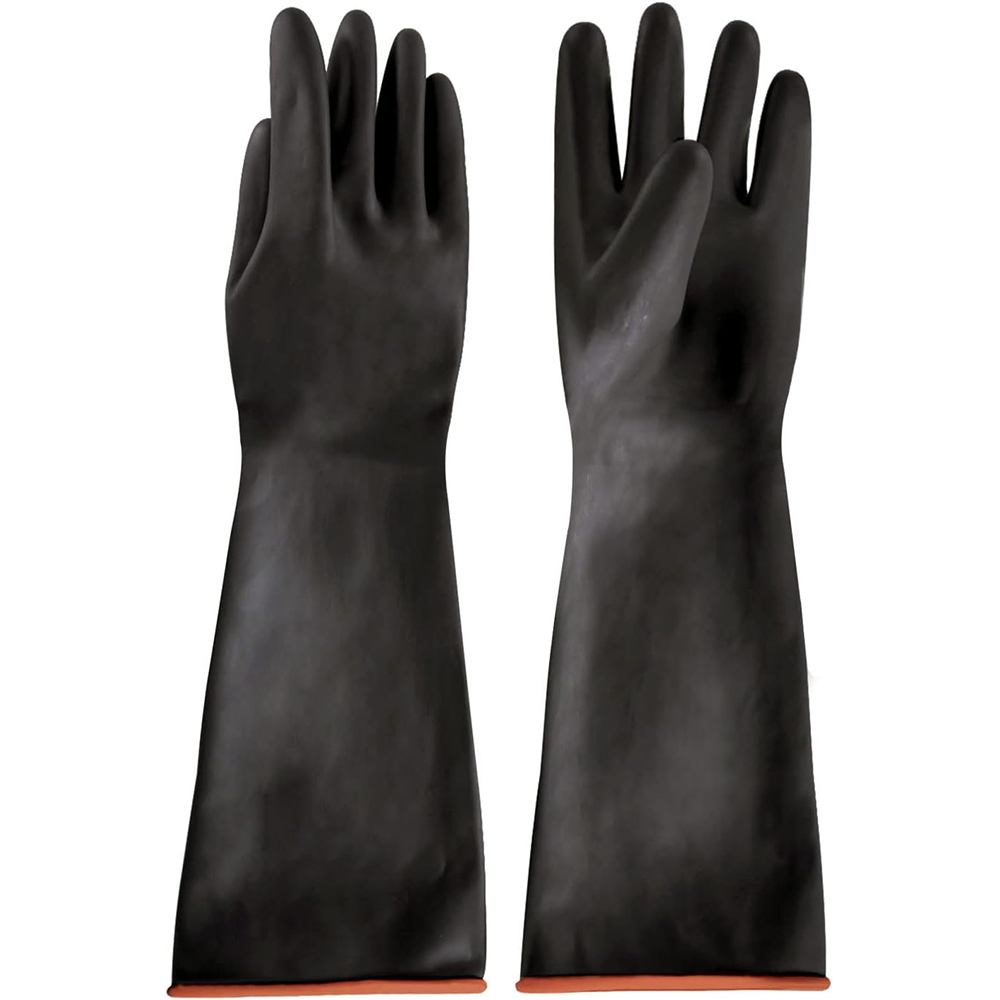
Performance depends critically on correct sizing, which ensures a snug yet non-restrictive fit. For deep cleaning or immersion tasks, ensure you select gloves with sufficient cuff length. Long-cuff or elbow-length protection (12 to 15 inches, with specialized options up to 18 inches) is necessary for full forearm protection against splashes and deep sinks.
5.2. Reusable Glove Sizing Guide:
Measure your palm width in inches for the most accurate fit:
Table 3: Reusable Glove Sizing Guide for Dexterity and Comfort
| Numerical Size | Glove Size (Approximate) | User’s Palm Width (Inches) | Fit Consideration |
| 7 | Small (S) | 2.7 – 3.1 | Preferred for high dexterity tasks; snug fit allows precision. |
| 8 | Medium (M) | 3.1 – 3.5 | Standard fit for comfortable, prolonged use; good balance of protection and flexibility. |
| 9 | Large (L) | 3.5 – 3.9 | Suitable for average to large hands; essential for comfort during heavy-duty cleaning. |
| 10 | Extra Large (XL) | 3.9 – 4.3 | For maximum hand coverage and accommodating glove liners for thermal or chemical tasks. |
| 11 | XX Large (XXL) | 4.3 – 4.7 | Designed for users requiring extensive coverage and protection in industrial/heavy household settings. |
5.3. Hidden Talents: Versatile Utility:
Beyond cleaning, the textured grip of reusable rubber and nitrile gloves provides surprising utility:
- Jar Opener Extraordinaire: The enhanced traction provided by the textured surface makes twisting open stubborn, tightly sealed jar lids significantly easier.
- Pet Hair Picker-Upper: When slightly moistened, the textured surface effectively attracts and collects pet hair from upholstery, carpets, and clothing. (Note: Ensure a dedicated, color-coded pair is used for this to prevent contamination).
- Dough and Sticky Foods: Reusable gloves facilitate the cleanup of sticky ingredients like bread dough or batter, as these substances slide off easily under running water.
Conclusion: Invest in Safety, Reap the Longevity
Adopting a color-coded system for your household or small business ensures you are not just purchasing a protective tool, but implementing a professional-grade safety protocol. By investing in durable materials like Neoprene and high-abrasion Nitrile, and rigorously adhering to the material-specific maintenance protocols outlined above, you maximize the Total Cost of Ownership and maintain an effective, long-lasting hygiene barrier.
CTA: Ready to upgrade your cleaning and safety protocols?
Contact us today to discuss customized sizing and material bulk-ordering options for high-durability, long-cuff reusable gloves.