Introduction: Why “One Size” Never Fits All
We’ve all experienced the frustration of a “sloppy” glove that slips off during dishwashing or a glove so tight it causes hand cramps after five minutes of cleaning. In the world of unsupported reusable rubber gloves, fit is the single most important factor for both safety and longevity.

Because reusable gloves are thicker (typically 0.33mm to 0.7mm) than thin disposables, an incorrect fit has a much larger impact on manual dexterity and hand fatigue. A proper fit ensures the glove acts as an “extension of the skin,” allowing for the transmission of tactile information—essential for handling delicate glassware or small tools. This glove sizing guide provides a professional framework to measure every hand in your family, from crafting kids to gardening seniors, ensuring everyone stays protected and comfortable.
1. The Science of Fit: Why Sizing Matters for Safety and TCO
Correct sizing isn’t just about comfort; it is a critical component of your safety protocol and Total Cost of Ownership (TCO).
- The Danger of “Too Tight”: Gloves that are too small restrict blood flow, leading to numbness, throbbing, and rapid hand fatigue. They are also under constant tension, making them more likely to suffer “stress tears” at the seams or fingertips.
- The Danger of “Too Loose”: Oversized gloves reduce your grip strength and “Coefficient of Friction” (COF). Excess material can bunch up or snag on sharp edges, increasing the risk of punctures. It also makes fine motor tasks—like picking up a coin or bolt—nearly impossible.
- CE & ISO 21420 Standard: Our gloves meet the CE/EN 21420 global requirement for ergonomics and sizing, ensuring that the dimensions are mathematically consistent across every batch “.
2. How to Measure for Glove Size: Step-by-Step
For professional-grade reusable gloves, we recommend using Numerical Sizing (6, 7, 8, etc.) for the most precise fit.
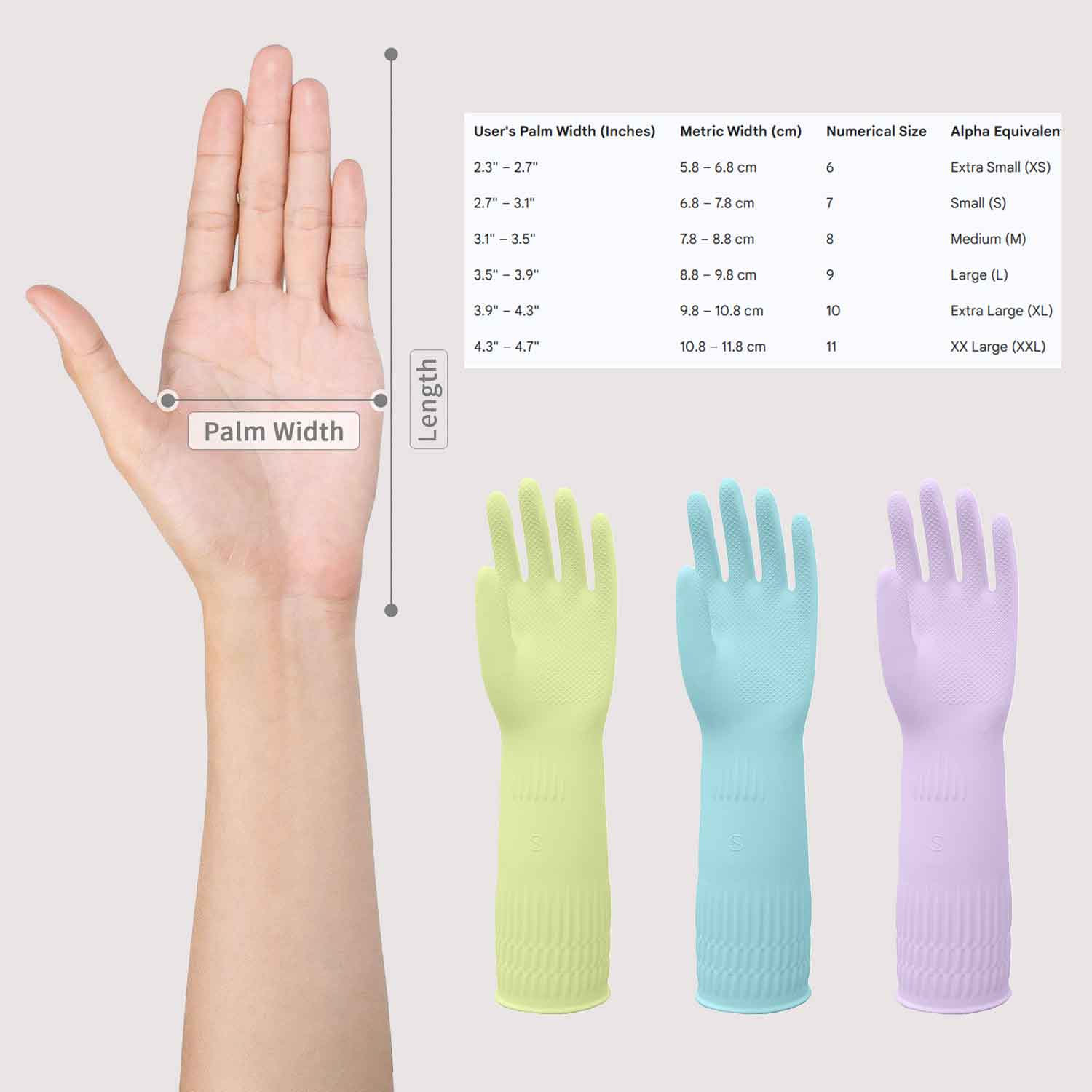
Step 1: Measure Hand Circumference
Wrap a soft tailor’s tape measure around the widest part of your dominant hand’s palm, excluding the thumb. Record the measurement in inches or centimeters.
Step 2: Measure Hand Length
Measure from the tip of your middle finger to the first crease at your wrist. If your fingers are exceptionally long or short for your palm width, you may need to adjust your size choice.
Step 3: Compare to the Master Sizing Table
Use this table to find your numerical and alpha equivalent :
| User’s Palm Width (Inches) | Metric Width (cm) | Numerical Size | Alpha Equivalent |
| 2.3″ – 2.7″ | 5.8 – 6.8 cm | 6 | Extra Small (XS) |
| 2.7″ – 3.1″ | 6.8 – 7.8 cm | 7 | Small (S) |
| 3.1″ – 3.5″ | 7.8 – 8.8 cm | 8 | Medium (M) |
| 3.5″ – 3.9″ | 8.8 – 9.8 cm | 9 | Large (L) |
| 3.9″ – 4.3″ | 9.8 – 10.8 cm | 10 | Extra Large (XL) |
| 4.3″ – 4.7″ | 10.8 – 11.8 cm | 11 | XX Large (XXL) |
3. Specialized Sizing for the Family: Kids and Seniors
Different life stages require different fit considerations.
- Kids (The Crafting & Helping Phase): Children’s hands are not just smaller; they have different proportions. Never let a child use an adult “Small” for tasks involving chemicals. Ill-fitting gloves can lead to accidental exposure if the cuff slips. Look for Size 5 or 6 specifically designed for smaller hands.
- Seniors (The Comfort & Accessibility Phase): For seniors with arthritis or swollen finger joints, we recommend sizing up by half or one full size. This reduces the “compression” on joints and makes the gloves easier to don (put on) and doff (take off).
- Pro Tip: For seniors, always choose gloves with Internal Cotton Flocking. The soft lining reduces friction against the skin, making the gloves slide on effortlessly “.
4. Material Fit Differences: Nitrile vs. Latex
Not all rubber materials stretch the same way.
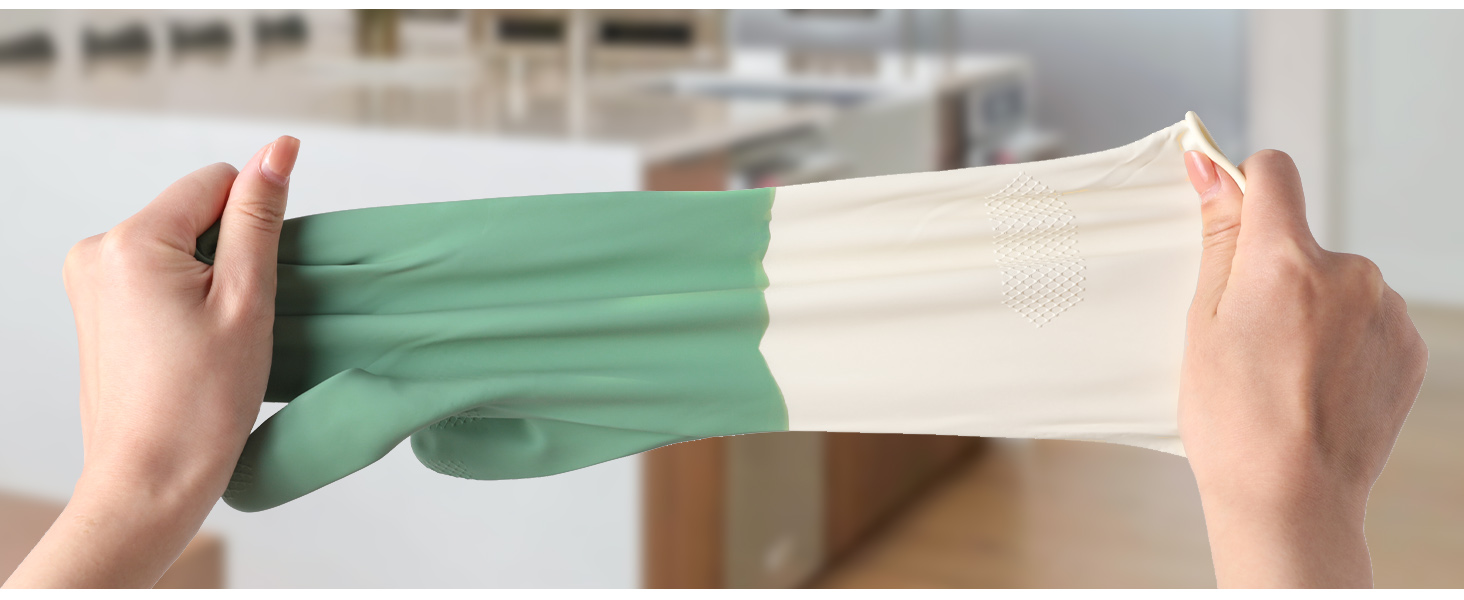
- Natural Rubber (Latex): Highly elastic. It mimics the hand’s anatomy better than any other material. If you are between sizes, you can usually stick with the smaller size for maximum dexterity “.
- Nitrile: Less stretchy than latex but more durable. Nitrile gloves provide a “memory fit”—they will conform to your hand over time but won’t “snap back” as aggressively as latex. Choose your true-to-measure size “.
- Neoprene: Thicker and more rigid. If your measurements are on the upper edge of a size, size up for Neoprene to maintain blood flow during heavy work “.
5. The 3-Point Fit Check
Once you have the gloves on, perform these tests to confirm the fit is safe:
- The Wiggle Test: Make a tight fist and then fully extend your fingers. You should feel no painful “pinching” at the knuckles and no excess “ballooning” of material at the fingertips.
- The Coin Test: Try to pick up a small object like a coin or a bolt from a flat surface. If you can’t “feel” the object or struggle to grip it, the glove is likely too large or too thick for the task.
- The Wrist Seal Check: Ensure the cuff fits snugly against your forearm or wrist. In reusable gloves, a Beaded Cuff provides a stronger seal that prevents liquid from wicking down into the glove “.
6. Maintenance: Ensuring a Consistent Fit Over Time
High-quality reusable gloves are an investment. Improper care can cause the material to shrink or degrade, ruining the fit.
- The “No Heat” Rule: Never put rubber gloves in a dishwasher or dryer. High heat causes “reversion” (stickiness) and can cause the material to shrink unevenly “.
- Mandatory Air-Dry: Always hang gloves to air-dry completely before storage. Trapped moisture inside a flocked lining can lead to mildew and odors, which compromises the fit and hygiene “.
- The Field Air Test: Before use, pinch the cuff, roll it up to trap air, and listen for leaks. A glove that has lost its barrier is no longer a protective tool “.
FAQ
Q: Can my child use my old medium gloves for gardening?
A: No. Excessive material at the fingertips makes it dangerous for a child to handle tools, as the glove can easily get caught or snagged. Always use size-appropriate protection “.
Q: Why do my gloves feel tighter in the winter?
A: Rubber materials can become slightly stiffer in cold temperatures. If you work in a cold garage or basement, choosing a slightly larger size with a thermal liner is recommended.
Conclusion: Protect the Hands That Matter
From the smallest helper to the most experienced gardener, every hand deserves professional-grade protection. By using a numerical sizing system and selecting ISO-certified, SGS-tested reusable gloves, you ensure that your family stays safe, comfortable, and efficient.
Not sure which size fits your team or family?
Request our printable hand-sizing chart and a sample pack for your facility.