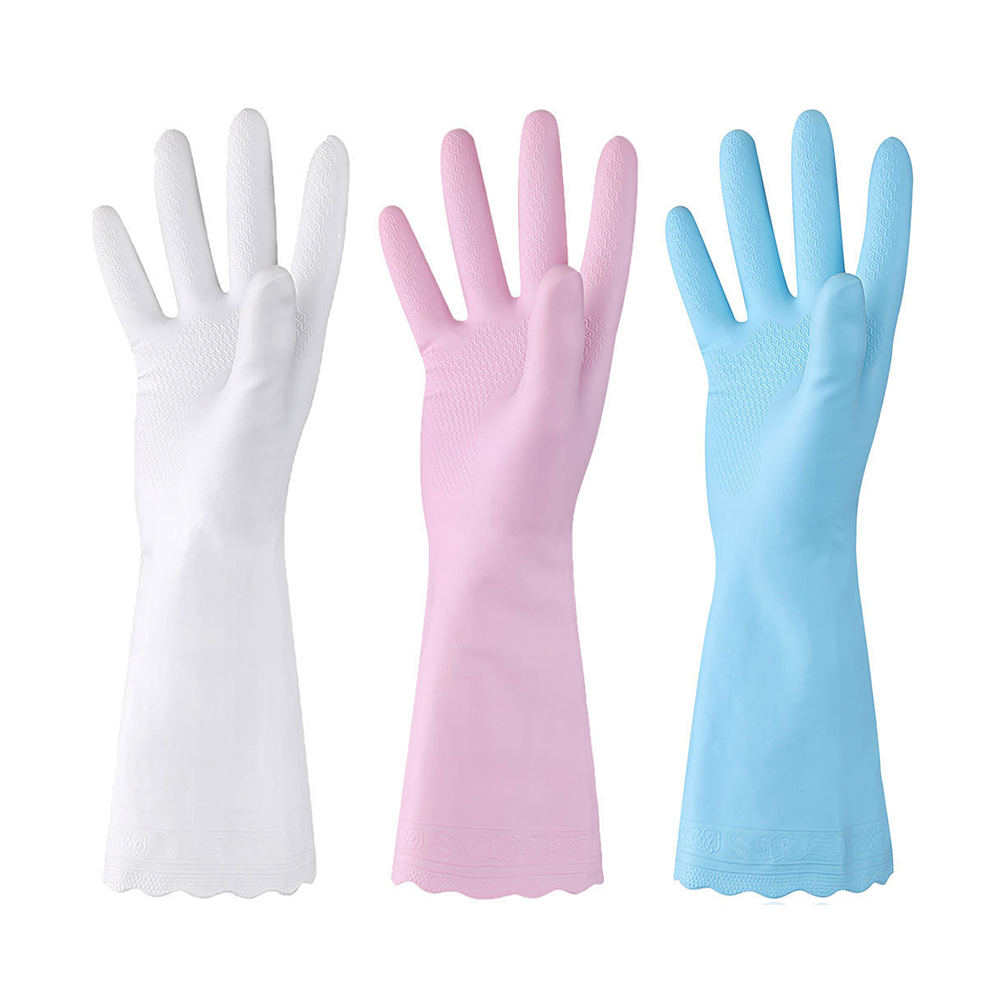
Introduction: Hygiene and Protection in the Modern Kitchen
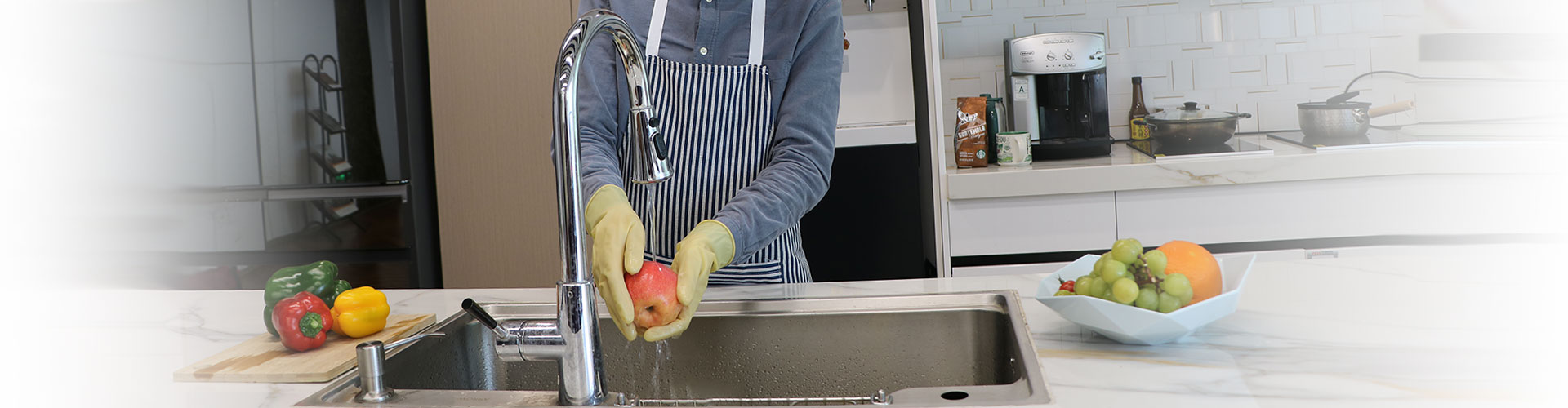
Kitchen tasks range from delicate pastry work to heavy scrubbing of oven racks. Choosing the right kitchen gloves is about balancing manual dexterity with a reliable safety barrier.
While many industrial settings use “coated” gloves with fabric liners, the modern kitchen requires unsupported reusable gloves. These are made of a solid, 100% liquid-proof polymer that doesn’t “wick” or trap food pathogens, making them the gold standard for hygiene. By selecting the right material and ensuring FDA compliance, you can protect your hands from harsh detergents and oils while maintaining the highest food safety standards.
1. Quick Guide: Material & Kitchen Task Mapping
Because unsupported gloves rely entirely on the thickness of the polymer (typically 0.33mm to 7mm), your material choice dictates the glove’s lifespan and performance.
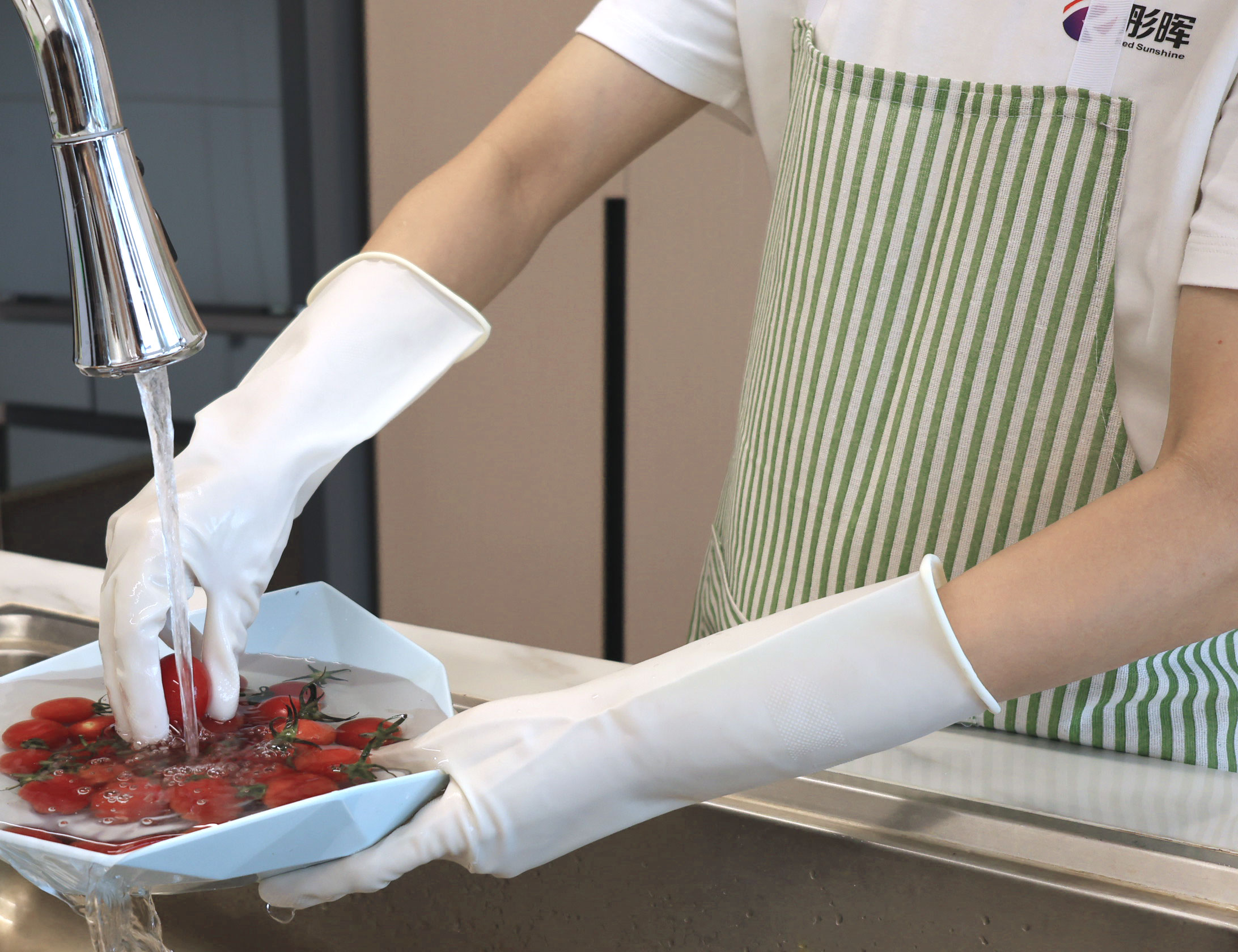
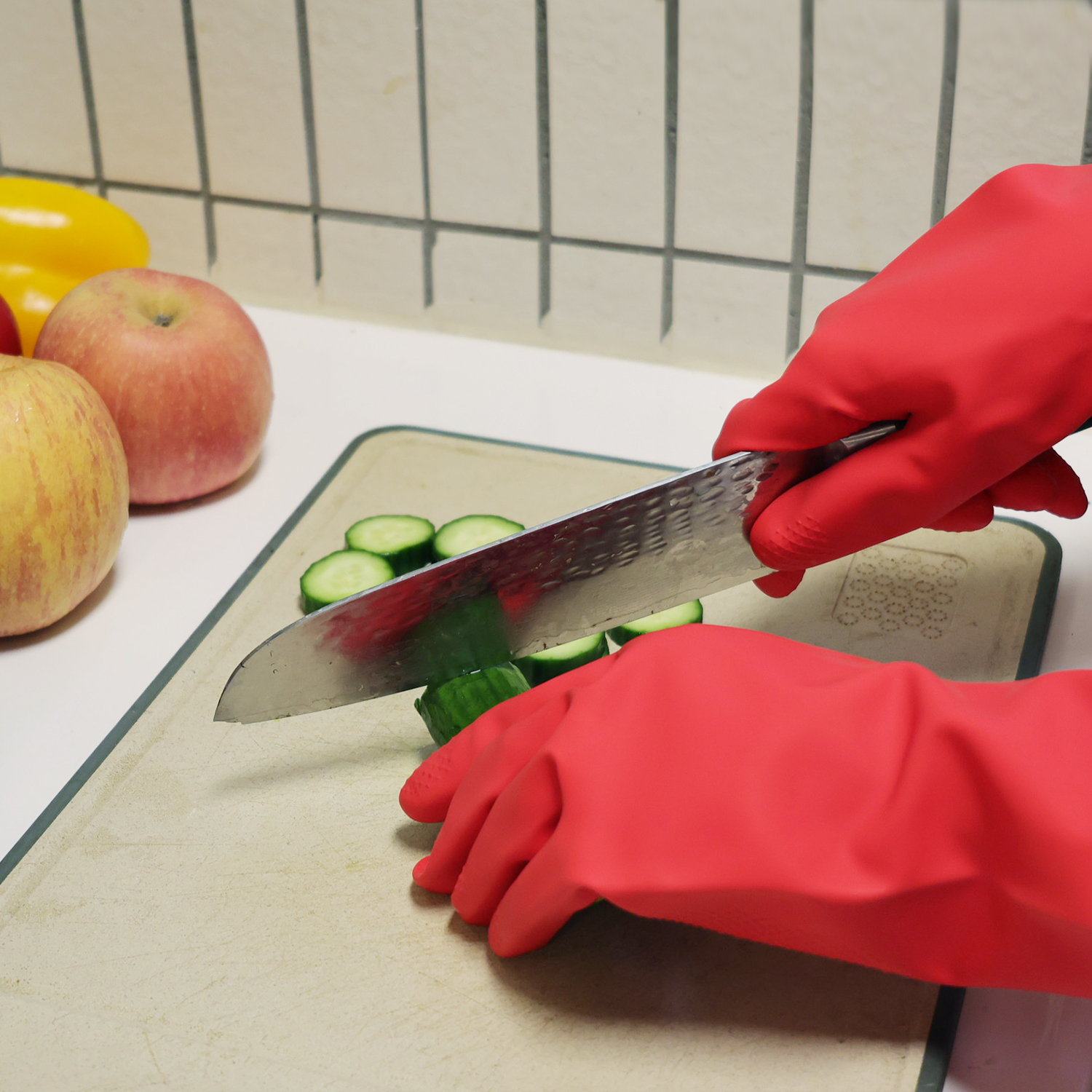
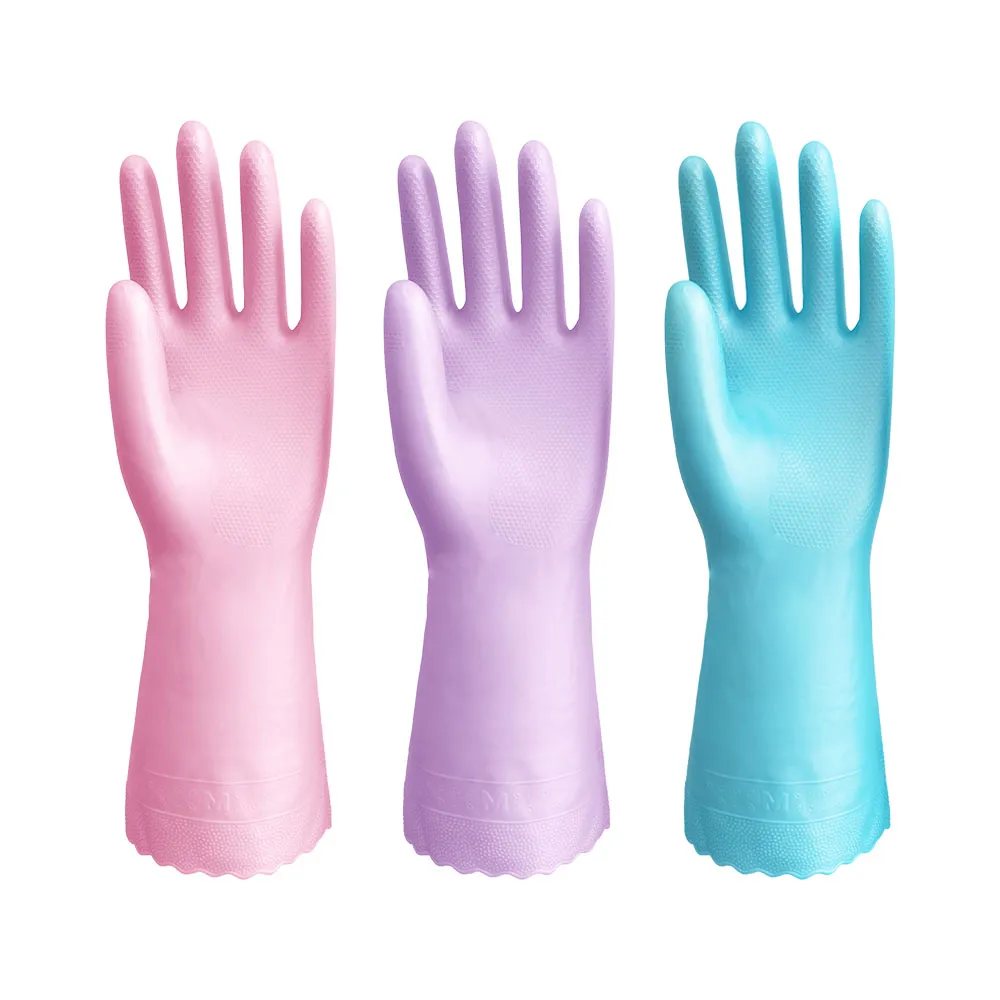
- Food-Grade Nitrile: The “Gold Standard” for food service. Nitrile is highly resistant to animal fats, oils, and sharp utensils. It is naturally puncture-resistant and latex-free, making it safe for both staff and customers with sensitivities. Use this for raw meat handling, chopping hot peppers, and intricate plating.
- Natural Rubber (Latex): Prized for unmatched tactile sensitivity and elasticity. It mimics the anatomy of the hand, allowing for the transmission of tactile information “. This makes it ideal for delicate pastry work, dough handling, and fine vegetable slicing.
- Neoprene: The heavy-duty choice for oven cleaning and dealing with harsh degreasers. Neoprene provides superior chemical and thermal protection while remaining flexible.
- PVC (Vinyl): A cost-effective, latex-free option. While less durable than Nitrile, FDA-compliant PVC is excellent for light-duty wet tasks and handling aqueous (water-based) foods.
2. Food Safety & Hygiene: Implementing a Professional System
In a kitchen environment, cross-contamination is the primary risk. A visual hygiene system is the most effective way to prevent the transfer of pathogens “.
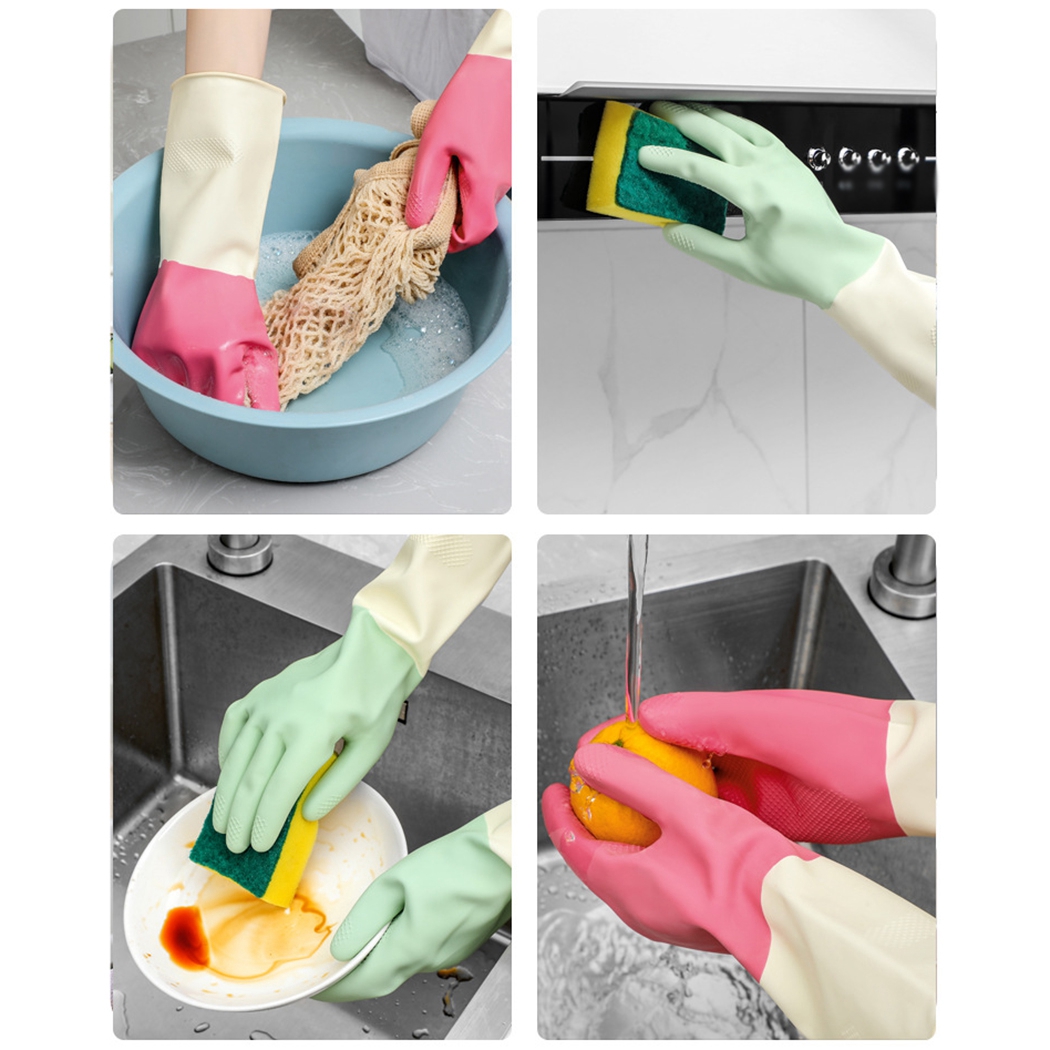
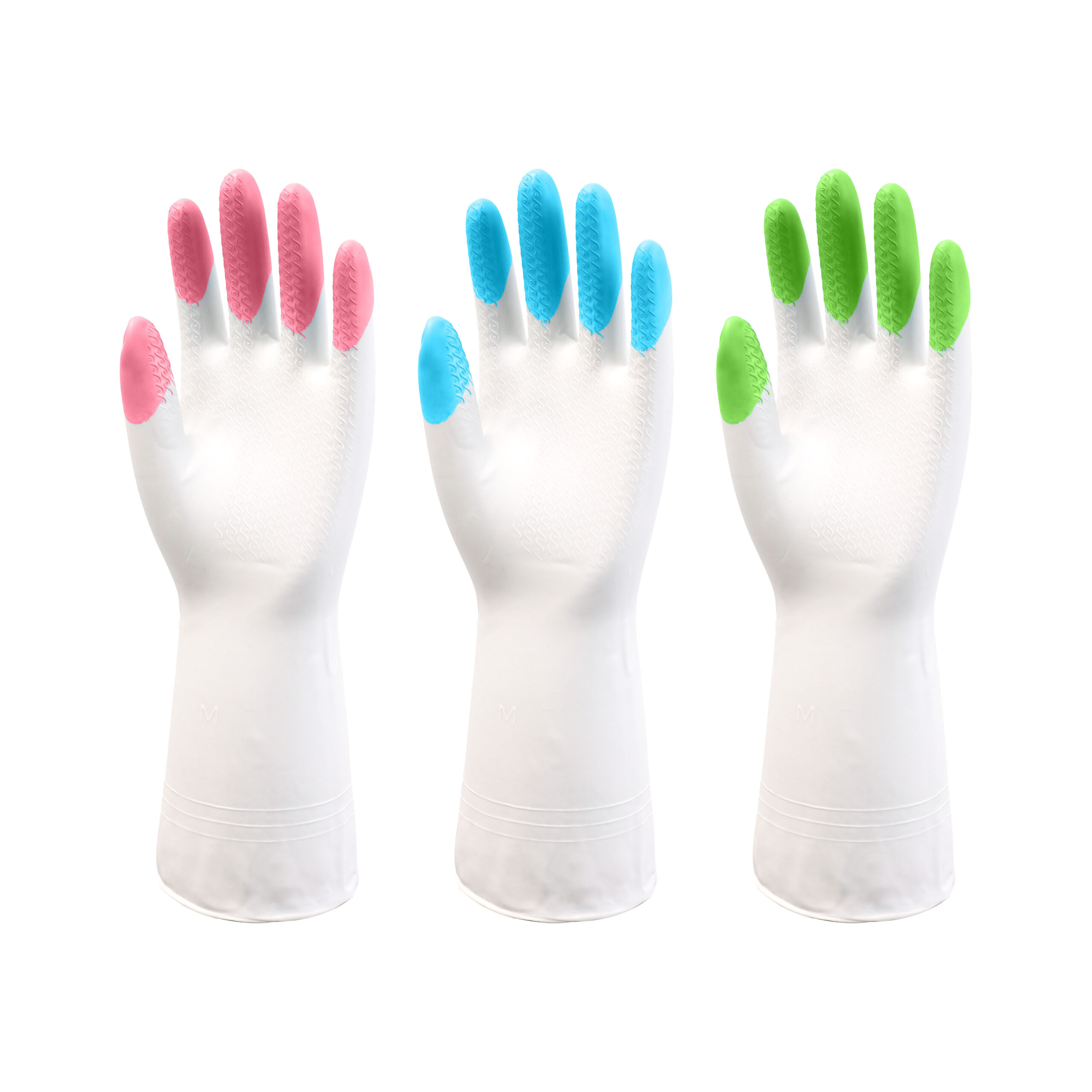
- Color-Coding Strategy: Adopt the industry standard to create a mental barrier for staff.
- Green: Produce, salads, and fruits.
- Red: Raw meat handling.
- Yellow: Cooked meat prep.
- Blue: Raw fish and general kitchen duties.
- The “Clean Zone” Rule: Always change gloves when moving from raw to cooked zones. Reusable gloves must be washed on the exterior with soap while still being worn before being transitioned to a new task area.
- FDA Compliance (21 CFR 177.2600): Ensure your gloves are specifically rated for repeated use with food. This verifies that no harmful chemicals will migrate from the glove into fatty or acidic foods.
3. Dishwashing: Reusable vs. Disposable Efficiency
For high-volume dishwashing, the Total Cost of Ownership (TCO) favors durable, reusable gloves over constant disposable changes “.
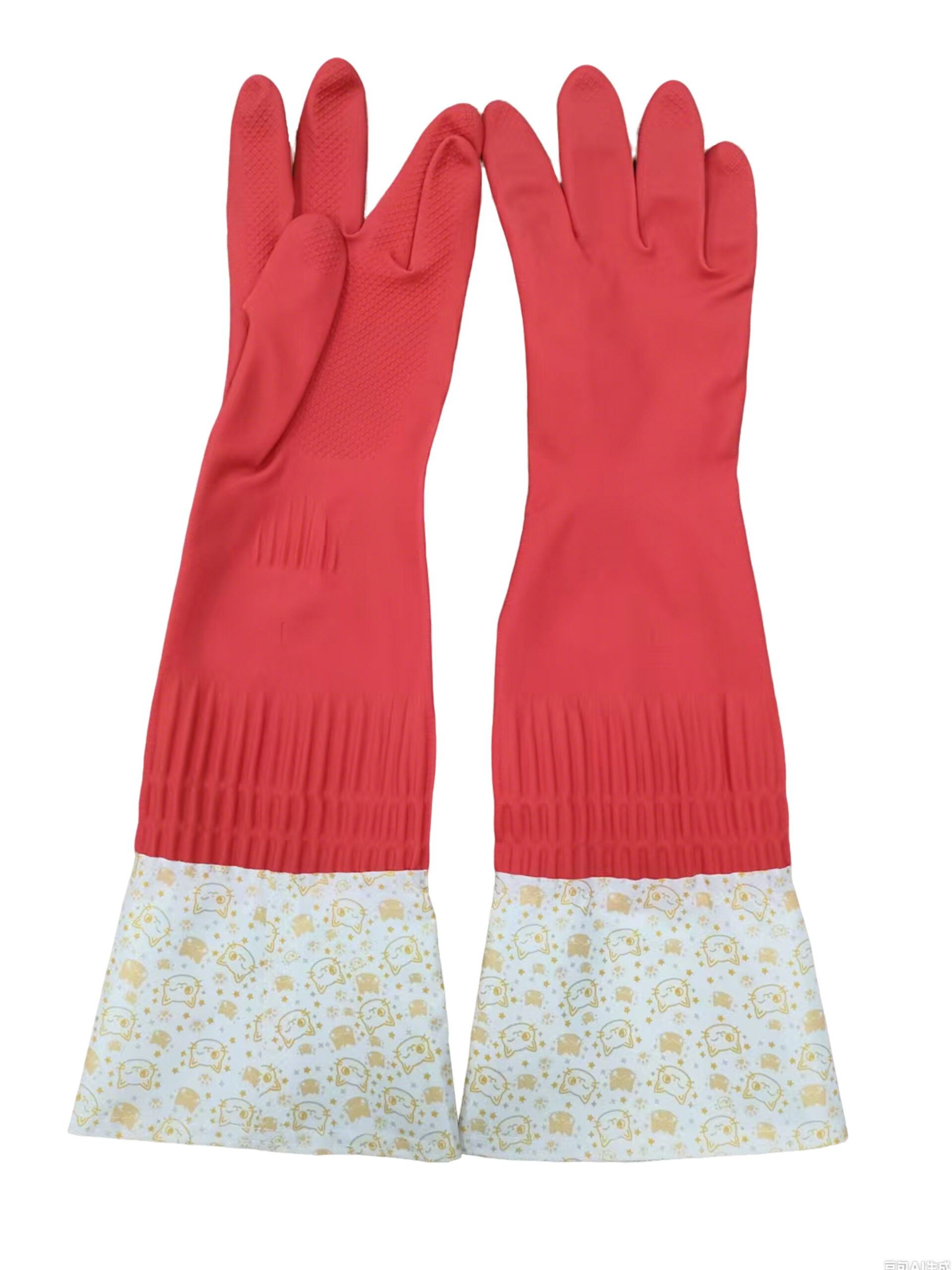
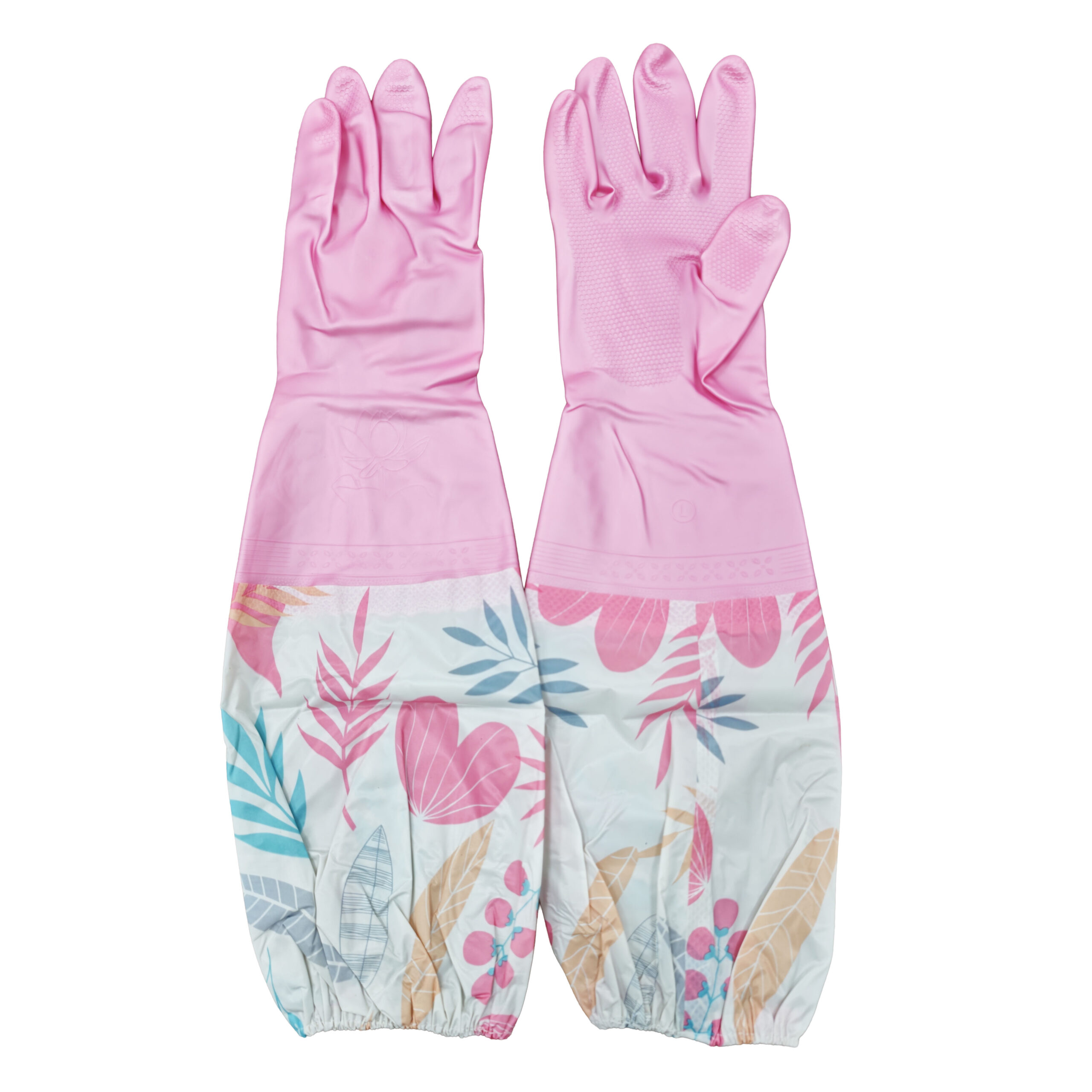
- The “Suds and Splash” Test: Reusable gloves are thicker and better suited for total immersion. Look for Gauntlet or Long-Cuff styles (12–15 inches) to prevent soapy water from entering the glove during deep-sink work “.
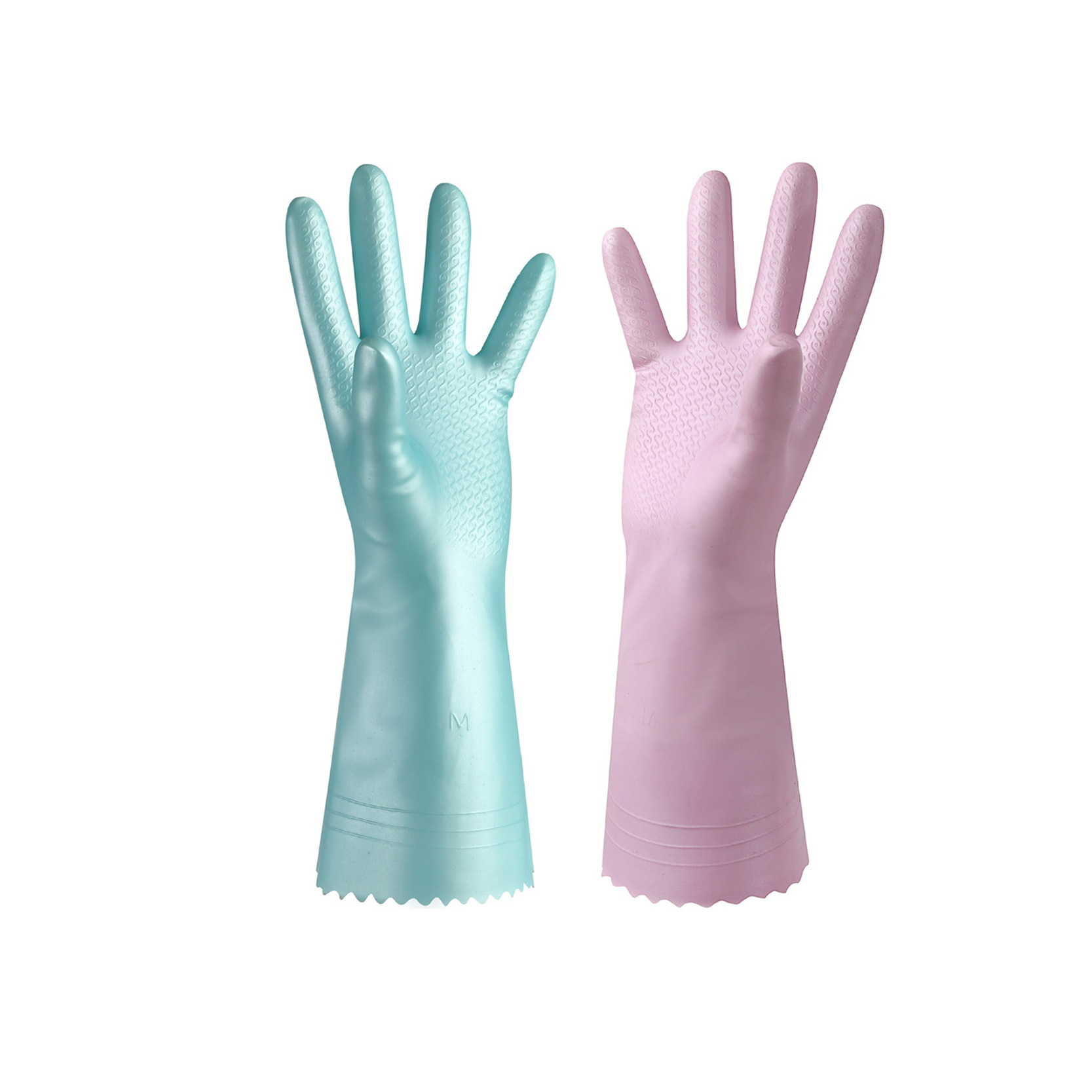
- Texture Matters: For handling slippery glassware, specify Embossed Diamond or Fish-Scale textures. These molded patterns increase the Coefficient of Friction (COF), preventing breakage and accidents “.
- The Dough Hack: Unlike sponges, dough and sticky foods like egg whites slide off rubber and nitrile gloves easily under running water. Using gloves for initial cleanup protects your dish sponges from becoming clogged with food residue.
4. Maintenance: Keeping Kitchen Gloves Hygienic
Because reusable kitchen gloves are multi-use, a strict maintenance protocol is necessary to prevent them from becoming a bacterial reservoir.
- Hand Wash Exterior: Wash the outside of the gloves with mild detergent and hot water while still wearing them
[18, 14]. - Inside-Out Rinse: Flip the gloves inside out to wash the interior. If your gloves have Internal Cotton Flocking, this is essential to remove sweat and oils that can lead to odors
[2, 14]. - Mandatory Air-Dry: Hang gloves in a well-ventilated area until completely dry before storage. Never store damp gloves in a dark cupboard, as trapped moisture breeds mildew “.
- No Dishwashers: High heat and aggressive dishwasher detergents can cause “reversion” (making rubber sticky) and loss of flexibility “.
FAQ
Q: Are nitrile gloves safe for baking and handling dough?
A: Yes, provided they are FDA-compliant (21 CFR 177.2600). Nitrile is grease-resistant and won’t leach odors into the fats used in baking
Q: Why do my kitchen gloves get sticky after a few weeks?
A: This is called “natural degradation” or reversion. It happens when rubber is exposed to high heat (like boiling water) or animal fats for too long. Cleaning them immediately after use and storing them away from sunlight prevents this “.
Conclusion: Quality You Can Taste (and Trust)
A professional kitchen is only as safe as its weakest link. By upgrading to ISO-certified and SGS-tested reusable gloves, you ensure a higher level of hygiene, better worker comfort, and a lower environmental impact. Don’t settle for “basic” protection when food-safe, high-durability rubber gloves can streamline your entire workflow.
Ready to upgrade your kitchen safety program?
Verify our FDA food-contact certifications and request a trial pack for your facility.